

 By Andrew Rettman
EUobserver – A European court ruling saying the EU breached the human rights of an Iranian "mujahidin" group could force member states to bring to light the inner workings of the EU terrorism list in 2007.
The Luxembourg-based Court of First Instance on Tuesday (12 December) "annulled" the EU’s 2002 decision to put on its official list of terrorist organisations and freeze the financial assets of the People’s Mujahidin of Iran (OMPI).
By Andrew Rettman
EUobserver – A European court ruling saying the EU breached the human rights of an Iranian "mujahidin" group could force member states to bring to light the inner workings of the EU terrorism list in 2007.
The Luxembourg-based Court of First Instance on Tuesday (12 December) "annulled" the EU’s 2002 decision to put on its official list of terrorist organisations and freeze the financial assets of the People’s Mujahidin of Iran (OMPI).
The court ruling said "fundamental rights [such as] the right to a fair hearing, the obligation to state reasons and the right to effective judicial protection" were violated in a precedent-setting move that could bolster similar cases against the EU.
The current list works on the basis that a "competent authority" in an EU member state submits evidence against a suspect entity to its EU colleagues, which make a consensus-based "political decision" to add or not add a new name.
But the suspect cannot see the evidence, find out where it came from or present a defence, even if it is a quasi-political group such as OMPI, Hamas or the PKK and not an "overriding security risk" such as Osama Bin Laden.
"At first glance, this is a very important ruling in terms of case law," OMPI’s lawyer Jean-Pierre Spitzer told EUobserver. "It means that if a so-called terrorism organisation never had the right to defend itself then [the EU] decision should be annulled."
"Nobody was able to tell the court which decision by which competent authority actually resulted in OMPI going on the list," a court spokesman said, adding that Palestinian group Al Aqsa will make "very similar" arguments in a hearing on 16 January.
Court decision will change things
The head of the legal service in the council – the EU member states’ secreteriat in Brussels – Jean-Claude Piris said a decision whether or not to appeal the OMPI judgment has not been taken yet, but sympathised with the court’s view.
"In my personal opinion, we will probably take into account the court’s view and present the motivation for our decisions, which was not the case for the time being – to find a way, where possible, to give people the opportunity to give their defence," he said.
For the time being however, OMPI will remain on the EU list and its money – millions of euro in accounts in France and Germany – will stay frozen, with Mr Piris saying the list will not be reviewed until early next year.
Under its own 2001 statute the council is obliged to revisit the list "every six months" to see who needs to go on or off, but EU officials skipped the last November deadline saying that in practice this means "six months plus or minus."
Meanwhile, Mr Piris defended the credibility of the existing EU list system, saying "It’s always well-motivated – it’s not arbitrary, not the fantasy of somebody. Twenty five European governments make the decision."
OMPI triumphant
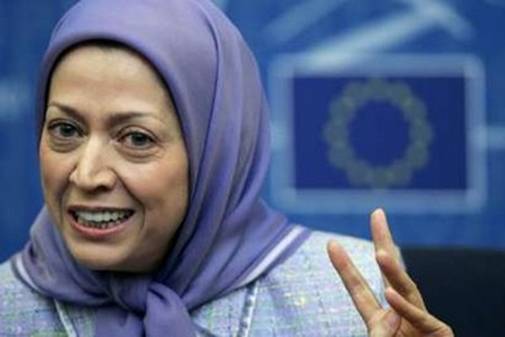
Reacting to the EU verdict from her base in Auvers-Sur-Oise, near Paris, one of OMPI’s leaders, Maryam Rajavi, called it a "testament to the legitimacy of resistance against the religious fascism ruling Iran and the triumph of justice over economic interests."
Ms Radjavi also gave a press conference at the European Parliament in Strasbourg later the same day at the invitation of the conservative EPP-ED group, after a previous meeting in July was cancelled following diplomatic threats from Teheran (…)