

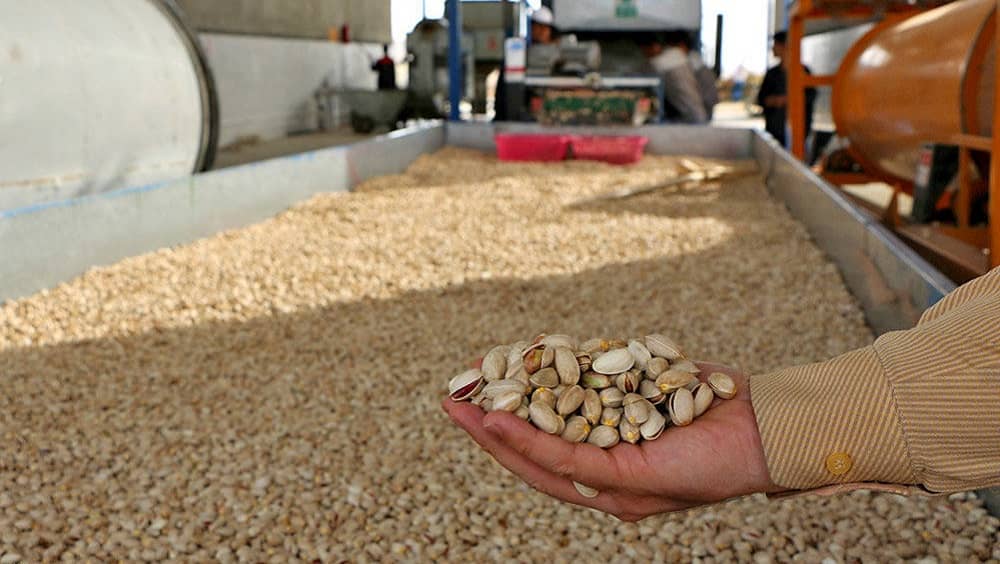
According to Iranian state officials, the European Union has banned Iranian pistachio imports, citing high levels of aflatoxin contamination, with the embargo set to take effect on November 18, 2024. The decision follows repeated EU warnings regarding Iran’s food safety standards, which officials say the Ministry of Agriculture has failed to adequately address.
Siamak Shahriari, a member of the Iranian Dried Fruit Exporters’ Union, confirmed the ban and criticized the government’s inaction. “The Ministry of Agriculture has not given a satisfactory response to the EU’s warnings,” he told state media. Shahriari reported that pistachio exports have fallen drastically, with revenue plummeting from $2.5 billion to less than $1 billion in recent years, as competitors like the U.S. and Turkey dominate the global market.
However, according to a report by ILNA on November 14, the Iran Chamber of Commerce announced that the European Union has granted Iranian pistachio producers and exporters a six-month extension to improve quality and eliminate aflatoxin contamination.
Mohammad Reza Torabi, Deputy Chairman of the Agriculture Commission, disclosed on November 12 that several pistachio shipments destined for Europe were returned due to non-compliance with EU health standards. Torabi stated, “These exports did not meet the approved standards, resulting in the rejection of multiple shipments over the past two years.”
#Iran News:
Iranian #Saffron Industry Struggles as Foreign Competitors Rebrand Ithttps://t.co/Mq26EZWqEO— NCRI-FAC (@iran_policy) October 21, 2024
The contamination issue has deepened concerns within Iran’s agricultural sector, with Mohammad Mehdi Boroumandi, Deputy Minister of Agriculture, acknowledging that rising domestic production costs have undermined the profitability of pistachio exports. “Exports are no longer feasible due to high production costs stemming from inflation,” Boroumandi said, adding that Iranian pistachios may be removed from international markets entirely within two years if current challenges persist.
In 2022, the EU had warned that it would tighten aflatoxin regulations on Iranian pistachios, prompting brief discussions within Iran’s Ministry of Agriculture. However, no substantial actions followed, and Boroumandi noted that “high domestic inflation has reduced the appeal of exports.” He also cited stringent currency return requirements as an additional barrier, limiting exporters’ ability to continue operations.
The EU’s decision will likely have far-reaching consequences for Iran’s pistachio industry. While only 5% of Iranian pistachios—approximately 7,500 tons—are exported to Europe, the ban signals mounting challenges for Iran’s exports to other markets. “Any decision by the EU will impact Iran’s global market share,” Boroumandi warned. Efforts to negotiate a compliance agreement, including a six-month grace period from the EU, are ongoing, though Boroumandi cautioned that resistance within Iran has hindered necessary regulatory adjustments.
Private sector figures are increasingly vocal about the government’s failure to act. “This issue should have been resolved six months ago, not at the last minute,” said Abdollah Mohajer Darabi, a member of the Iran Chamber of Commerce’s executive board. Mehdi Tabibzadeh, head of the Kerman Chamber of Commerce, echoed these concerns, stressing the need for improved testing and oversight. He called for private laboratories to help enforce food safety standards, a suggestion that was reportedly well-received within the industry.
#Iran News in Brief
One member of the Iranian regime’s Chamber of Commerce has described Iran’s #carpet exports as “disastrous,” citing a significant drop in earnings from $1.7 billion to $50 million annually.https://t.co/LzjezqKXTn pic.twitter.com/8V5bHKT5o3— NCRI-FAC (@iran_policy) April 25, 2023
The ban poses a significant challenge for Iran’s broader agricultural exports, as Boroumandi highlighted, warning that similar standards could soon be imposed by other nations. He added that while talks with the EU continue, non-compliance could lead to further market losses.
Despite state initiatives to mitigate the consequences, Iran faces stiff competition from the United States, which has successfully maintained high production standards and has expanded its pistachio exports globally. U.S. production outpaces Iran’s, with an annual yield of 500,000 tons compared to Iran’s estimated 200,000 tons, as noted by Mohammad Salehi, head of Iran’s Pistachio Association, in July.
The current ban underscores how the clerical regime has systematically eroded what was once a strength of the nation. Once a pillar of Iran’s non-oil exports and a symbol of national pride, the pistachio industry now faces unprecedented decline due to the regime’s failure to uphold international food safety standards. Many businesses now fear that Iran’s historic foothold in the global pistachio market could be lost entirely, a casualty of the regime’s neglect and mismanagement of one of the nation’s valuable resources.