

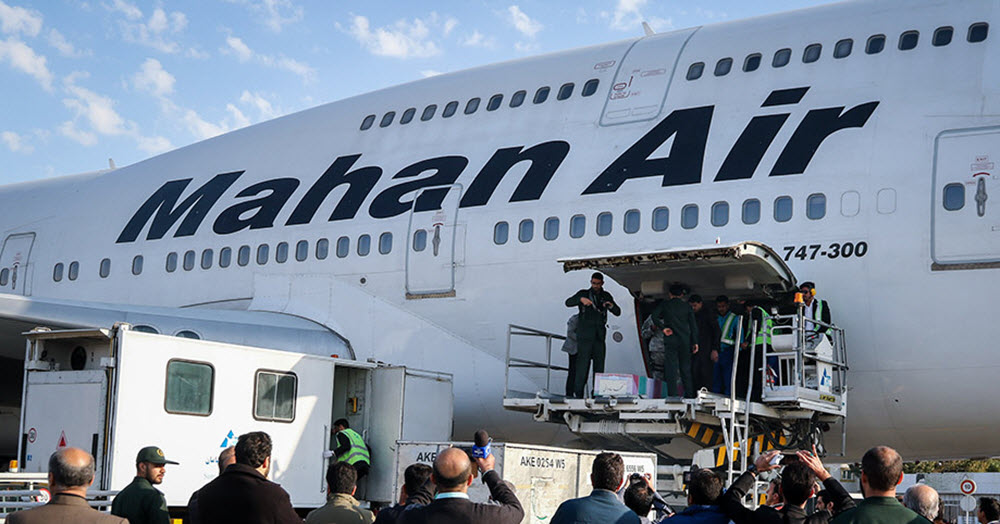
For the second time in two days, Lebanese authorities conducted a detailed inspection of an Iranian Mahan Air flight at Beirut’s Rafic Hariri International Airport. This continued scrutiny underscores Lebanon’s shifting stance as it distances itself from Tehran’s influence, reflecting broader regional changes.
Lebanese Interior Minister Bassam Mawlawi confirmed the inspections, stating, “At 11:30 AM today, a Mahan Air flight arrived, and all items onboard were inspected without exception. This aligns with the Lebanese government’s decision to enforce stricter inspections at Beirut’s airport to ensure security and sovereignty.” The move comes amid intelligence reports linking such flights to potential financial and logistical support for Hezbollah.
This incident follows a similar inspection of another Mahan Air flight just a day earlier, during which Iranian diplomats invoked the Vienna Convention to prevent the inspection of diplomatic pouches. While no illicit items were found, the repeated inspections highlight Lebanon’s growing resolve to tighten control over its infrastructure and reduce Tehran’s operational leverage.
#Iran News: Beirut Airport Tightens Security Over Suspected #Hezbollah Funds Amid Tehran’s Declining Influencehttps://t.co/bjGdmq15bM
— NCRI-FAC (@iran_policy) January 3, 2025
Lebanon’s actions are part of a broader trend. Recently, the country handed over 70 former Syrian regime officers to Syria’s new leadership, signaling a shift away from its reliance on Tehran. Observers note that these developments, coupled with increased international scrutiny, indicate a significant decline in Iran’s influence in Lebanon.
Iranian state media, including Farhikhtegan and Tasnim News Agency, echoed these sentiments, portraying the inspections as part of a larger campaign against Iran orchestrated by the United States and its allies. A report on Iranian television emphasized that “the inspections targeted predominantly Lebanese passengers aboard the Mahan Air flight” and accused Lebanese authorities of acting under U.S. and Israeli influence.
“This move, specifically targeting Iranian flights, is not acceptable to us. Such measures must apply universally, not selectively,” said Mojtaba Amani, the regime’s ambassador to Lebanon, reflecting Tehran’s growing frustration with what it perceives as politically motivated actions.
Leaked Documents Expose #Iranian Regime’s Unraveling Agenda in #Syria and #Lebanonhttps://t.co/dp64mP3FPS
— NCRI-FAC (@iran_policy) December 30, 2024
The Iranian regime’s embassy in Lebanon clarified through the Lebanese Ministry of Foreign Affairs that the diplomatic pouches on the flight contained documents and operational funds for embassy use, in full compliance with the Vienna Convention on Diplomatic Relations. However, Iranian media questioned why the inspections focused disproportionately on Iranian flights, suggesting a broader agenda to undermine Tehran’s regional ties and Hezbollah’s operational capacities.
Some Iranian officials linked the incident to broader geopolitical tensions, accusing the United States and Israel of orchestrating pressure on Lebanon to sever its ties with Tehran and its proxies. State-affiliated analysts claimed the inspections were a continuation of efforts to weaken Iran’s influence in the region following its setbacks in Syria and growing international scrutiny of its activities.
The strong reactions from Iranian officials and state media underscore the sensitivity of the issue for Tehran. With increasing signs of Lebanon distancing itself from Iranian influence, the inspections have become a symbol of Tehran’s eroding regional leverage, prompting a defensive stance from Iranian authorities.