

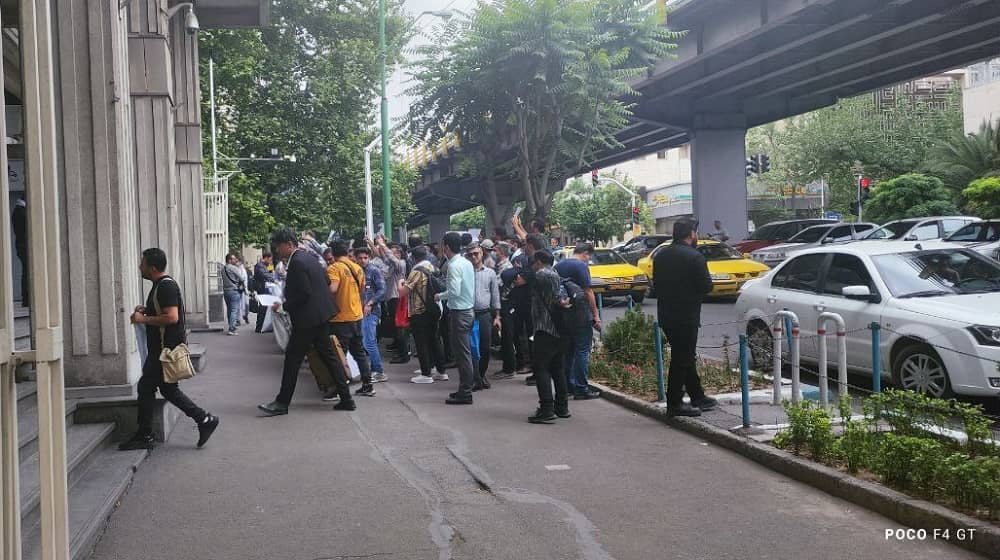
On May 6, 2025, a new wave of protests swept across cities from Tehran to Gachsaran, as citizens voiced mounting anger over worsening living conditions, state repression, and systemic failures under the clerical regime. The demonstrations—led by bakers, oil workers, political prisoners’ families, and everyday residents—paint a picture of a nation increasingly defiant in the face of economic hardship and government dysfunction.
In Isfahan, central Iran, a crowd of bakers filled the streets on Tuesday, chanting “Incompetent official, resign!” Their grievances focused on months of unpaid subsidies and skyrocketing production costs, with demands for higher bread prices to cover soaring flour and utility expenses. Similar scenes unfolded in Kermanshah and Tehran, where bakers silently held protest banners, stating they were “not here for profit, but for survival.”
Meanwhile, widespread and unannounced power cuts triggered spontaneous protests across several provinces. In Ardakan (Yazd Province), residents shut down roads outside the local electricity office, declaring they would not leave “until the power comes back.” Daily blackouts have disrupted homes, bakeries, pharmacies, and shops, with no schedule or solution in sight. Protesters in Behesht-e Zahra (South Tehran), Shahr-e Rey, Robat Karim, and Marivan also rallied, citing frequent outages as life-threatening, especially for families with children, the elderly, or the sick.
More footage of the protest rally by bakers in Isfahan, chanting, "Enough with the promises, our tables are empty!"#IranProtestspic.twitter.com/sy6mIGi0q2
— People's Mojahedin Organization of Iran (PMOI/MEK) (@Mojahedineng) May 6, 2025
A business owner in Tehran’s Iron Market described losses due to three consecutive days of blackouts: “They cut our power from morning to night. One of Tehran’s biggest commercial hubs is in darkness.” Frustration turned into direct action in Shahr-e Rey, where residents blocked roads and demanded immediate answers from the local electricity department.
In Gachsaran, located in southwest Iran, veteran oil industry workers—some with over 15 years of service—rallied in front of the governor’s office. Their demand: conversion to permanent employment status and job security. They condemned years of neglect and broken promises by the Ministry of Oil, saying they had been kept in limbo despite their critical roles in Iran’s energy sector.
Meanwhile, in Tehran, in front of the notorious Evin Prison, families of death row inmates gathered once again for the 67th consecutive week of the “No to Executions Tuesdays” campaign. Holding photos of their loved ones, they pleaded for an end to what they called “inhuman and unjust death sentences.” This weekly campaign, coordinated across 41 prisons nationwide, has become a growing symbol of resistance against Iran’s draconian justice system and its use of capital punishment as a tool of repression.
May 6—Tehran, Iran
In tandem with the 67th week of the "No to Executions Tuesdays" campaign, families of political prisoners sentenced to death rally in front of Evin Prison and call for the revocation of the death sentence of their loved ones.pic.twitter.com/aee5SsTfFS— People's Mojahedin Organization of Iran (PMOI/MEK) (@Mojahedineng) May 6, 2025
Tuesday’s protests coincided with public anger over water shortages in Allard, Robat Karim, where residents rallied outside local government offices after days of dry taps. One woman cried out: “We can’t go on like this. There’s no water for our children, the sick, or the elderly. No one listens.”
Amid these simultaneous flare-ups, critics say the regime has been unable—or unwilling—to respond to the compounding crises. Mismanagement, corruption, and international isolation have deepened the country’s economic woes, leaving millions to fend for themselves.
State-affiliated media acknowledged power shortages but downplayed the unrest. “Planned outages have resumed in Tehran,” reported NourNews, a website linked to the Supreme National Security Council, issuing warnings of further disruptions without offering relief or transparency.
May 6—Gachsaran, southwest Iran
Oil industry workers hold protest rally, demanding the conversion of their employment status and job security.#IranProtests pic.twitter.com/cqAldc4e1J— People's Mojahedin Organization of Iran (PMOI/MEK) (@Mojahedineng) May 6, 2025
Observers note that while the protests differ in form—from labor demands to opposition to executions—they are increasingly unified in their rejection of the ruling system. Each grievance, whether about unpaid wages, blackouts, or basic survival, carries a broader political undertone: a public that no longer trusts the regime to govern.
One protest banner in Isfahan summed up the mood: “When the baker protests, the bread is already gone.”