

Two-minute read
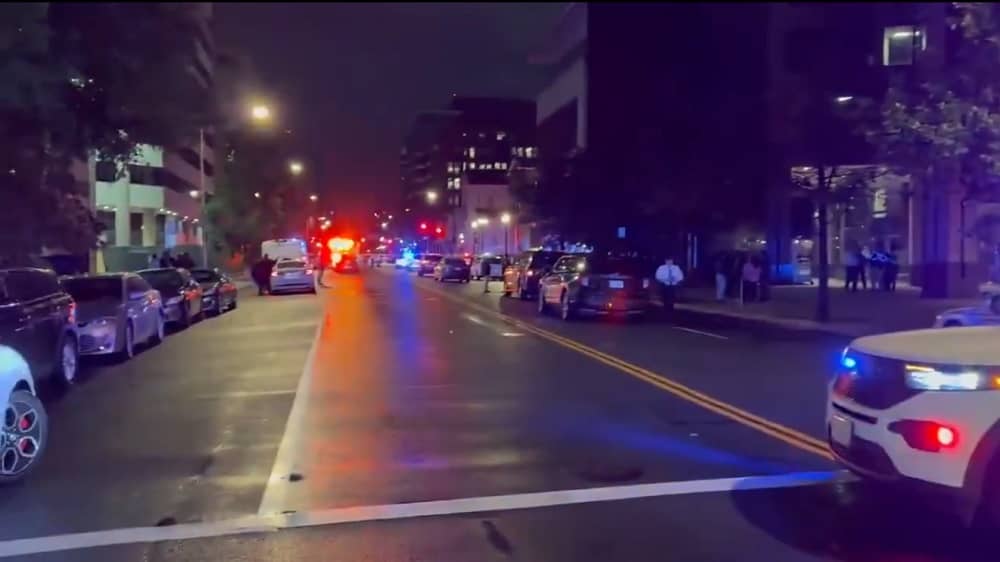
Amid growing internal unrest and external isolation, Iran’s regime has seized on a violent incident in Washington, D.C., to bolster its propaganda and rally its dwindling base. Regardless of the outcome of official investigations into the perpetrator’s motives or affiliations, Iran’s state-run media is already spinning the act into a strategic asset—an alarming reminder of the clerical regime’s capacity to leverage bloodshed and chaos for its own survival.
On May 23, the Kayhan newspaper, known as a mouthpiece for the regime’s Supreme Leader Ali Khamenei, celebrated the alleged shooter—named “Elias Rodriguez”—as a revolutionary hero. “Our dear Basiji brother,” the paper wrote in its May 22 column, “sent two Zionist beasts to hell with bullets.” It went further, declaring, “Washington’s Basij [militia] has announced its presence through this revolutionary action.”
This glorification of violence is not new. Kayhan previously praised the 2022 stabbing of Rushdie in New York as “divine revenge,” writing that “Trump and Pompeo are next.”
Clerical Regime Welcomed and Promoted the Attack on Salman Rushdie Based on Khomeini and Khamenei’s Fatwa #Iran #SalmanRushdie https://t.co/cUzyLycxP6
— NCRI-FAC (@iran_policy) August 16, 2022
This rhetoric is not just inflammatory—it is calculated. The regime, weakened by the erosion of its proxy networks, the collapse of its Syrian ally, and increasing domestic unrest, is desperate to project strength. By openly endorsing lone acts of violence abroad, it aims to energize demoralized IRGC members and loyalists at home, whom it hopes will stand against the inevitable next uprising.
The pattern is unmistakable. In 1989, following the strategic setback of abruptly accepting a ceasefire with Iraq, former Supreme Leader Ruhollah Khomeini issued a fatwa against Salman Rushdie—an attempt to shake the world and reassert control amid a turbulent and weakened regime.
This is not mere rhetoric. It is the calculated use of terrorism and assassination as tools of statecraft, deeply rooted in the regime’s ideology. Tehran’s leaders continue to idolize acts of violence that serve their narrative of defiance, whether through covert proxies or glorified lone actors. Even when such violence damages the regime’s global standing, the ruling clerics see political value in it—both as an intimidation tactic abroad and a morale booster at home.
Iran’s Regime Behind the Attack on Salman Rushdie#UKIndictMohajerani #SalmanRusdhie #Iran
https://t.co/RhyL56wRQ2— NCRI-FAC (@iran_policy) August 13, 2022
In a 2023 statement, Kayhan argued that “no matter how much noise America or Israel makes over the Rushdie verdict, they cannot extinguish the zeal running through the veins of the Muslim nation.” This reflects a worldview in which human life is expendable, so long as it serves the regime’s struggle to maintain control.
The true message emerging from Iranian state media is chilling: in the eyes of the clerical dictatorship, chaos and death—even on foreign soil—are not tragedies to be mourned, but opportunities to be exploited. As the regime faces mounting rebellion from within and increasing condemnation abroad, its propaganda machine reveals what may be its final doctrine of desperation: survive at all costs, even if it means applauding terror.