

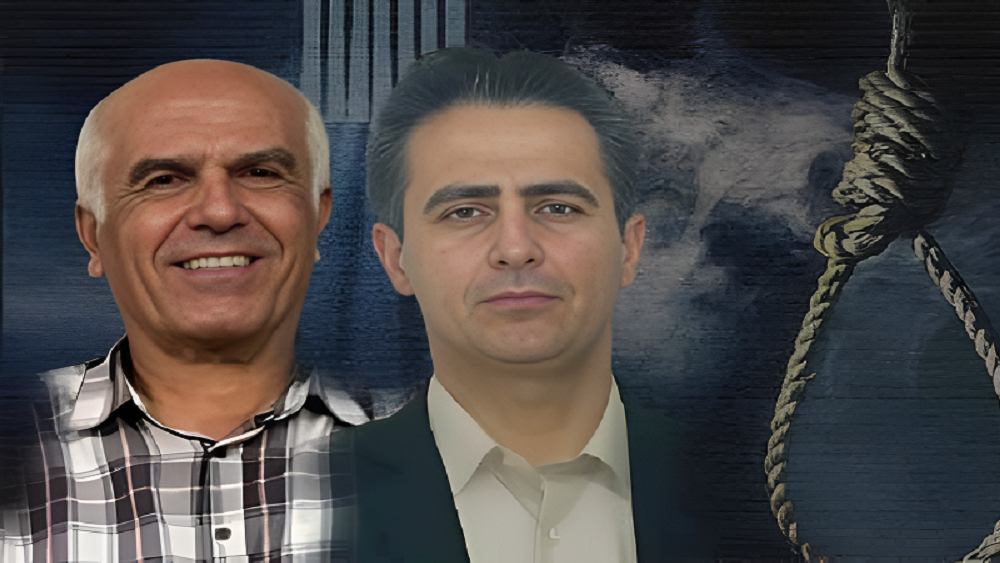
The brutal execution of PMOI members Behrouz Ehsani (69) and Mehdi Hassani (48) by Iran’s regime has sparked global outrage. Both prisoners were executed in secret on 27 July at Ghezel Hesar Prison in Karaj, without prior notice to the men or their families. In a statement following the executions, Amnesty International called for an immediate moratorium on the death penalty in Iran.
Both men were convicted on charges of “armed rebellion against the state” (baghi), “enmity against God” (moharebeh), and “corruption on earth” (efsad-e fel-arz)—vaguely defined charges often used against dissidents and linked to their alleged affiliation with the banned People’s Mojahedin Organization of Iran (PMOI). According to Amnesty International, their trial before a Revolutionary Court lasted only five minutes, during which they were denied the right to speak. The organization reports that their convictions were based on forced confessions extracted under torture, including beatings, threats against family members, and extended solitary confinement.
Kristine Beckerle, Amnesty’s Deputy Regional Director for the Middle East and North Africa, described the executions as part of a “horrific execution crisis,” noting that nearly 700 people have been hanged in Iran this year alone. “The Iranian authorities have intensified repression at home following the latest escalation of hostilities with Israel in June,” she said, pointing to a broader campaign of silencing dissent.
World Reacts with Outrage After Execution of Iranian Political Prisoners #BehrouzEhsani and #MehdiHassanihttps://t.co/uoujFD942j
— NCRI-FAC (@iran_policy) July 27, 2025
Ehsani and Hassani had been active in protesting the death penalty from inside prison, staging a hunger strike every Tuesday for 18 months as part of the “No to Execution Tuesdays” campaign. Their execution, Amnesty argues, is a stark example of the regime’s use of the death penalty as a political weapon aimed at crushing resistance and instilling fear.
Following the executions, the Iranian regime’s judiciary news agency released a vague statement claiming the men had “manufactured launchers” and caused “damage to civilians, homes, and administrative buildings,” but provided no evidence. Amnesty reports the men consistently denied these accusations, stating they were based on coerced confessions.
Rising Fears of More Executions
The secretive nature of these executions, coupled with recent state media rhetoric advocating a repeat of the 1988 massacre—when thousands of political prisoners were killed—has heightened fears of further politically motivated executions. Since the “12-day war” with Israel in June, the Iranian regime has escalated mass arrests and implemented orders to accelerate trials and executions.
Amnesty International has documented 19 individuals currently at risk of execution for politically motivated charges, including several that are linked to the PMOI.
Behrouz Ehsani (69) & Mehdi Hassani (48) face imminent execution after a 5-minute sham trial in Iran.
Tortured. Denied lawyers. Forced confessions.
They could be executed in secret any moment. Be their voice!#SaveMehdiHassani #SaveBehrouzEhsanihttps://t.co/zTgH7exhCC— People's Mojahedin Organization of Iran (PMOI/MEK) (@Mojahedineng) March 1, 2025
Amnesty Demands Global Action
Amnesty International reiterates its call for the Iranian authorities to halt all executions and impose a formal moratorium with a view to full abolition. The organization is also urging other countries to initiate criminal investigations under the principle of universal jurisdiction against Iranian officials involved in torture and other crimes under international law.
“These executions underscore the urgent need for accountability,” said Beckerle. “Without real consequences, the Iranian authorities will continue to commit grave human rights violations with impunity.”
Amnesty International remains unequivocally opposed to the death penalty in all cases, calling it the ultimate cruel, inhuman, and degrading punishment.