

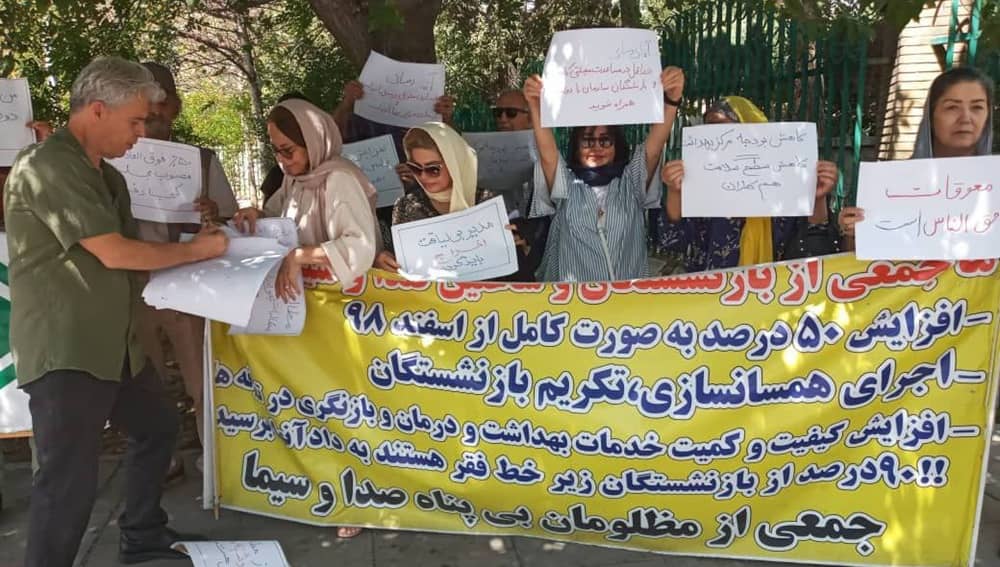
On August 20, 2025, a new wave of protests swept across multiple Iranian cities, exposing the deep-seated rot within the clerical regime. From shopkeepers in Saveh and industrial workers in Arak to residents in Eslamshahr and unpaid municipal employees in Zahedan, Iranians from different walks of life took to the streets to protest the same fundamental problem: a state that is failing to provide the most basic necessities.
These demonstrations are not isolated incidents of local grievance but clear symptoms of the regime’s systemic corruption and catastrophic mismanagement of the nation’s infrastructure and economy. The protests underscore a stark reality: superficial political changes are powerless to contain the explosive social anger fueled by decades of incompetence.
August 20—Saveh, northern Iran
Protest by merchants and traders against frequent power outages. According to the merchants, with the current electricity outages, business has effectively come to a halt and their lives and income have been disrupted.#IranProtests pic.twitter.com/TSylim97tx— People's Mojahedin Organization of Iran (PMOI/MEK) (@Mojahedineng) August 20, 2025
The Blackout Rebellion: A Nation Plunged into Darkness
The most widespread trigger for the August 20 protests was the crippling electricity blackouts that have paralyzed daily life and decimated businesses. In the city of Saveh, shopkeepers and bazaar merchants held a rally, warning that the frequent and unannounced power cuts have brought their businesses to the brink of collapse. According to reports, their demands for solutions have been met with only “meaningless answers” from regime officials who refuse to take responsibility.
This scene was replicated across the country. In Arak, workers at the Khairabad Industrial Park protested the prolonged blackouts that have severely disrupted production. In Eslamshahr, north of Tehran, residents protested the disruption to their everyday lives. These are not just complaints about inconvenience; they are a response to a full-blown industrial collapse orchestrated by the regime.
August 20—Arak, central Iran
Protest by industrial workers in Khairabad Industrial Park against frequent and prolonged electricity blackouts, which have severely disrupted production.#IranProtests pic.twitter.com/TEpqGoPgh8— People's Mojahedin Organization of Iran (PMOI/MEK) (@Mojahedineng) August 20, 2025
The scale of this crisis has been confirmed by the regime’s own experts. Abdolvahab Sahlabadi, the head of Iran’s House of Industry, Mine, and Trade, recently stated that power outages have forced nearly 50% of the country’s entire production capacity offline. He revealed that most industrial factories are now only able to operate for two to three days per week, causing immense financial losses, destroying raw materials, and leaving workers in a state of uncertainty. Compounding the crisis, the regime’s Minister of Energy has effectively abdicated responsibility, declaring that the government will no longer guarantee power supply to industries. This manufactured crisis is not seasonal; Sahlabadi warns that the coming winter will bring even more severe gas shortages, promising another season of economic devastation.
A Cry for Dignity: Workers Unpaid and Unheard
Parallel to the blackout protests, another front of social unrest is being waged by Iran’s long-suffering labor force. In Zahedan, on August 20, municipal workers from the city’s second district gathered to protest not receiving their wages for five consecutive months.
This protest is a testament to their desperation. Despite holding repeated rallies, the workers’ demands have been completely ignored by regime authorities. Their plight is deliberately exploited by the regime; the workers are kept on temporary contracts and, as they themselves have reported, are threatened with dismissal for the simple act of demanding their earned wages. Their protest is not merely for overdue pay, but for the basic dignity and security that the regime systematically denies its people. The situation in Zahedan is symbolic of the dire conditions faced by millions of workers across Iran, who are deprived of their fundamental rights while the ruling elite plunders the nation’s wealth.
August 20—Zahedan, southeast Iran
Municipal workers rallied in front of the municipality in Zahedan to protest unpaid salaries that have been overdue for five months. Regime officials refrain from addressing their demands.#IranProtestspic.twitter.com/5DaxNvStDP— People's Mojahedin Organization of Iran (PMOI/MEK) (@Mojahedineng) August 20, 2025
In Mehrvilla, Karaj, the unrest turned overtly political on August 19 after four consecutive power outages plunged the neighborhood into darkness. Residents gathered in the streets at night, chanting anti-regime slogans, including “Death to the principle of the Supreme Leader.”
The simultaneous protests over blackouts and unpaid wages are two sides of the same coin: a corrupt and incompetent regime that can no longer provide for its citizens. While the regime invests billions in its nuclear program, ballistic missiles, and terrorist proxies abroad, it leaves its own industries to collapse and its workers to starve.
From the bazaars of Saveh to the factories of Arak and the municipal offices of Zahedan, the message from the Iranian people is unified and clear: their patience has run out. These ongoing protests are not isolated flare-ups but the tremors of a larger social earthquake. They signal that the regime’s foundation is cracking under the immense weight of its own failures, bringing the prospect of fundamental change ever closer.