

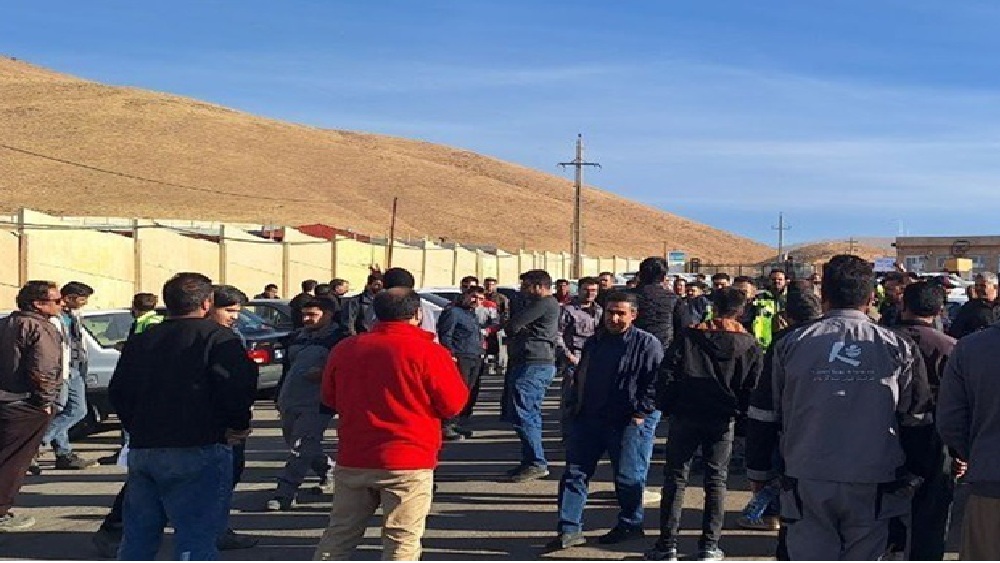
On December 24, 2025, a simultaneous wave of protests swept across Iran on Wednesday, bridging the gap between laborers in gold mines, university students in dormitories, and defrauded investors in the capital. The protests highlight a deepening crisis of governance where the regime’s inability to manage basic economic needs is fueling widespread unrest among diverse sectors of society.
“City of Gold, Workers Without Justice”
In Takab, West Azerbaijan province, strikes at the Zarshuran Gold Mine entered their tenth consecutive day on Wednesday. Known as the largest gold reserve in the country, the site has become a symbol of the disparity between Iran’s natural wealth and the poverty of its workforce.
Approximately 400 heads of households, employed as contract workers, have downed tools to protest discriminatory wage practices. While the mine generates massive revenue for the state, these workers report earning an average of roughly 20 million tomans—a figure that has failed to keep pace with inflation. The strikers are demanding job classification implementation and benefits commensurate with the harsh nature of their labor, noting that official staff at the adjacent factory receive bonuses and rewards denied to the miners.
The workers’ sentiment was captured in their chant: “In a mine that makes gold, I am deprived of minimum welfare. Why is my share of all this gold not justice?”
December 24—Ahvaz, southwest Iran
Dorm students at Chamran University launched a hunger strike to protest poor-quality meals and finding hair in their food, demanding accountability and respect for student dignity.#IranProtests pic.twitter.com/FGfsUbAA01— People's Mojahedin Organization of Iran (PMOI/MEK) (@Mojahedineng) December 24, 2025
University Dining Halls Become Protest Grounds
Simultaneously, a unique form of protest spread to the country’s universities, targeting the degradation of student dignity. On the evening of December 23, at the Imam Ali Dormitory of Beheshti University of Medical Sciences in Tehran, students arranged their food trays on the ground in a long line, refusing to eat. They described the act as a response to “humiliation and disregard for student dignity,” citing poor food quality and hunger as a disrespect to the country’s future professionals.
By December 24, this tactic spread to Chamran University in Ahvaz. Students there staged a similar strike after finding hair and other hygiene issues in their meals. The image of hundreds of untouched trays lining the dormitory floors serves as a visual indictment of university managements that, plagued by budget cuts and corruption, fail to provide even basic sustenance to the student body.
December 24—Joveyn, Khorasan Razavi province, northeast Iran
Livestock farmers protested the lack of livestock concentrate distribution, warning that producers are being driven to ruin and that “today farmers collapse, tomorrow people’s tables will be empty.”#IranProtests pic.twitter.com/YLkTRqoGe9— People's Mojahedin Organization of Iran (PMOI/MEK) (@Mojahedineng) December 24, 2025
The Looming Food Security Crisis
In Joveyn, Razavi Khorasan, livestock farmers gathered to sound an alarm regarding the nation’s food security. Protesting the government’s failure to distribute essential livestock feed (concentrate), the farmers warned that the current trajectory ensures the destruction of small and medium-sized farms.
The protesters argued that the skyrocketing costs of production, coupled with state negligence, are forcing them out of business. They issued a stark warning to officials: the collapse of local farming will inevitably lead to a severe shortage of meat and dairy, driving prices up further for a population already struggling with inflation. As of Wednesday, no government entity had responded to their grievances.
December 24—Tehran, Iran
Cryptoland users and defrauded investors rallied after nearly 5 years with zero answers, demanding the judiciary return their frozen funds and provide a clear timeline. They chanted: “Prosecutor, prosecutor! Return our money!”#IranProtests pic.twitter.com/U11stBTeLy— People's Mojahedin Organization of Iran (PMOI/MEK) (@Mojahedineng) December 24, 2025
“Mr. Prosecutor, Give Us Our Money!”
In Tehran, the judiciary faced direct scrutiny as victims of the “Cryptoland” exchange fraud rallied outside the Economic Crimes Prosecutor’s Office. It has been five years since the scandal broke, leaving thousands of families without access to their savings.
Protesters chanted, “Prosecutor, Prosecutor! Give us our money back!” highlighting the state’s complicity and incompetence. The demonstrators pointed out that the CEO of Cryptoland, Sina Estavi, was previously arrested but subsequently released, allowing him to flee the country. The gathering on December 24 was not an isolated event but part of a broader pattern of unrest involving victims of state-affiliated financial scams, including Unique Finance and Rezayat Khodro. Despite years of petitions, the judiciary has offered no timeline for the return of assets, leaving thousands in financial limbo.
The regime’s response to labor strikes, student hunger, and financial plunder has been uniform: silence and negligence. As the gap between the ruling elite and the populace widens, these scattered protests are coalescing into a singular narrative of a nation held hostage by a kleptocracy that extracts wealth while abandoning its citizens to poverty.