

THIS PAGE WILL BE UPDATED WITH THE LATEST NEWS
UPDATE: 07:30 AM CEST
A Glimpse into the Soul of a Revolutionary: Vahid Bani Amerian’s Final Letter to His Mother
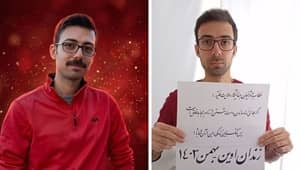
On April 4, 2026, the Iranian regime executed Vahid Bani Amerian, a 33-year-old political prisoner and member of the People’s Mojahedin Organization of Iran (PMOI/MEK). Months before his death, in September 2025, Vahid managed to send a clandestine audio message from Ghezel Hesar prison to his mother. He recorded this poignant message shortly after the regime executed two other PMOI members, Behrouz Ehsani and Mehdi Hassani, acknowledging with profound clarity that he and his cellmates were also on death row. The letter serves as a powerful testament to the dedication of the more than 100,000 PMOI martyrs who knowingly abandoned the comforts of a normal life to fight for a democratic Iran. It reveals the deep empathy and unwavering resolve that fuels the Iranian Resistance—a force the clerical regime can never destroy.
Vahid’s path to the gallows began with a childhood awakening to the stark inequalities of Iranian society. In his message, he reminds his mother of a day he asked her to exchange a nice pair of shoes for simpler ones because he felt the “innocent and longing looks” of his impoverished classmates, Sharifi, Mohammadi, and Karami. He recounted how he would secretly hide good food in his school bag to bring to them, just to see “the spark in their eyes.”
A Choice for Freedom: Ali Akbar Daneshvarkar’s Final Letter from Death Row

On the morning of March 30, 2026, the Iranian regime executed two dedicated political prisoners and members of the People’s Mojahedin Organization of Iran (PMOI/MEK), Ali Akbar (Shahrokh) Daneshvarkar and Mohammad Taghavi, following months of torture and sham trials. However, the regime’s gallows have never been able to extinguish the light of resistance.
Shortly after his death sentence was reconfirmed in November 2025, Shahrokh Daneshvarkar penned a profound letter from Ghezel Hesar Prison. This statement is not just a personal memoir; it is a historical testament. It showcases a conscious decision to sacrifice his life for freedom and highlights the very essence of the PMOI’s 60-year struggle against the dictatorships of both the Shah and the mullahs. It demonstrates exactly why the regime, despite its executions and torture chambers, cannot destroy a force built on such unwavering conviction.
Iran: Women’s National Team Barred from 2026 Asian Games Amid Asylum Fears
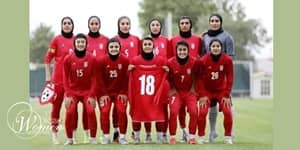
TEHRAN – The Iranian Football Federation has sparked controversy following its decision to bar the Women’s National Team from the upcoming Nagoya Asian Games, despite the squad having already secured a qualification spot among the top 12 teams in Asia. While official statements from the federation point to a lack of “medal potential,” insiders and local media suggest a more controversial motive: the fear of athletes seeking asylum while abroad.
Farideh Shojaei, Vice President of Women’s Affairs at the Federation, justified the move by claiming the team was not deemed capable of “reaching the podium.” This reasoning has been widely dismissed as a double standard. Critics point out that the Iranian Men’s U-23 team has failed to reach an Asian Games podium for 22 years, yet they continue to receive full institutional support and participation rights.
War as a Shield: How Tehran Uses Conflict to Conceal Economic Collapse
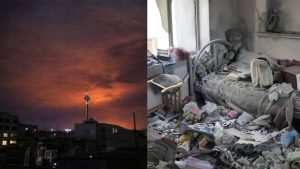
Is Iran’s deepening economic collapse truly the result of war? If military conflict had never erupted, would the country now be experiencing prosperity and stability? These are the questions increasingly raised by ordinary Iranians as regime officials repeatedly invoke “wartime conditions” to justify inflation, shortages, unemployment, and growing social pressure.
The regime’s narrative is clear: Iran is under extraordinary circumstances, therefore the public must endure extraordinary hardship. Yet for millions of citizens struggling with poverty, unemployment, collapsing purchasing power, and economic uncertainty, this explanation rings increasingly hollow.
The reality confronting Iranian society did not begin with war. The foundations of today’s crisis were laid years — even decades — earlier through corruption, rent-seeking economics, institutional inefficiency, and systematic lack of accountability. War has merely provided the authorities with a convenient political cover for failures that long predate the current conflict.
Iran’s Inflation Crisis: A Monster Nurtured by the Power Structure
Iran’s inflation crisis is no longer a temporary phenomenon but has become a chronic and structural condition. Contrary to official narratives, this crisis is not merely the result of war or reduced supply of goods, but the direct outcome of economic and political mechanisms that have taken shape over many years. It is a structure in which unproductive and rent-seeking costs are continuously imposed on society.
In the past, even under unstable conditions, there was a possibility of relatively returning to lower inflation levels. But now, this possibility has almost disappeared. The reason for this change lies in the accumulation of deep economic imbalances.
One of the most important factors is the uncontrolled expansion of spending orders within the power structure. In this framework, economic resources are allocated not based on productivity, but according to the interests of groups close to power. This process has caused public expenditures to rise continuously without any growth in the economy’s productive capacity.
MEK Supporters in Essen Rally Against Executions, Call for a Democratic Republic in Iran
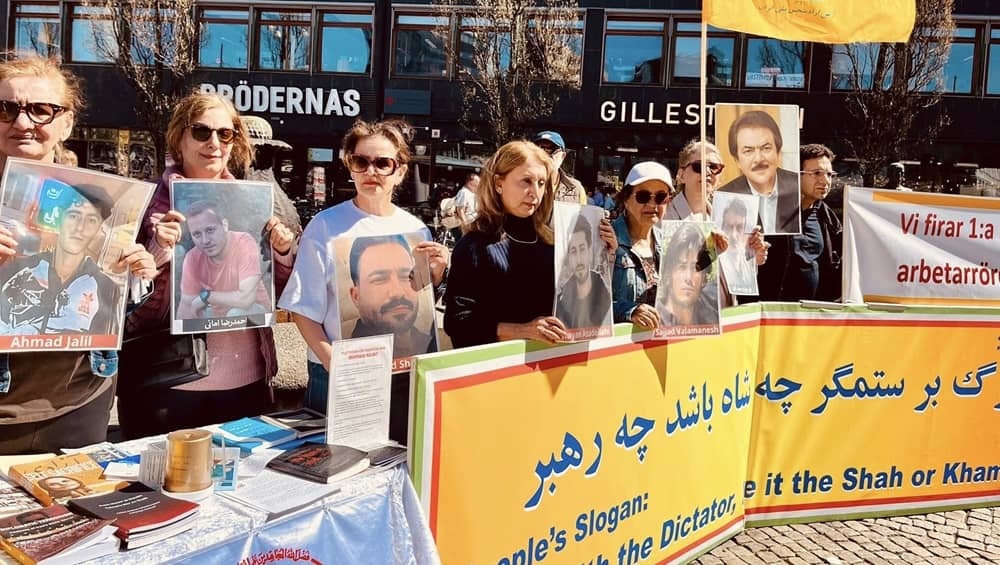
Essen, Germany – May 6, 2026: Supporters of the People’s Mojahedin Organization of Iran (PMOI/MEK) held a book stall and photo exhibition in Essen to protest the Iranian regime’s escalating executions of political prisoners and protesters. The event expressed solidarity with the nationwide “No to Execution” campaign and called for urgent international action against the mullahs’ regime. The participants also called for the immediate release of all political prisoners.

The exhibition backed the NCRI President-elect Maryam Rajavi’s “No to Executions” campaign and urged the international community to hold the Iranian regime accountable for its human rights violations.
Rally in Washington, D.C. on May 16: Thousands to Call for “No to Executions” and a Democratic Republic in Iran
Washington, D.C. — May 8, 2026: A major rally organized by the Organization of Iranian American Communities (OIAC) is set to take place on Saturday, May 16, 2026, at Upper Senate Park, drawing thousands of participants in support of a free and democratic Iran.
🔔 9-day countdown
From every walk of life, we come together as one voice for freedom, justice, and hope ✊✨
Join this moment. Stand with the Iranian people. Let’s make it heard in the heart of Washington. 🕊️@ABC7 @nbcwashington @AP_Images @GettyImages @reuterspictures @NBCNews… pic.twitter.com/EpoxBBPRi4— IAC New York (@IAC_NY) May 7, 2026
The demonstration, scheduled for 11:00 AM, will highlight a central message: “No to Executions, Yes to a Democratic Republic in Iran,” along with a clear rejection of both the dictatorship of the defunct monarchical regimes and the ruling clerical (mullah) regime. Organizers say the rally aims to condemn the Iranian regime’s increasing use of executions, particularly against political prisoners, and to call for their immediate release.