

Three-minute read
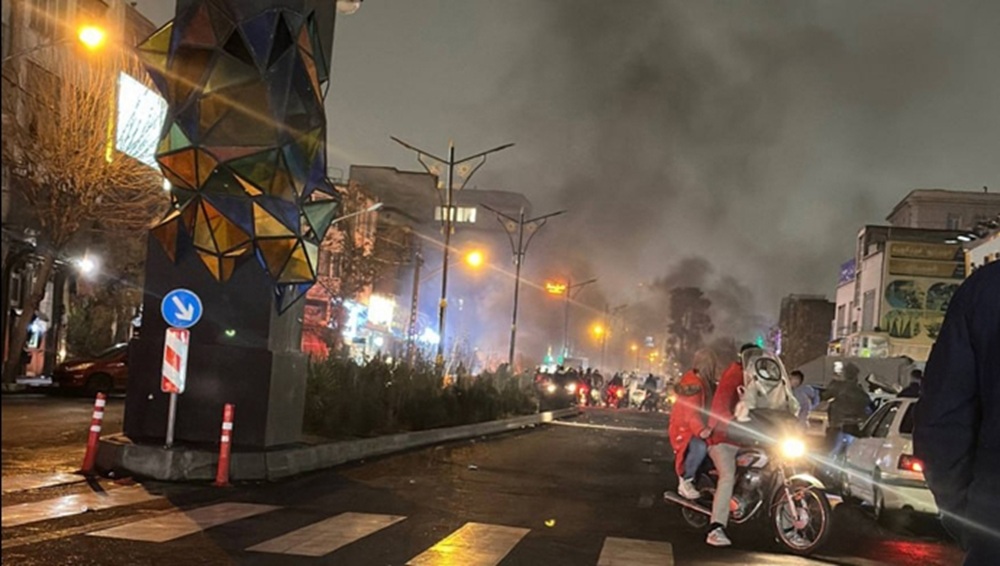
Iran’s clerical regime is confronting a dangerous convergence of economic collapse, spreading protests and internal fractures that could trigger a more radical uprising than the January 2026 unrest.
The Statistical Center of Iran reported that economic growth in 1404 (2025-2026) reached only 0.2 percent including oil, down from 3.1 percent the previous year. Without oil, GDP contracted 0.3 percent. Agriculture fell 2.9 percent, industry 1.5 percent and water-electricity supply 6.5 percent.
Private consumption dropped 1.4 percent and gross fixed capital formation 2.8 percent. Imports of goods and services collapsed 20 percent while exports fell just 2.1 percent. The final quarter already showed negative 2.2 percent growth. Liquidity expanded 47 percent and the monetary base 54 percent.
Agriculture Minister Ghulamreza Nouri Qazalthjeh confirmed 500 trillion rials allocated for bread subsidies while wheat is bought at 48,500 tomans and sold near 1,000 tomans to mills. Daily calorie intake has fallen to around 1,800 — well below minimum standards — with more than half the population affected. These official figures may even understate the crisis because the regime lacks transparency and views all data through a national-security lens.
"Stripped of ideological legitimacy and entirely unable to provide economic relief, the deeply fractured regime in Iran is hurtling toward an inevitable collision with a public devastated by systemic #poverty and state violence," @shahriarkia writes.https://t.co/ZJvMB1pVMR
— NCRI-FAC (@iran_policy) June 10, 2026
Protests Erupt Among Students, Retirees, Workers and Women
In recent days, students in Ilam, Khorramabad, Shahrekord, Urmia, Kerman, Tehran, Yazd and Shiraz have protested the postponement of final exams until after Arbaeen, warning of added stress and educational harm.
On June 21, Telecom retirees demonstrated in Kurdistan and Tehran for unpaid arrears and insurance improvements. Electricity workers in Khuzestan and medical staff in Kermanshah opposed the insufficient 20 percent wage rise. Cemetery workers at Tehran’s Behesht Zahra halted work over cut benefits, while social security pensioners in Ahvaz and Rasht chanted “Bread expensive, medicine expensive, the government has become the enemy of life” and “Death to the oppressor — the oppressor’s time is over.”
In Shush and Tehran, social security retirees protested with direct anti-regime slogans such as “The government betrays, the parliament supports,” “100 percent inflation and 10 percent wage increase,” “Leave Lebanon alone, think about us,” and “From Khuzestan to Tehran, death to the officials.” At the same time, medical university professors demonstrated in front of the Plan and Budget Organization over unpaid salaries since February.
"A nation’s collective consciousness cannot be rewritten by state decrees. When a baker sees his children starving under #economic plunder, when a student sees her classmates murdered for showing their hair, and when an entire generation sees its future auctioned away by a…
— NCRI-FAC (@iran_policy) May 25, 2026
Judicial Crackdowns and Executions Confirm the Explosive State of Society
Judiciary spokesman Asghar Jahangir announced 3,292 arrests under the Law on Intensifying Punishments for Cooperation with Hostile Governments, including 1,258 for political or media activities, with over 1,000 indictments issued and hundreds of assets targeted for confiscation. More than 50,000 pages containing around six million pieces of content were purged from foreign messengers.
In three provinces alone, over 1,800 cases were opened linked to the January 2026 protests. Mazandaran reported 700 cases and Zanjan around 1,000. UN High Commissioner Volker Türk stated that since the start of 2026 Iran has executed around 40 people on security charges, 18 of them January protesters. Human rights groups put total arrests from those protests in the tens of thousands. The post-war intensification of trials and executions after the January uprising further reveals the regime’s fear of broader unrest.
"As the terrorist regime in Iran grapples with the aftermath of the war, multiple internal pressures are mounting simultaneously. Reports from regime-aligned media and #humanrights sources reveal a toxic mix of sectarian repression, elite infighting, economic collapse, and…
— NCRI-FAC (@iran_policy) May 8, 2026
Internal Elite Rifts and War Damage Accelerate Regime Fragility
The regime continues to be plagued by intense factional feuds that have spilled into public view. These conflicts pit hardline elements, particularly those aligned with the Paydari Front, against revisionist factions. The latest flare-up occurred when lawmaker Mahmoud Nabavian used a live state television broadcast on June 20 to reveal alleged internal positions attributed to Mojtaba Khamenei regarding the direction of foreign policy. The program was abruptly cut off mid-statement, later removed from the archive, and the judiciary opened an investigation into the disclosure of classified material.
In a separate development, MP figure Mohammad Reza Bahonar stated on June 21 that the recent war had caused at least 200 billion dollars in lost economic development, including 30 billion dollars in direct physical damage to infrastructure. He also highlighted that eight consecutive years of around 40 percent inflation had increased average prices roughly tenfold and driven large sections of the middle class into poverty.
These episodes reveal a regime trapped in a state beyond repair. Decades of repression, economic mismanagement, and unresolved internal power struggles have created contradictions that the leadership can no longer contain or resolve. The clerical regime is now facing the direct consequences of its own making.