

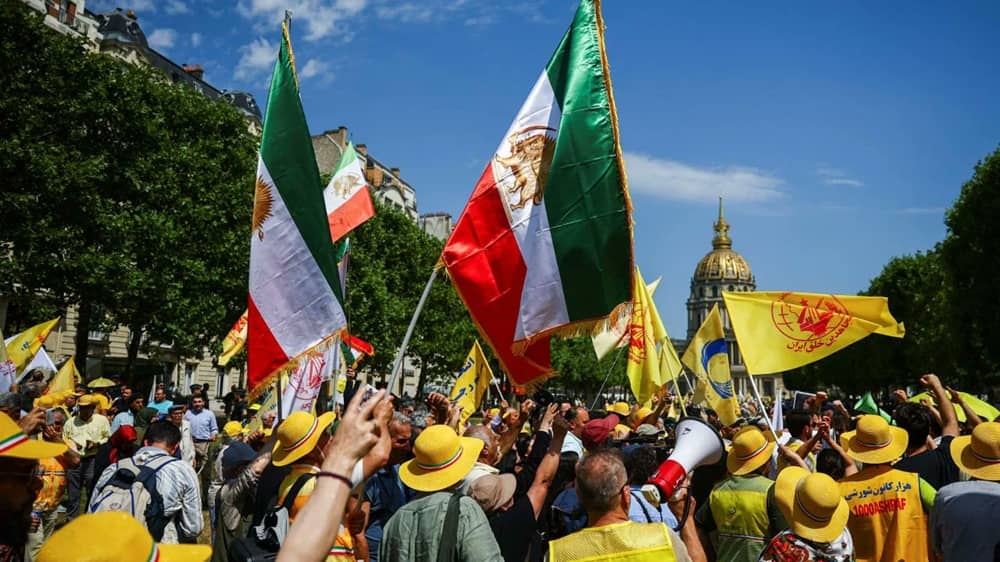
The judicial order issued on June 20, 2026, by the Administrative Tribunal of Paris (N° 2618978/9) provides a highly detailed legal and intelligence-based examination of the shifting mechanics of transnational repression. While the court ruling formally addresses the domestic legality of an administrative public order restriction, its evidentiary findings illuminate a critical geopolitical reality: the functional and tactical alignment between remnants of the deposed Pahlavi monarchy and the clerical dictatorship currently ruling Iran. The verdict documents how monarchist elements, operating under the explicit banner of the pre-1979 secret police, SAVAK, generate severe security vulnerabilities that directly advance Tehran’s primary objective—the disruption and neutralization of the organized democratic opposition.
The Intelligence Findings: SAVAK as a Violent Disruptor
According to official intelligence data integrated into the court’s final ruling, a planned demonstration in Paris organized to protest the unprecedented surge in domestic executions in Iran faced systemic, targeted obstruction. The judicial record reveals that the Iranian monarchist movement, which advocates for the restoration of the son of the last Shah of Iran, maintains an active operational presence in Europe utilizing the symbols and heritage of SAVAK. Intelligence logs cited by the judge indicate that these monarchist cadres displayed SAVAK insignias and uniforms during public assemblies in London and Regensburg, Germany, in early 2026. This behavior escalated to overt declarations by active monarchist figures, such as Mohammad Sadeghi Ahangar, who publicly urged followers to “block the path” of the democratic procession. The court’s ruling states in part:
«However, on one hand, this note reports that an attack plot was prevented at the very last minute by police forces in March 2026, targeting a banking institution in Paris, about which the National Antiterrorist Prosecution Office estimated, given its description, that it did not constitute a large-scale project, and that it appeared “capable of being linked” to the pro-Iranian splinter group Harakat Ashab al-Yamin al-Islamiya (HAYI).
On the other hand, the author of the note estimates that the demonstration, given the expected participation of people belonging to or supporting the People’s Mojahedin Organization of Iran (PMOI/MEK), is exposed to a major risk of an attack by the Iranian regime or the Iranian monarchist group, which favors the return to power of Mohammad Reza Pahlavi, son of the last Shah of Iran, and possesses an internal security service named SAVAK. This “service” is presented as active in Europe, participating in demonstrations on April 26, 2026, in London and on May 10 following in Regensburg (Germany), during which members of the processions displayed clothing and banners bearing the SAVAK symbol.
The author of the note further notes that several “reports” were collected on June 16, 2026, on the intake platform moncommissariat.fr, through which the authors inserted the SAVAK symbol into their messages and threatened “to plant a bomb if the administrative authority [granted] the holding of the demonstration on June 20, 2026.” In addition, it is specified regarding these threats that they could be the work of the Iranian monarchist opposition within the framework of its rivalry with the PMOI, and “could also originate from the Iranian regime via circumstantial proxies.” Finally, the author of the intelligence document indicates that the monarchist movement, through one of its active members, Mohammad Sadeghi Ahangar—”reputed” for “his particularly threatening public stances, notably toward law enforcement and the President of the French Republic”—invited his followers to “block the path of the procession.”»
The symbiotic utility of these factions to the current theocracy is most evident in the execution of the bomb threats that ultimately prompted the administrative prohibition. French law enforcement recorded multiple terror alerts submitted via digital portals, embedded with the SAVAK symbol, threatening explosive attacks if the pro-democracy assembly proceeded. Crucially, the intelligence assessment incorporated into the ruling explicitly highlights the blurred lines between these adversarial groups, stating that these threats: “…could be the work of the Iranian monarchist opposition, within the framework of its rivalry with the PMOI, [and] could also originate from the Iranian regime via circumstantial proxies.”
The Operational Mechanics of the “Circstantial Proxy”
This dual attribution by Western intelligence services underscores a significant strategic convergence. For the clerical establishment in Tehran, the organized democratic alternative represents an existential challenge. To restrict the opposition’s international operations without incurring direct diplomatic fallout, the regime benefits immensely from the parallel, aggressive efforts of monarchist factions.
By deploying violent rhetoric, intimidation, and terror threats under the SAVAK banner, monarchist entities generate the precise public order crises that induce Western governments to invoke public safety clauses and curtail democratic assembly. Consequently, the court’s verdict legally demonstrates how the remnants of the old autocracy serve as an effective tactical extension of the current theocratic dictatorship’s machinery of external repression. By forcing the shutdown of democratic platforms, the monarchist SAVAK network fulfills the exact strategic desires of the Ayatollahs, proving that in the global campaign to silence Iranian dissent, the crown and the turban function hand in hand.
A translated version of the court ruling follows:
Shame on France! Iranian style repression in Paris? Abominable! https://t.co/vaGZiELXBX
— Dr. David R. Boyd (@EnvirOptimist) June 23, 2026
ADMINISTRATIVE TRIBUNAL OF PARIS
N° 2618978/9 FRENCH REPUBLIC
ASSOCIATION NOUVEAUX DROITS DE L’HOMME IN THE NAME OF THE FRENCH PEOPLE
Mr. Jean-François Simonnot
Summary Judgment Judge (Juge des référés)
Hearing of June 19, 2026
Order of June 20, 2026
The summary judgment judge,
Having regard to the following procedure:
By a petition registered on June 19, 2026, the Association Nouveaux Droits de l’Homme, represented by Me Bourdon and Me Brengarth, requests the summary judgment judge:
-
To order, pursuant to the provisions of Article L. 521-2 of the Code of Administrative Justice, the suspension of the execution of the order issued by the Police Prefect on June 18, 2026, which prohibited a declared demonstration scheduled to take place in Paris on Saturday, June 20, 2026;
-
To assess against the State a sum of 3,000 euros in application of Article L. 761-1 of the Code of Administrative Justice.
The association argues that:
-
The condition of urgency is satisfied since the demonstration targeted by the contested prohibition order is scheduled to take place on June 20;
-
The contested decision inflicts a serious and manifestly illegal injury upon the freedom to demonstrate and freedom of expression, having been issued in violation of, on one hand, Articles 19 and 20 of the Universal Declaration of Human Rights and Article 21 of the International Covenant on Civil and Political Rights of December 19, 1966, and, on the other hand, Article 11 of the Declaration of the Rights of Man and of the Citizen of August 26, 1789;
-
The freedom to demonstrate constitutes a fundamental freedom under the jurisprudence of the Council of State;
-
The decision is flawed by illegality because a prohibition must always be justified by the impossibility of implementing less restrictive measures and the absolute inability to maintain public order, thereby rendering it disproportionate;
-
The decision is further illegal because it relies on public order grounds that fail to justify it, specifically the risk of clashes between activists with opposing views, a route lined with public buildings or diplomatic representations in Paris, and the elevation of the Vigipirate plan on March 24, 2024; the disruptions to public order are not materially established.
N° 2618978/9 — Page 2
By a defense brief registered on June 19, 2026, at 3:05 PM, the Police Prefect concludes that the petition should be dismissed.
Having regard to the other documents in the case file.
Having regard to:
-
The Declaration of the Rights of Man and of the Citizen of August 26, 1789;
-
The Convention for the Protection of Human Rights and Fundamental Freedoms;
-
The Internal Security Code;
-
The Code of Administrative Justice.
The President of the Tribunal designated Mr. Simonnot to rule on the summary judgment requests.
The parties were regularly notified of the date of the hearing.
During the public hearing held in the presence of Ms. Heeralall, court clerk, Mr. Simonnot read his report and heard:
-
The observations of Me Brengarth, representing the Association Nouveaux Droits de l’Homme, who reiterated the written pleadings and added:
-
That since the declaration of the demonstration, a dialogue had been initiated between the petitioning association and the general staff of the Directorate of Public Order and Traffic of the Police Prefecture, and nothing suggested up until June 18 that a prohibition decision would be taken;
-
That the public order disruptions cited in the defense pleadings are “undocumented” and that the international and national context does not constitute sufficient grounds to justify the contested prohibition;
-
Furthermore, because this prohibition was enacted on the evening of the eve of the eve of the planned demonstration, it carries significant consequences, specifically the nullification of the substantial organizational efforts of all kinds invested in the event.
-
-
The observations of Mr. Déchin, representing the Police Prefect, who deplores the wording used in the third and fourth paragraphs of page 8 of the petition and otherwise reiterates the arguments presented in the defense observations.
The investigation was closed at the conclusion of the hearing.
Considering the following:
Regarding the conclusions presented under Article L. 521-2 of the Code of Administrative Justice:
-
According to the terms of Article L. 521-2 of the Code of Administrative Justice: “When seized of a request to this effect justified by urgency, the summary judgment judge may order any measures necessary to safeguard a fundamental freedom to which a public legal entity or a private law organism tasked with managing a public service has caused, in the exercise of one of its powers, a serious and manifestly illegal injury. The summary judgment judge rules within forty-eight hours.” According to the terms of Article L. 522-1 of this code: “The summary judgment judge rules at the end of an adversarial written or oral procedure. When requested to issue the measures referred to in Articles L. 521-1 and L. 521-2, to modify them, or to terminate them, they shall inform the parties without delay of the date and time of the public hearing (…)”
N° 2618978/9 — Page 3
Regarding urgency:
2. The aforementioned provisions of Article L. 521-2 of the Code of Administrative Justice condition the summary judgment judge’s exercise of these powers upon a double requirement: first, that an administrative authority has caused a serious and manifestly illegal injury to a fundamental freedom, and second, that a particular urgency makes an intervention necessary within forty-eight hours from the time of seizure. Given their office, which consists of ensuring the safeguarding of fundamental freedoms, it is the duty of the summary judgment judge seized under Article L. 521-2 of the Code of Administrative Justice to take, in case of urgency, all measures capable of remedying the effects resulting from a serious and manifestly illegal injury caused by an administrative authority to a fundamental freedom.
-
Considering the date on which the contested order takes effect and the date of the planned demonstration, urgency is characterized.
Regarding the manifestly illegal injury to a fundamental freedom:
4. According to the terms of Article L. 211-1 of the Internal Security Code: “All processions, parades, gatherings of people, and, generally, all demonstrations on public roads are subject to the obligation of a prior declaration (…)” According to the terms of Article L. 211-4 of this code: “If the authority invested with police powers deems that the planned demonstration is of such a nature as to disrupt public order, they shall prohibit it by an order which they shall immediately notify to the signatories of the declaration at their chosen domicile (…)”
-
It follows from these provisions that respect for the freedom to demonstrate, which has the character of a fundamental freedom, must be reconciled with the maintenance of public order, and that it is the duty of the Police Prefect (in Paris, pursuant to Article L. 2512-13 of the General Code of Local Authorities), when seized of the prior declaration provided for in Article L. 211-1 of the Internal Security Code, to assess the risk of disruptions to public order and, under the review of the administrative judge, to take measures capable of preventing such disruptions, including, if necessary, prohibiting the demonstration if such a measure is the only one capable of preserving public order.
-
To prohibit the demonstration organized by the petitioning association—aimed at supporting “(…) the aspiration of the Iranian people for Peace and Freedom; and alerting public opinion to the unprecedented increase in the number of executions in Iran”—the Police Prefect relied on grounds of risks to public order “in a particularly tense national and international context,” the gathering location of the participants and their route which would lead them near several public buildings and diplomatic representations, the elevation since March 24, 2024, of the Vigipirate plan to the “attack urgency” level, and finally, through his defense brief alone, the level of mobilization of law enforcement forces.
-
However, on one hand, a constructive dialogue between the organizers and the Deputy Chief of Staff of the Directorate of Public Order and Traffic of the Police Prefecture, initiated on May 15 and continued until June 18, led to a modification of the initial route requested by the Directorate of Public Order and Traffic (DOPC), as stated adversarially during the debates. Furthermore, the elevation to the highest level of vigilance regarding terrorist risk now presents an old character, and finally, the capacity to maintain order in Paris during the numerous events of all kinds organized every year is constant. Consequently, the motives related to the route, the level of vigilance regarding attacks, and the mobilization of law enforcement forces cannot constitute grounds capable of justifying a total prohibition of a demonstration.
N° 2618978/9 — Page 4
-
The Police Prefect, through his defense brief alone—the contested order containing only stereotyped motives devoid of any specific contextualizing elements—evokes “a high risk that violence or attacks” might be committed during or on the sidelines of the demonstration, particularly against its participants. To establish this risk, he relies, via his defense observations, on an intelligence services note concerning the planned demonstration. This note reports a risk of internal violence within the demonstration between participants and individuals belonging to an opposing movement, specifically the Iranian monarchist movement. Its author reports, for the most part, only general elements relating to the situation in Iran and its repercussions in Europe caused by certain opposition groups to the current government of that State or organizations supporting that government, and public order disruptions that occurred in various European cities between 2018 and 2022 during other demonstrations organized with a similar objective to the prohibited one.
However, on one hand, this note reports that an attack plot was prevented at the very last minute by police forces in March 2026, targeting a banking institution in Paris, about which the National Antiterrorist Prosecution Office estimated, given its description, that it did not constitute a large-scale project, and that it appeared “capable of being linked” to the pro-Iranian splinter group Harakat Ashab al-Yamin al-Islamiya (HAYI).
On the other hand, the author of the note estimates that the demonstration, given the expected participation of people belonging to or supporting the People’s Mojahedin Organization of Iran (PMOI/MEK), is exposed to a major risk of an attack by the Iranian regime or the Iranian monarchist group, which favors the return to power of Mohammad Reza Pahlavi, son of the last Shah of Iran, and possesses an internal security service named SAVAK. This “service” is presented as active in Europe, participating in demonstrations on April 26, 2026, in London and on May 10 following in Regensburg (Germany), during which members of the processions displayed clothing and banners bearing the SAVAK symbol.
The author of the note further notes that several “reports” were collected on June 16, 2026, on the intake platform moncommissariat.fr, through which the authors inserted the SAVAK symbol into their messages and threatened “to plant a bomb if the administrative authority [granted] the holding of the demonstration on June 20, 2026.” In addition, it is specified regarding these threats that they could be the work of the Iranian monarchist opposition within the framework of its rivalry with the PMOI, and “could also originate from the Iranian regime via circumstantial proxies.” Finally, the author of the intelligence document indicates that the monarchist movement, through one of its active members, Mohammad Sadeghi Ahangar—“reputed” for “his particularly threatening public stances, notably toward law enforcement and the President of the French Republic”—invited his followers to “block the path of the procession.”
-
All of the elements relating to the threats directly targeting the planned demonstration, under the specific circumstances of the case, are of such a nature as to characterize a risk of serious disruption to public order. Under these conditions, the Police Prefect cannot be regarded as having caused a manifestly illegal injury to the fundamental freedom of collective expression of ideas and opinions and the freedom to demonstrate.
-
It follows from the foregoing that the petition of the Association Nouveaux Droits de l’Homme must be rejected.
N° 2618978/9 — Page 5
ORDERS:
Article 1: The petition of the Association Nouveaux Droits de l’Homme is rejected.
Article 2: This order will be notified to the Association Nouveaux Droits de l’Homme and to the Minister of the Interior. Copies will be sent to the Police Prefect.
Done in Paris, June 20, 2026.
The summary judgment judge,
Signed
J.-F. SIMONNOT
The Republic commands and orders the Police Prefect, as far as he is concerned, or any justice commissioners required regarding common law routes against private parties, to ensure the execution of this decision.