

THIS PAGE WILL BE UPDATED WITH THE LATEST NEWS
UPDATE: 4:00 PM CEST
UK Police Charge Man Over Iran-Linked Spying Offences
LONDON, July 17 (Reuters) – British police said on Friday they had charged a 39-year-old man on suspicion of assisting Iran’s intelligence service, the latest in a series of incidents involving Tehran and offences covered under UK National Security laws.
Police said the suspect, Vahid Aberi, from Liverpool, northern England, was taken to a police station in central England and searches had been carried out at addresses in nearby Birmingham and Liverpool.
UK security officials have repeatedly warned that Iran has sought to use criminal proxies to carry out hostile activity in the country. Since the beginning of the U.S.-Iran war there have been a number of antisemitic attacks in Britain linked to Iran.
Seeking to use new powers designed to stop the use of state-sponsored proxies, Britain banned support for Iran’s Islamic Revolutionary Guard Corps earlier this week.
UPDATE: 7:00 AM CEST
Message to the Gathering of Free Iranians in Italy: No to Executions, Yes to a Democratic Republic
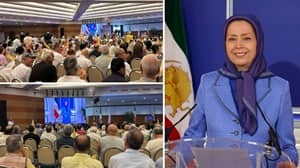
Mrs. Maryam Rajavi’s speech: “Fellow compatriots and supporters of the Iranian Resistance, I salute you, who know no weariness in the struggle for the freedom of Iran. I salute you, who have risen with all your might to defend the Iranian people’s national demarcation against the dictatorships of both the Mullahs and the Shah, and all manifestations of tyranny and dependency. On June 20th of this year, Massoud (Rajavi) addressed each of you in a message, stating: “Proving the viability of the independent and democratic alternative rests upon the shoulders of Iran’s brave sons and daughters. Blessed are your resolute wills, which through relentless struggle have raised the banner of the provisional government announced by the National Council of Resistance.
“Today, the remnants of the regime live in a nightmare of impending uprisings. They tremble at the consequences of the mass slaughter during the January uprising—and indeed, of the 48 years of suppression, massacre, and the simmering rage of a deeply dissatisfied society. For this legacy has awakened and driven the young generation to confront the regime.”
Treasury Targets Global Network Procuring Weapons for Iranian Regime.
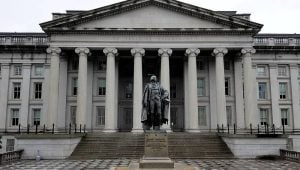
WASHINGTON—Today, following Iran’s attacks on commercial vessels in the Strait of Hormuz, the U.S. Department of the Treasury’s Office of Foreign Assets Control (OFAC) sanctioned seven individuals and entities involved in an international network supporting weapons procurement efforts on behalf of the Islamic Revolutionary Guard Corps (IRGC). The actors designated today exemplify Iran’s use of foreign aviation and transport firms, financial conduits, and travel coordinators to obscure the IRGC’s role in illicit procurement and to move material and personnel globally. OFAC will continue to disrupt the overseas procurement and financial networks that sustain Iran’s weapons production and proliferation efforts, which threaten Americans and U.S. partners and allies worldwide.
“President Trump has been clear that Iran must denuclearize,” said Secretary of the Treasury Scott Bessent. “Treasury will continue to target and disrupt the illicit procurement networks that fund Iran’s weapons programs and war machine.”
Address to the Human Rights Commission of the Italian Senate
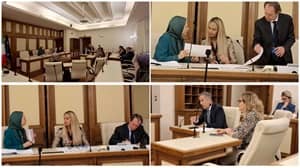
Mrs. Maryam Rajavi’s speech: “I am deeply grateful for your steadfast attention to the human rights crisis in Iran. When I stood before this very commission last July, I detailed the staggering scale of repression and the systematic dismantling of liberties by Iran’s ruling religious dictatorship.
“Tragically, over the past year, the regime’s brutal assault on the fundamental rights of the Iranian people has only intensified. Since my last address, approximately 2,400 individuals have been executed. Exploiting the fog of war and regional conflict in recent months, the regime has launched a sweeping campaign of mass arrests against dissidents and aggressively escalated its political executions.
“Dozens of political prisoners, including ten members of the People’s Mojahedin Organization of Iran (PMOI/MEK) alongside numerous other young activists, have been hanged simply for participating in the January uprising. In a cruel display of ongoing torment, the regime refuses to return the bodies of these executed dissidents to their families, leaving their loved ones entirely in the dark regarding their final resting places.”
Italian Parliament: The Iranian Crisis and a Democratic Solution for the Future
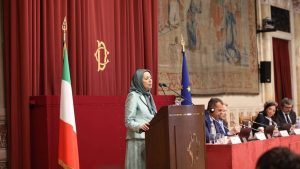
Mrs. Maryam Rajavi’s speech: “It is a great pleasure to meet with you here in the home of Italian democracy. On behalf of the people of Iran and the Iranian Resistance, I would like to begin by expressing my gratitude for the support of the majority of the members of both houses of the Italian Parliament. In their declaration, they have emphasized a realistic, democratic, and popular solution to the crisis in Iran.
“I stand before you today, on behalf of the Iranian people’s organized resistance for peace and freedom, to urge Italy and the European Union to stand in solidarity with the people of Iran. Last August, in this very parliament, I made it clear: ‘Khamenei seeks to delay the inevitable overthrow of his regime at the cost of destroying the nation.’
“In the months that followed, in a desperate bid to preserve his regime, he chose the path of national destruction, beginning with the ruthless slaughter of thousands of young people during the January uprising, and subsequently, by opening the country’s doors to war.”
Iran’s Regime Hangs Two More Political Prisoners in Continuation of Brutal Wave of Executions

On July 15, 2026, the executioners of the Iranian regime hanged two individuals arrested during the nationwide uprisings of 2022 and 2026. Aref Khoshkar, a 28-year-old arrested on November 11, 2022, during protests in Tehran’s Fallah neighborhood, was executed in Ghezel Hesar Prison in Karaj after enduring brutal torture.
Simultaneously, Mohammad Amini Dehaghani, detained during the January 2026 uprising, was hanged in Isfahan Prison. While the regime attempts to project an image of absolute control through these executions, the reality is starkly different. These state-sanctioned murders are the desperate acts of a terminal dictatorship, highlighting the urgent responsibility of the international community to hold the regime accountable and take immediate action to save the lives of remaining political prisoners.
The judiciary’s proceedings against these protesters reveal a complete disregard for due process. Khoshkar was sentenced to death on fabricated charges of killing a Basij militia member who had actively participated in the violent crackdown on demonstrators.
Iran: Women Political Prisoners Face Intensifying Crackdown

As pressure on women political prisoners and detainees from the nationwide protests continues, new reports point to an escalation in the denial of medical treatment, the issuance of prison sentences, and the continued arrest of women across Iran. The reports indicate the ongoing use of security and judicial measures against women political prisoners.
Shadi Shadman (Khajijeh), a detained female head of household and mother of a 9-year-old child, has been sentenced to five years in prison by the judiciary of the mullahs’ regime. Ms. Shadman was arrested during the uprising in early January and was transferred to the women’s ward of Evin Prison on January 29.
Leila Afarin, a political prisoner held in Evin Prison, continues to be denied access to specialized medical treatment despite suffering from a malignant brain tumor and joint disorders.
Qarchak Prison: A Former Detainee Describes Hunger and Humiliation
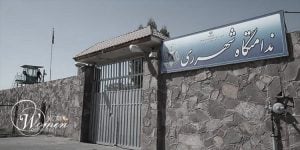
A woman detained during January 2026 nationwide protests, who spent approximately 40 days in Ward 11 of Qarchak Prison in Varamin, has provided a detailed account of the conditions faced by women held there.
According to her testimony, hundreds of women are confined in a limited space with inadequate basic facilities, while access to safe drinking water, showers, toilets, adequate food, hygiene supplies, and medical care is either severely restricted or dependent on prisoners’ financial means.
She also described repeated transfers between Wards 8 and 11 and the solitary confinement cells in Ward 6, restrictions on purchasing essential items from the prison store, sleeping on a cold floor, and humiliating treatment during body searches.
From Exposure to Designation: How Years of Documenting the IRGC’s Terror Network Shaped International Action
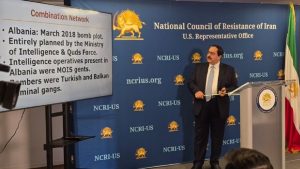
The United Kingdom’s recent decision to designate the Islamic Revolutionary Guard Corps (IRGC) as a terrorist organization marks another milestone in a years-long international reassessment of the regime’s principal instrument of repression and terrorism. While the designation reflects the UK’s own legal and national security assessment, it also follows decades of accumulating evidence documenting the IRGC’s role in financing terrorism, suppressing dissent, and destabilizing the Middle East.
Among the earliest and most comprehensive efforts to expose the IRGC’s economic and security apparatus came from the National Council of Resistance of Iran (NCRI) and the People’s Mojahedin Organization of Iran. Their investigations, public briefings, and detailed reports helped place the Guards’ financial empire under international scrutiny long before many governments adopted tougher policies toward the organization.
One of the most significant milestones in that effort came in March 2017 with the publication of the book “The Rise of Iran’s Revolutionary Guards’ Financial Empire: How the Supreme Leader and the IRGC Rob the People to Fund International Terror.”
Iran’s Democratic Future Depends on Organized Change, Not Manufactured Alternatives
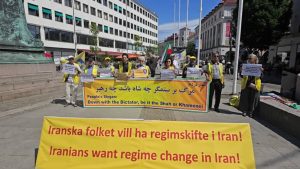
The political landscape surrounding the Iran regime is entering a period of increasing uncertainty. As a reported 60-day diplomatic window approaches its conclusion, multiple pressures are converging simultaneously: expanding domestic unrest, intensifying factional rivalries, growing international scrutiny, and continued diplomatic isolation. Together, these developments are reinforcing the perception that the regime faces one of its most significant challenges in decades. While the precise course of future events remains uncertain, one trend is becoming increasingly apparent: discussion has shifted from whether change is possible to what form that change should take. The Iran regime is confronting challenges from several directions at once.
Inside the country, persistent labor protests, economic demonstrations, and acts of resistance continue despite heightened repression. Meanwhile, political divisions within the ruling establishment have become increasingly visible following the absence of Ali Khamenei, with competing factions openly challenging one another for influence.
Protests Spread Across Iran as Workers Reject the Regime’s War Narrative

As the Iran regime seeks to drown out domestic dissent by beating the drums of war, a growing wave of social protests is demonstrating that many Iranians are refusing to be intimidated. Instead of retreating in the face of official rhetoric, workers, public employees, truck drivers, and other citizens are once again taking to the streets to voice grievances over worsening living conditions and decades of economic mismanagement.
The resurgence of demonstrations suggests that the regime’s strategy of using external tensions to divert attention from internal crises is losing slowly its effectiveness. Across multiple provinces, protesters are increasingly linking their economic demands with broader political criticism, signaling a growing rejection of the regime’s priorities.
On July 15, protesting workers at the Chooka paper factory in Gilan Province gathered after their longstanding demands remained unanswered. The demonstration escalated when workers reportedly forced the factory’s chief executive to leave the premises, highlighting growing frustration over unresolved labor grievances.
Power Struggles Eclipse Governance as Iran Regime Factions Battle for Control
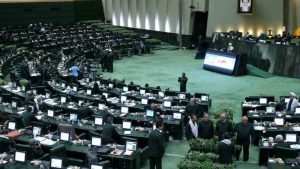
The absence of Ali Khamenei has not ushered in a period of stability for the Iran regime. Instead, it has intensified a struggle for dominance among competing factions, with political energy increasingly devoted to internal confrontation rather than governance. Recent developments suggest that the regime’s immediate priority is no longer addressing the country’s mounting crises, but securing power by eliminating rival factions from within. Some may question why these internal disputes deserve close attention when much of Iranian society has already rejected the ruling system as a whole. The answer lies in the direct relationship between the regime’s internal dynamics and the broader political, economic, and social realities facing the country. Even if the overwhelming majority of Iranians no longer identify with any faction of the ruling establishment, the outcome of these power struggles will inevitably shape the conditions under which the public continues its demand for change.
Authoritarian systems often become most vulnerable when internal contradictions intensify. As political cohesion deteriorates, governing institutions increasingly turn inward, devoting their resources to factional competition instead of addressing public needs.
Rising Youth Unemployment in Iran

The Iranian regime claims in its official reports that the unemployment rate has declined, but the reality of the labor market paints a different picture. Today, the issue is no longer limited to unemployment itself; a phenomenon known as “hidden unemployment” or “labor force withdrawal” has become one of the country’s most serious economic crises. Millions of people, particularly young people and educated women, are no longer even searching for work, making the official unemployment rate appear lower than the actual situation.
According to the definition used by the Statistical Center of Iran, the Iranian regime’s official statistics agency, only individuals who were without a job during the reference week and were actively seeking employment are classified as unemployed. As a result, those who have stopped looking for work because they have lost hope of finding a job are no longer counted as unemployed and are excluded from the economically active population. Therefore, a decline in the official unemployment rate does not necessarily indicate the creation of new jobs and, in many cases, is the result of a declining labor force participation rate.
The Quest for a Democratic Republic Through the Lens of Iran’s Organized Resistance
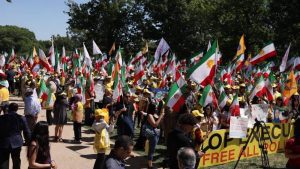
Iran’s current crisis goes beyond temporary governance failures and is rooted in a closed political structure that has deprived society of the right to choose. Under these circumstances, overcoming the crisis is not possible through replacing a few officials or returning to a hereditary monarchy. Rather, the fundamental question is which force can channel the people’s protest potential into a lasting democratic transition.
Today, Iranian society is burdened by severe economic pressures, systemic corruption, environmental crises, and the suppression of civil liberties. Despite the widening gap between the people and the ruling establishment, relying solely on spontaneous protests cannot guarantee the fall of an authoritarian government, as a centralized repressive apparatus is capable of exhausting and containing movements that lack continuity and organization.
To fill this gap, the existence of an organized resistance is essential. The “Resistance Units” affiliated with the People’s Mojahedin Organization of Iran (PMOI/MEK) play a key role in connecting scattered civil and labor protests—including those of workers, teachers, women, and students—and transforming them into a nationwide, sustained, and purposeful movement under the harshest conditions of repression.
“Honorable Peace” Turns Iran’s Internal Power Struggle into an Open Confrontation
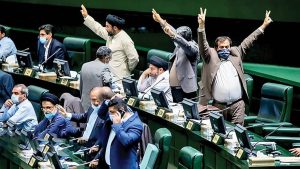
Mohammad Khatami’s unequivocal defense of “honorable peace,” and the simultaneous, intense attacks against him by hardline media, showed that Tehran is facing a crisis extending beyond diplomatic deadlock. The public confrontation immediately drew the state broadcaster, parliament and the legitimacy of Masoud Pezeshkian’s government into a grinding internal conflict. The main battlefield over diplomacy is now not in Washington but at the heart of Iran’s governing institutions, where supporters call opponents of negotiations “sanctions profiteers,” while hardliners portray any green light to the West as a “recipe for surrender.”
Khatami, who remains a supporter of the Islamic Republic’s principle of Velayat-e Faqih (Guardianship of the Islamic Jurist), described Iran as “anxious but still standing proud” and called for preserving the path towards an agreement, supporting negotiations and working to end the conflict.
MEK Supporters in Paris Denounce Executions, Support a Democratic Republic in Iran
Paris, France – July 15, 2026 – Supporters of the People’s Mojahedin Organization of Iran (PMOI/MEK) organized a book table and photo exhibition to denounce the execution of political prisoners linked to the group, along with protesters arrested during the January 2026 uprising. The event highlighted the Iranian people’s call for a democratic republic under the leadership of the Iranian Resistance as a path toward peace, freedom, and justice.

Organizers called on the French public and the international community to recognize the suffering of the Iranian people and their unwavering rejection of all forms of dictatorship, whether monarchical or theocratic. Through powerful images and personal testimonies, the exhibition highlighted the courage and sacrifices of participants in the January 2026 uprising while condemning the regime’s ongoing human rights violations, including the execution of political prisoners.
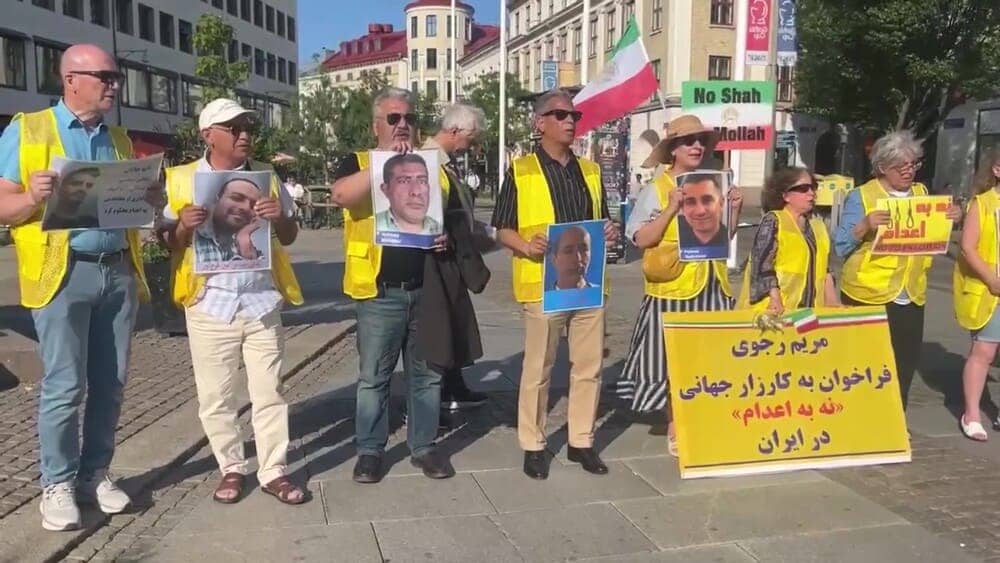
Gothenburg: Rally in Solidarity with the 129th Week of “No to Execution Tuesdays” in 58 Iranian Prisons
Gothenburg, Sweden — July 14, 2026: Supporters of the People’s Mojahedin Organization of Iran (PMOI/MEK) held a rally in solidarity with the 129th consecutive week of the “No to Execution Tuesdays” campaign, a movement protesting the Iranian regime’s escalating executions and systemic repression. Protesters condemned the recent execution of political prisoners and demonstrators arrested during the January 2026 uprising.

Participants also highlighted the regime’s intensifying crackdown, the rising number of executions, and broader repressive measures, including nationwide internet shutdowns. They chanted slogans such as “Down with the executioner regime” and called for the immediate release of all political prisoners.