

THIS PAGE WILL BE UPDATED WITH THE LATEST NEWS
UPDATE: 08:30 AM CEST
Echoes Of 1988: How Iran’s Resistance Units Keep the Spirit Of 30,000 Martyrs Alive
In commemoration of the 38th anniversary of the summer 1988 massacre, where over 30,000 political prisoners were executed by the ruling regime, Iran’s rebellious youth and PMOI Resistance Units launched a bold nationwide campaign. Comprising 30 revolutionary acts, these activities send a clear message to the regime: the fight for freedom in Iran is more alive than ever, and the movement seeking justice for the martyrs will not rest until the system responsible for these atrocities is overthrown. Through coordinated photocalls, graffiti, and the distribution of posters, the Resistance Units emphasized the continuation of the justice movement across the nation.
The commemorative campaign spanned multiple major cities across Iran, demonstrating the vast reach and undeniable courage of the Resistance Units in Tehran, Kerman, Tabriz, Sonqor, Mashhad, and Kermanshah.
In Tehran, activists reclaimed public spaces by plastering walls, columns, doors, and cars with photos of the 1988 martyrs, including Ashraf Ahmadi, Monireh Rajavi, Majid Khademi, Seyed Hamid Khezri, Massoud Dalvand, and Farahnaz Ahmadi. By prominently displaying these faces, the youth ensured the regime cannot erase them from the public memory.
The youth also bravely held photocalls with messages of defiance, declaring, “We are stronger than death, execution, and massacre,” and asserting that “fire” is the only thing the regime of massacre and execution deserves.
The Gender Gap in Iran and Decision-Making Positions Without Female Representation
Gender Gap in Iran: As discussed in earlier sections of this article, Iranian women, under a religious dictatorship, are deprived of even the minimum rights required for a dignified and just life. The deep gender gap is itself a consequence of this very policy.
The structure of power and the labor market in Iran is patriarchal. Employment policies are based on the assumption that men are the breadwinners, while women are expected to take care of household duties and childrearing. Hiring quotas, banking facilities, and even welfare policies are designed in a way that prioritizes men and pushes women to the margins. Labor and family laws effectively do not support women’s economic independence, and women’s employment is contingent upon their husband’s permission.
Reports published in the media and by international bodies such as the World Bank and the World Economic Forum are based on official government data. Since the clerical regime lacks transparency in publishing statistics and manipulates data to serve its political interests, these reports cannot fully reflect the reality in Iran. Nevertheless, even these assessments point to a massive gender gap in the country.
Iran’s Mullahs and The Crown Share the Same Existential Threat — And It’s Not Israel

Since the United States and Israel launched their Feb. 28 attacks, thousands have reportedly been killed, shipping routes have come under assault, and the Strait of Hormuz has become an instrument of coercion. Yet missiles, blockades, and negotiations cannot answer the central political question: Who can lead Iran beyond the Islamic Republic? That answer will determine whether the country moves toward popular sovereignty or is trapped between competing forms of authoritarian rule.
For the Iranian regime, that question is more dangerous than any military strike. The regime can absorb physical losses, rebuild command structures, and tighten repression. What it cannot easily survive is international recognition that an organized democratic alternative exists. Its next offensive will therefore be fought through television studios, think tanks, diplomatic circles, social media, and the ecosystem of influence it has cultivated abroad.
This playbook is already visible. In January, the European Union sanctioned Iranian regime entities for censorship, online trolling, surveillance, and disinformation. Hamburg’s 2025 intelligence report is even more direct: it identifies the Mojahedin-e-Khalq Organization and its political coalition, the National Council of Resistance of Iran, as the primary focus of the regime’s Ministry of Intelligence in Western countries. The regime does not spend such resources randomly. It targets organizations it considers capable of threatening its survival.
Iran’s Poverty Crisis Deepens as Food Inflation Devours Household Incomes
Iran’s economic crisis is rapidly turning into a broader social catastrophe. As food prices soar, wages lose purchasing power, and the cost of basic necessities rises beyond the reach of millions, poverty is no longer confined to the unemployed or traditionally vulnerable sections of society. Increasingly, workers, retirees, and families that once considered themselves part of Iran’s middle class are being pushed toward economic insecurity. The scale of the deterioration is reflected in figures published by Iran’s own state and semi-official media. According to a recent assessment attributed to Iran’s Parliamentary Research Center and reported by Ettelaat, Iran’s poverty rate could rise from 41% in 1405 (2026) to 45.5% by 1407 (2028) if current economic trends continue.
That would mean that almost half of the country’s population could fall below the relevant poverty threshold within two years. The projection is particularly alarming because it comes amid an already severe deterioration in household purchasing power.
Iran Regime Cleric Warns of an Internal Threat to the Principle of Velayat-e Faqih
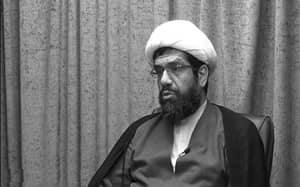
The most revealing threats to the Iranian regime are not always articulated by its opponents. Sometimes, they are voiced by those defending the system from within.
A recent interview with cleric Mehdi Abutalebi, a faculty member of the Khomeini Institute, offers an unusually candid glimpse into the regime’s internal anxieties. His concern is not merely factional rivalry, disagreements over negotiations, or disputes between government institutions. It is far more fundamental: the gradual erosion of the principle of Velayat-e Faqih, the cornerstone of the regime’s political structure.
Abutalebi openly warns that political currents inside the regime are attempting to exploit the current absence of the Supreme Leader to weaken his authority.
His warning is striking: “There are currents that want to use this situation to move toward a non-Velayat-e Faqih outlook.”
He then describes what he believes would be the first stage of such a transformation:
Oil Pollution Reaches the Shores of Persian Gulf

Oil pollution on the southern shores of Qeshm Island, which has also reached the island’s mangrove forests, has heightened concerns about environmental consequences on both sides of the Strait of Hormuz, as an oil leak from a stranded tanker has also reached the coast of Oman.
Officials from the Iranian regime have not yet officially announced the source of the Qeshm pollution, but Foreign Ministry spokesperson Esmaeil Baghaei says preliminary evidence indicates it originated from “a foreign bulk carrier.”
Esmaeil Baghaei, the Iranian regime’s Foreign Ministry spokesperson, said on the evening of Wednesday, August 12, that pollution had been detected at three coastal locations and across parts of the sea surface, and that it had drifted from the Persian Gulf toward the shore.
Without naming the vessel, he said preliminary evidence suggests the pollution came from “a foreign bulk carrier” and added that all parties benefiting from commercial shipping through the Strait of Hormuz are “responsible for compensating for the environmental damage inflicted on the Persian Gulf and the Gulf of Oman.”
CENTCOM: 59 Vessels Linked to Iran Redirected

The U.S. Central Command (CENTCOM) says that as of Wednesday, August 12, U.S. forces had redirected 59 commercial vessels linked to the Iranian regime, disabled three vessels, and boarded two ships to inspect them and ensure full compliance with the blockade.
Following the resumption of attacks on ships in the Strait of Hormuz by the Islamic Revolutionary Guard Corps (IRGC), the United States resumed its naval blockade against the Iranian regime on July 14.
According to tanker-tracking companies, Iran’s oil exports have come to a complete halt since the naval blockade began.
President Donald Trump said in a Wednesday post on Truth Social that the U.S. naval blockade of the Iranian regime is a “steel wall” and that the regime cannot do anything to counter it.
He stressed that the United States has full control of the Strait of Hormuz and will likely maintain it.
In response to Donald Trump’s message, the Persian Gulf Waterway Management Authority—operating under the supervision of the IRGC—claimed that the Strait of Hormuz remains closed and will not reopen until the Iranian regime’s conditions are accepted.
Executive Deputy of Iranian Regime Army Commander: More than 75% of Our Missile Capability Remains Intact
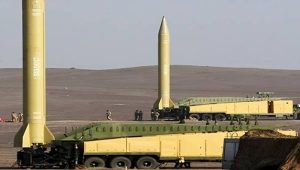
Alireza Sheikh, executive deputy of the Iranian regime’s army commander, claimed that “more than 75% remains intact and is ready for use.” Without providing details or evidence to support this claim, he added that reports from foreign intelligence agencies had also confirmed that more than three-quarters of Iran’s missile and drone capabilities remain intact.
In an interview with the state-run website Jamaran, the senior official claimed: “There has not been a moment’s pause in rebuilding power within the armed forces. Even under the current conditions, the regeneration of our defense capabilities, drones, and missiles has not stopped for a single moment.”
According to him, the Iranian regime has “changed the playing field and shifted it to other elements of national power, rendering the enemy’s defensive capabilities ineffective.”
In recent weeks, reports have emerged about the Iranian regime’s efforts to rebuild its military infrastructure. Among them, The Wall Street Journal reported in late January, citing satellite imagery, that the Iranian regime had rebuilt parts of missile bases, ports, and production facilities damaged in U.S. and Israeli attacks more quickly than expected.
Iran’s Misery Index Crosses 100 in Over 60% of Provinces as Regional Economic Divide Widens

Official data reveals a deepening divide across the country as 19 of 31 provinces enter triple-digit distress, leaving oil-producing hubs and border areas disproportionately hit compared to the capital.
In July 2026, the gap in living conditions between the border province of Ilam and Tehran expanded into a 37.1-point chasm on the Misery Index—the economic metric combining point-to-point inflation with unemployment. According to calculations based on Statistical Center of Iran data, Ilam topped the national rankings with a score of 120.6, driven by a 112.4% inflation rate, while Tehran recorded the lowest score at 83.5. This stark divergence highlights a growing reality across Iran: a household’s geographical location now dictates how severely price hikes erode purchasing power and how limited job prospects are to offset the damage.
What is the Misery Index?
Created by economist Arthur Okun, the Misery Index is a straightforward measure of an economy’s immediate human toll. It is calculated by adding a country’s (or region’s) annual inflation rate to its unemployment rate. A higher score reflects greater economic distress for everyday households, as soaring living costs compound the difficulty of finding work.
Copenhagen Rally and Photo Exhibition Commemorate Iran’s 1988 Massacre
Copenhagen, Denmark – August 12, 2026 – Supporters of the People’s Mojahedin Organization of Iran (PMOI/MEK) held a rally and photo exhibition in Copenhagen to commemorate the anniversary of the 1988 massacre of political prisoners in Iran.

The event called for justice for those killed during the 1988 massacre and for all victims who have lost their lives in the Iranian people’s struggle for freedom. Participants also stressed the importance of preserving the memory of those who sacrificed their lives in pursuit of freedom and human rights.
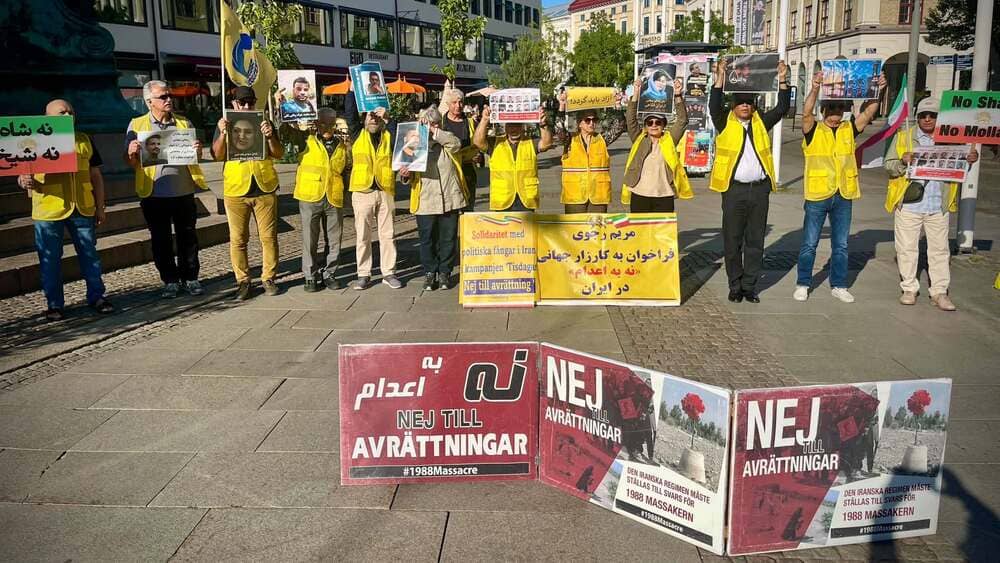
Gothenburg Rally Backing the 133rd Week of “No to Execution Tuesdays” Across 59 Iranian Prisons
Gothenburg, Sweden — August 11, 2026: Supporters of the People’s Mojahedin Organization of Iran (PMOI/MEK) held a rally in solidarity with the 133rd consecutive week of the “No to Execution Tuesdays” campaign, a movement protesting the Iranian regime’s escalating executions and systematic repression.

Participants also highlighted the regime’s intensifying crackdown, the rising number of executions, and broader repressive measures. They chanted slogans such as “Down with the executioner regime” and called for the immediate release of all political prisoners.
Freedom-loving Iranians in Gothenburg expressed support for Mrs. Maryam Rajavi, President-elect of the National Council of Resistance of Iran (NCRI), and her call to expand the “No to Executions” campaign globally.