

Three-minute read
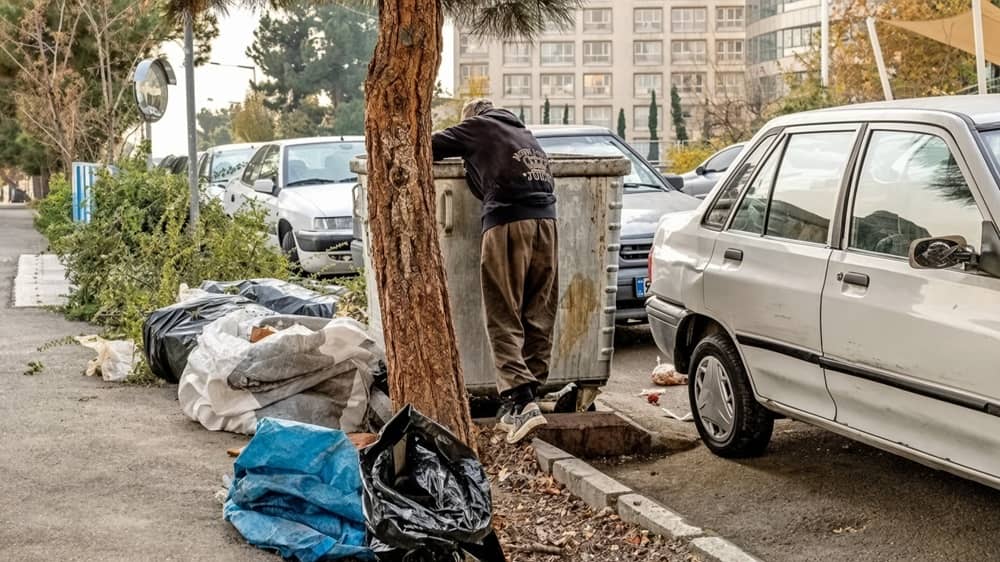
Iran’s clerical establishment is confronting a crisis of governing capacity, not simply another bad economic cycle. Inflation, shrinking purchasing power, disrupted energy provision and deteriorating public finances are converging at the point where citizens meet the state: the supermarket, the gasoline station and the pay packet. The political danger lies in this convergence. Each problem is familiar; together they make daily life a running referendum on competence.
The warning is coming from inside the system. On 13 August 2026, state-aligned economist Farshad Momeni, discussing official Statistics Center data, said that three-digit inflation had appeared in some income groups and deprived areas. He described high inflation as “fiercely anti-poor and powerfully strengthening to mafias and oligarchs,” adding: “When inflation and unemployment come together, it means we have entered the abyss of misery.” Such language does not prove an imminent breakdown, but it shows how far official debate has moved from routine reassurance.
The fiscal picture explains the absence of an easy remedy. Tasnim, the state-affiliated news agency, reported on 14 August that the National Development Fund was owed more than $110 billion by the government and more than $17 billion by the National Iranian Oil Company. Its investment deputy said the proposed oil-field investment scheme intended to recover those claims had still not been implemented. A state that owes its sovereign fund $127 billion has little room to subsidize distress indefinitely yet withdrawing subsidies risks intensifying it.
Why #Iran Is Running Out of Water, Power — and Patiencehttps://t.co/9ZghlJCNpO
— NCRI-FAC (@iran_policy) August 13, 2025
The gasoline trap
Gasoline has turned that contradiction into a visible political test. The supplied reports record long queues and rationing complaints across several provinces, while a senior energy official acknowledged an aborted plan in Kerman. In a state-television interview on 13 August, Esmail Soghab Esfahani said the president had instructed officials to “refrain from any action that takes people by surprise.” That is not the language of a government confident that it can impose a necessary price reform.
The figures behind the hesitation are stark. In the same interview, Soghab Esfahani said gasoline consumption had reached roughly 135 million liters a day, against refinery output of around 112 million; the gap was being covered through petrochemical capacity, imports or strategic reserves. Tehran therefore faces an unattractive choice: maintain a costly and increasingly fragile fuel system, or make consumers pay more at a moment when inflation has already become politically incendiary.
The near-term focus is neither decisive reform nor normal governance, but a state of hyper-vigilance driven by the ruling elite’s acute fear of a popular uprising. The current mood inside the system is one of deep anxiety, with officials openly warning of an inevitable social explosion and straining every lever to preempt it. Rather than projecting authority, the regime is engaged in aggressive damage control—combining psychological management, verbal reassurance, and localized security deployment with selective rationing and blame-shifting to keep anger from spilling into the streets. While the state continues to rely on coercive apparatuses to keep a lid on public discontent, these security measures cannot repair the shattered social bargain that cheap energy once represented. Every delay in structural adjustment reflects a leadership consumed by preemption, ensuring that the inevitable breaking point will arrive with far greater force.
"You can terrorize an opinion. You cannot terrorize an appetite. You can shoot a demonstrator, and the regime has shot thousands. You cannot shoot #hunger, and hunger does not get tired, does not go home at night, and does not negotiate," writes @MansoreGolestan.…
— NCRI-FAC (@iran_policy) August 13, 2026
From hardship to legitimacy
This is why the next phase may be more politically damaging than a single protest wave. Economic grievance is becoming cumulative and geographically diffuse: a worker facing prices, a driver facing fuel queues, a household facing rent and an official facing unpaid state obligations all experience different aspects of the same institutional failure. The system’s vulnerability is not that every grievance will automatically become an uprising; it is that it has no trusted mechanisms for absorbing them.
The clerical regime’s central challenge is therefore legitimacy under scarcity. The fuel freeze may buy temporary calm, but it also advertises fear of the public reaction. If inflation, energy shortages and fiscal arrears persist, internal factionalism is likely to sharpen, while citizens will judge the state less by ideology or external threats than by whether it can provide basic economic security. In that sense, Iran’s crisis is developing not as one dramatic rupture, but as a slow erosion of authority—made more dangerous each time the state postpones the price of governing.