

THIS PAGE WILL BE UPDATED WITH THE LATEST NEWS
UPDATE: 7:30 AM CEST
A Powder Keg of Poverty: Why Iran’s Regime Is Terrified of The Next Social Eruption

Despite the Iranian regime’s continuous attempts to project an image of domestic stability, data published by its own state-run media reveals a catastrophic collapse in the living standards of the Iranian people. The vast majority of the country’s population has been pushed into absolute poverty, struggling to secure the most basic necessities of life.
According to official statistics from the end of July, the minimum cost of living—referred to as the “livelihood basket”—for an average family of 3.3 people has reached a staggering 900 million rials per month. Consequently, seven income deciles, equating to more than 70 percent of the population or roughly 63 million Iranians, have officially fallen below the poverty line. These millions are entirely unable to afford basic nutritional staples, including protein and dairy.
The driving force behind this destitution is an out-of-control inflation rate. In July, point-to-point general inflation hit an alarming 87.9 percent, while the annual inflation rate reached 66 percent.
Iran: 27-Year-Old Journalism Student Denied Separation of Offenses in Isfahan Prison

Journalism student, Maryam Javadi, who has been sentenced to five years in prison by the Isfahan Revolutionary Court, is serving her sentence in Ward 2 for convicted female inmates at Dowlatabad Prison in Isfahan, in violation of the principle of the separation of crime categories.
Maryam Javadi, a 27-year-old journalism student from Chermahin living in Isfahan, was arrested by security forces in July 2025. Following her arrest, she spent months in complete legal limbo.
During her detention, Javadi was subjected to lengthy interrogations. Interrogators repeatedly threatened her to exert pressure, aiming to extract forced confessions or compel her to admit to charges fabricated by authorities.
Inducing anxiety, insomnia, and psychological erosion were among the tactics imposed on the 27-year-old student throughout her interrogation.
Maryam Javadi was ultimately sentenced to five years in prison on charges including “insulting Khamenei,” “membership in opposition groups,” and “propaganda against the system.” She is currently serving her sentence in Isfahan’s Dowlatabad Women’s Prison.
Iran’s Power Crisis: Blackouts, Damaged Appliances, and Mounting Economic Losses

Iran’s electricity crisis is continuing through the summer of 2026, and the consequences of repeated blackouts have gone far beyond enduring several hours of heat and darkness.
Reports from residents, shop owners, workshops, and industrial units indicate that repeated power cuts and voltage fluctuations are damaging refrigerators, televisions, air conditioners, water pumps, shop equipment, and industrial machinery. At the same time, small workshops and production units are being forced to reduce operations, lay off workers, or suspend activity altogether.
The publication of electricity blackout schedules showed that several-hour outages were continuing across different provinces. The daily schedules also indicated that power cuts would continue into September.
What is becoming increasingly clear is that the cost of the electricity crisis is being transferred directly to households, workers, and producers.
When Hereditary Rule Is Presented as Democracy
The question of Iran’s political future has become increasingly prominent as opposition to the ruling regime has intensified and the prospect of political transition has entered a broader public debate. Alongside the demand for an end to the current system, different political currents are seeking to shape the discussion about what should come next.
One of the most consequential debates concerns the choice between a democratic republic and a constitutional monarchy.
Supporters of Reza Pahlavi and the monarchist current have increasingly promoted the idea that monarchy should not be viewed as incompatible with democracy. Their argument frequently points to constitutional monarchies such as Norway, Sweden, Denmark, the Netherlands, Britain, Canada, Australia, and New Zealand. These countries are democratic, prosperous, stable, and, in many cases, among the world’s highest-performing societies.
From this perspective, the existence of successful constitutional monarchies is presented as evidence that monarchy can be a viable democratic model for Iran. Some advocates go further, suggesting that the constitutional-monarchical model could provide Iran with political continuity, stability, national unity, and an institutional safeguard against future authoritarianism.
25-Year-Old Protester Sentenced to Death in Mashhad’s Vakilabad Prison

Hossein Nazari, a 25-year-old citizen arrested during Iran’s January 2026 protests, has been sentenced to death by Branch One of the Revolutionary Court in Mashhad.
According to a report by HRANA, the protesting prisoner faced charges including “communicating with hostile governments and groups” and “assembly and collusion to commit crimes against national security.” His death sentence was issued in July.
Hossein Nazari, born in 2001, was arrested by security forces during the January protests and, after undergoing interrogation and judicial proceedings, was transferred to Vakilabad Prison in Mashhad. He is currently imprisoned there.
Iran’s Fuel Shortage Crisis and Its Consequences
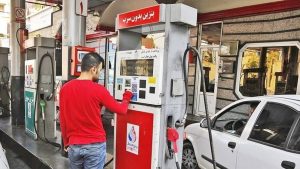
The admission by senior Iranian regime officials that an increase in gasoline prices is inevitable demonstrates the depth of the regime’s financial crisis.
Mohammad-Jafar Ghaem-Panah, executive deputy to Iranian regime president Masoud Pezeshkian, admitted that an increase in gasoline prices is inevitable and acknowledged the high costs of importing fuel. Referring to the impact of the naval blockade, he stressed that domestic gasoline production is insufficient to meet the country’s needs and that new management measures must be implemented. These remarks come as numerous reports have emerged of long lines at fuel stations across the country. Fearing the eruption of livelihood-related protests similar to those in 2019, regime officials have yet to announce a final decision on the timing and extent of a price increase.
The severe diesel shortage at fuel stations across the country has once again seriously disrupted the road transportation fleet. In many provinces, truck drivers are forced to wait for days in long lines stretching for kilometers to receive their basic fuel allocations. The Ministry of Oil’s mandated reduction in fuel quotas has severely affected the livelihoods of this sector and the distribution of essential goods. Experts are warning about the economic consequences of this crisis and the possibility of a complete halt to road transportation.
Iran: Rising Dollar Exchange Rate, People Shocked by Soaring Prices

Following the announcement of new U.S. sanctions against the Iranian regime, people are once again witnessing a rise in the dollar’s price and a surge in prices.
The sudden and astronomical increase in the prices of household appliances in Iran’s market once again exposed the regime’s severe economic incompetence. Reports indicate that the price of a refrigerator increased by as much as 700 million rials in just three days. This unprecedented surge has made purchasing essential goods impossible for a large segment of society. The plunder of public assets to preserve the Iranian regime’s survival is considered the main cause of this runaway inflation.
According to accounts obtained by Iran Azadi website, a resident of Khuzestan Province said: “After the announcement of the harsh U.S. sanctions and the rise in the dollar’s price, people are very worried about rising prices. If someone can afford to buy something, they buy it because they know they will have to pay more for it tomorrow. Most importantly, they are worried about gasoline because it directly affects the prices of all goods and services. Besides the price, the shortage of gasoline has forced people to stand in line for hours to get it. They have to go to two or three gas stations before they can manage to fill their tank. Our wages don’t cover a family’s expenses for even one week. Where else have you seen a situation where every time you buy something, say a container of yogurt, its price has gone up? People are worried, anxious, and appear distressed, and everyone is waiting for something to happen.”
Majid Adineh: A Philanthropist Executed by the Islamic Republic of Iran
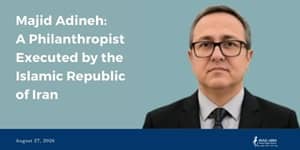
Reports confirm the execution of Majid Adineh, a protester detained during the nationwide demonstrations of January 2026 in Mohammadshahr, Karaj. He was executed on August 23, 2026 -under charges of “operational actions benefiting the Zionist regime, the United States, and hostile groups” pursuant to Article 1 of the Law on Intensifying the Punishment for Espionage and Cooperation with the Zionist Regime and Hostile States Against National Security and Interests.
According to a source close to Majid Adineh, he was a long-time benefactor and advocate for underprivileged children and families. His case file was fraught with evidentiary ambiguities; he was subjected to torture, and his family was informed of his execution only hours prior to it.
In a written testimony regarding Majid Adineh, the acquaintance states (paraphrased):
- Two Decades of Philanthropy for Vulnerable Children and Families:
Majid devoted 20 years of his life to supporting orphans, children from dysfunctional households, impoverished families, and the unhoused. He initially founded the “Fadak” Institution in the Sarasiab region of Fardis, followed by the “Abshar-e Sabz-e Atefeha” (Green Waterfall of Affection) Charity in Mohammadshahr using his personal funds. Supported by several donors, these organizations provided approximately 50 families with food, school supplies, and essential necessities. Furthermore, Majid organized and funded wedding ceremonies on two separate occasions for a total of 10 couples with disabilities and Down syndrome, aiming to foster social inclusion and assist low-income couples in starting their shared lives.
Iran’s Ruling Camp Splits Over U.S. Talks as Lawmaker Calls for Military Response

TEHRAN — Fresh efforts by Oman and Pakistan to revive the Islamabad memorandum of understanding have become the focus of an open dispute within Iran’s political establishment, stretching from the president’s office and parliament leadership to conservative lawmakers and former diplomats. At the center of the argument is an issue with direct consequences beyond Iran: the future of the Strait of Hormuz and the risk of Tehran and Washington returning to military conflict.
Sadegh Maleki, an international affairs analyst, described the visits to Tehran by Omani Foreign Minister Badr al-Busaidi and Pakistani army chief Asim Munir in the newspaper Arman Melli as an attempt to return the two sides to a path of compromise. He wrote that despite domestic opposition, Masoud Pezeshkian and Mohammad Bagher Ghalibaf “emphasize the Islamabad memorandum of understanding as a turning point,” and that returning to it should be on Tehran’s agenda.
The clearest sign of the internal divide has been the position taken by Mohammad Bagher Ghalibaf, the conservative speaker of parliament, against critics of negotiations. Responding to Hossein Shariatmadari, editor-in-chief of the newspaper Kayhan, Ghalibaf rejected an absolute view of diplomacy and wrote: “In my view, negotiation has neither intrinsic value nor is it a taboo; it is neither absolutely good nor absolutely evil.” He said negotiations were acceptable when they helped “advance the national interest, secure the rights of the nation, remove injustice and consolidate the achievements of resistance.”
Manchester Exhibition Highlights Iran’s Escalating Executions and Calls for Democratic Change
Manchester, UK – August 27, 2026: Members of the Academics in Exile Association in the UK, supporters of the People’s Mojahedin Organization of Iran (PMOI/MEK) and the National Council of Resistance of Iran (NCRI), held a book table and photo exhibition in Manchester to draw public attention to the Iranian regime’s escalating wave of executions and widespread human rights violations.

The event focused in particular on the intensifying use of executions against political prisoners and protesters arrested during the January 2026 uprising. Through photographs, publications, and testimonies, the organizers sought to portray the suffering of the Iranian people and their continued determination to reject all forms of dictatorship, whether monarchical or theocratic, in favor of freedom, democracy, and a secular democratic republic.
PMOI Supporters Hold Book Table and Photo Exhibition in Paris Against Executions and Human Rights Abuses
Paris, France – August 25–26, 2026 – Supporters of the People’s Mojahedin Organization of Iran (PMOI/MEK) held a book table and photo exhibition in Paris to condemn the execution of political prisoners and the continued detention of protesters who were arrested during Iran’s January 2026 uprising.
The event highlighted what organizers described as the Iranian people’s demand for a democratic republic and their aspirations for peace, freedom, justice, and fundamental rights. It also drew attention to the Iranian Resistance’s call for international solidarity with the Iranian people.

Organizers called on the French public and the international community to acknowledge the suffering of the Iranian people and their rejection of all forms of dictatorship, whether monarchical or theocratic.
Through photographs, personal testimonies, and other materials, the exhibition highlighted the courage and sacrifices of those who participated in the January 2026 uprising. It also drew attention to what organizers described as the Iranian regime’s ongoing human rights violations, including the execution of political prisoners and the continued detention of protesters.
Hamburg Rally Condemns Executions in Iran and Calls for End to Death Penalty
Hamburg, Germany – August 25, 2026: Supporters of the People’s Mojahedin Organization of Iran (PMOI/MEK) held a rally and photo exhibition condemning executions carried out by the mullahs’ regime and calling for an end to the death penalty. They urged the international community to take action to stop executions in Iran and condemned the execution of PMOI political prisoners, as well as protesters arrested in January 2026. The event also expressed solidarity with the “No to Executions” campaign.

Participants highlighted the Iranian people’s ongoing struggle against the ruling regime and called on the German government to take immediate action to halt executions in Iran. They denounced the regime’s use of capital punishment as a blatant violation of human rights.
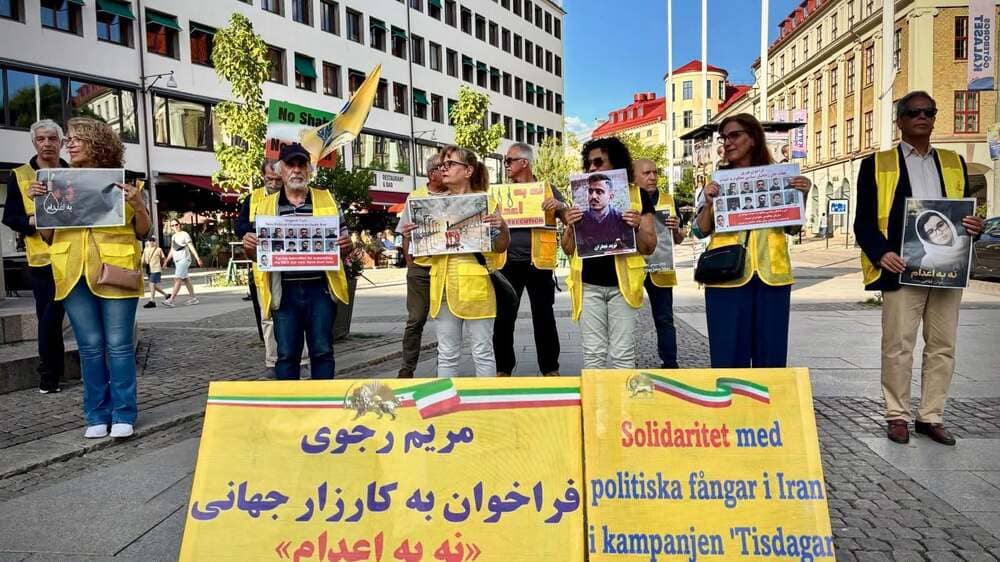
Gothenburg Rally Backing the 135th Week of “No to Execution Tuesdays” Across 61 Iranian Prisons
Gothenburg, Sweden — August 25, 2026: Supporters of the People’s Mojahedin Organization of Iran (PMOI/MEK) held a rally in solidarity with the 135th consecutive week of the “No to Execution Tuesdays” campaign, a movement protesting the Iranian regime’s escalating executions and systematic repression.

Participants also highlighted the regime’s intensifying crackdown, the rising number of executions, and broader repressive measures. They chanted slogans such as “Down with the executioner regime” and called for the immediate release of all political prisoners.
Freedom-loving Iranians in Gothenburg expressed support for Mrs. Maryam Rajavi, President-elect of the National Council of Resistance of Iran (NCRI), and her call to expand the “No to Executions” campaign globally.