

Three-minute read
Iran’s regime appears to have drawn a lesson from previous gasoline crises: never give an angry population one clear moment around which to mobilize.
So instead of imposing the unavoidable price shock at once, authorities are breaking it into smaller pieces—floating prices, reversing them, reducing access to cheap fuel, tightening distribution and increasingly stretching the fuel itself. The objective is to acclimatize society gradually. The danger is that Tehran may only be converting an immediate gasoline shock into a delayed crisis involving millions of motorists and their cars.
The first instrument is price management through psychological sequencing.
The government has already acknowledged that the status quo cannot continue. Its spokeswoman said on July 25, 2026, that a change in gasoline prices or quotas was effectively inevitable.
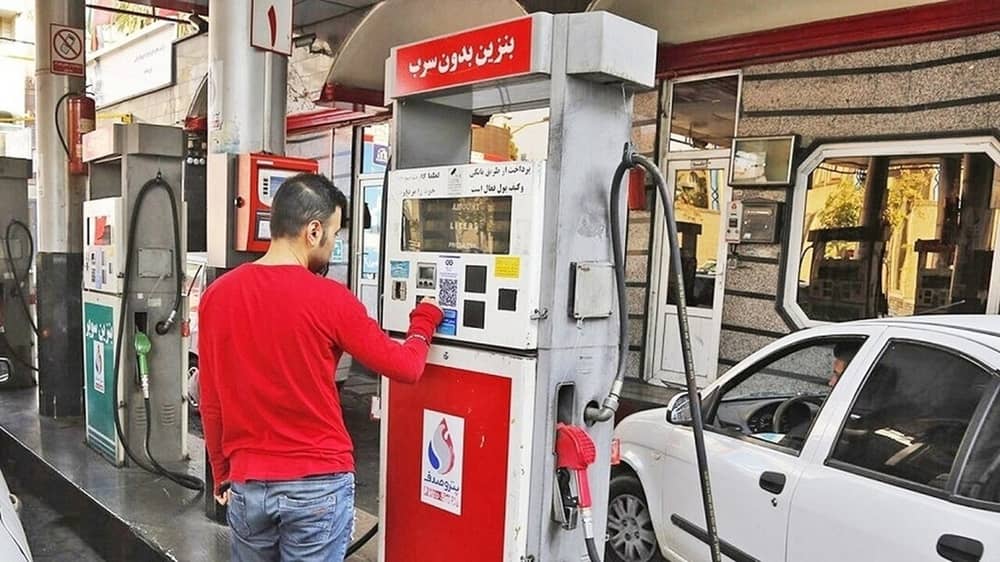
Then came an extraordinary test. On August 13, authorities began a pilot program in Kerman under which gasoline consumed beyond subsidized quotas would cost 87,200 tomans per liter—roughly the claimed refinery cost. Within hours, the scheme was suspended. Officials offered little explanation beyond saying the governor had intervened with national authorities.
The reversal should not necessarily be read as abandonment. It provided the regime with something valuable: a live measurement of public reaction to an extreme price.
#Iran’s Three Tier Gasoline Plan Collides with Food Inflation and Health Strainhttps://t.co/6hQVa2aNv7
— NCRI-FAC (@iran_policy) December 13, 2025
Two weeks later, Pezeshkian introduced a far smaller figure. In his August 28 state-television interview, he said the third-tier gasoline rate would rise from 5,000 to 10,000 tomans, while insisting that figures such as 50,000 tomans were not contemplated “for now.” Implementation, he said, required further coordination and public explanation.
The sequence is politically shrewd. Eighty-seven thousand tomans establishes the frightening outer boundary; its rapid withdrawal creates relief; 10,000 tomans then appears comparatively moderate. The regime is not escaping the price increase. It is attempting to reduce the psychological impact before administering it.
Meanwhile, the physical shortage remains.
Officials have acknowledged consumption around 135 million liters per day against production of roughly 121 million, leaving a deficit of about 14–15 million liters. That gap creates pressure not only to ration gasoline but to manufacture more saleable volume through blending.
On August 21, Persian Gulf Star refinery acknowledged operational use of approximately 0.5 percent methanol by volume in its gasoline. It argues that the concentration is within Iran’s standards and can improve combustion. The National Iranian Oil Refining and Distribution Company likewise says methanol itself does not demonstrate harmful fuel quality.
Rationed Water, Three-Tier Gasoline, Prosecutors on Alert: Why #Tehran Fears a November Flashpointhttps://t.co/1YWsOEjAQs
— NCRI-FAC (@iran_policy) November 14, 2025
Technically, that defense is important: methanol has a high octane value, and 0.5 percent methanol alone does not establish that engines will be damaged.
But the dispute concerns the finished blend, not methanol in isolation.
The state oil company itself says quality depends on octane, water content, vapor pressure, oxidation stability, corrosiveness and other characteristics. Meanwhile, a parliamentary proposal to use much larger M10 or M15 methanol blends to alleviate the gasoline deficit acknowledges that higher concentrations require technical safeguards.
That matters because motorists are also reporting contamination. Complaints have emerged of gasoline containing water, while public anger has grown over vehicles malfunctioning after refueling.
Then, on August 29, state-affiliated economist Sadegh Alhosseini made a more serious allegation. He claimed authorities had lowered the quality of the gasoline base, increased petrochemical components and added methanol to boost nominal supply. He argued that cars were already consuming more fuel and predicted that within three or four months, widespread vehicle problems would become apparent.
#Iran News in Brief
Jalal Rashidi Kuchi, a member of the regime’s parliament, expressed concerns about the consequences of raising #gasoline prices, stating, “Fundamentally, our approach to gasoline has been wrong. Even now, if we tamper with gasoline prices, people will take to… pic.twitter.com/hT5DpjIEU2— NCRI-FAC (@iran_policy) August 23, 2023
That timetable remains his prediction, not established engineering fact. But politically, even partial confirmation would create an entirely different crisis.
Iran has tens of millions of passenger vehicles. A car is among the most valuable assets many Iranian families possess. If poor or inconsistent gasoline begins damaging fuel pumps, injectors, filters, catalytic systems or engines across even a fraction of the fleet, the government will have achieved something extraordinary: it will have hidden part of the gasoline-price increase inside the public’s repair bills.
In the short term, staged announcements, reversals and quota adjustments can soften the moment of impact. But they also encourage motorists to fill tanks whenever another rumor appears—producing queues and shortages through rational public anticipation.
In the medium term, inferior fuel quality can become a concealed tax. Taxi drivers, couriers and workers do not merely buy more gasoline; they pay for maintenance and pass those costs into transport and consumer prices.
The long-term risk is delayed collective recognition. A gasoline increase is understood immediately. Vehicle deterioration unfolds over months. If large numbers of motorists eventually conclude that authorities kept the pump price artificially manageable by transferring the cost into their cars, scarcity becomes something more politically dangerous: a sense of having been cheated.
#Iran: During November 2019, at least 1,500 protesters were massacred. The #Iranian resistance published the names and the identities of 828 martyrs of the November 2019 uprising. The list of names can be seen in the following link: #IranProtests https://t.co/SgF4gc96H3
— NCRI-FAC (@iran_policy) April 1, 2021
Tehran therefore cannot eliminate the shock. The supply deficit eventually requires higher prices, deeper rationing, or both. What it is doing is fragmenting and postponing the shock—87,200 today, retreat; 10,000 tomorrow, normalization; tighter quotas and altered fuel in between.
The regime used similar incrementalism before the economic and social pressures that culminated in the January 2026 uprising: announce, calibrate, retreat where necessary and deny society one obvious trigger.
It succeeded in postponing the explosion.
It did not eliminate the conditions that produced it.