

THIS PAGE WILL BE UPDATED WITH THE LATEST NEWS
UPDATE: 7:00 AM CEST
Tehran’s Hollow Street Maneuvers Expose the Iranian Regime’s Fear of Uprisings
On September 18, the Iranian regime staged one of its largest government-organized street mobilizations in Tehran since the beginning of the recent war. The “Janfada-ye Iran” campaign brought uniformed participants, armed volunteers, drones and other military hardware into the streets, while state media claimed a 313,000-person turnout. Regime president Masoud Pezeshkian and senior military officials attended the event.
The regime presented the maneuver as a demonstration of unity and readiness against external threats. But its timing was significant. It came just two days after the fourth anniversary of Iran’s September 2022 uprising, at a time when the authorities had placed security forces on heightened alert over the possibility of renewed domestic unrest.
The significance of the regime maneuver goes beyond the September 18 parade. State-linked sources say the campaign began months earlier and was intended to build a nationwide network of volunteers receiving military, emergency and security-related training.
Sign the Petition: Demand Urgent International Action to Protect Women Prisoners in Iran

The UN Special Rapporteur on the situation of human rights in Iran, The UN Special Rapporteur on violence against women and girls, The UN Working Group on Arbitrary Detention, The UN Special Rapporteur on torture and other cruel, inhuman or degrading treatment or punishment, The UN Independent International Fact-Finding Mission on Iran, and The European Parliament Subcommittee on Human Rights (DROI). We join the call to action by the Women’s Committee of the NCRI to express our grave concern over the worsening conditions in Iranian prisons and the systematic violations of the rights of women prisoners. Recent reports point to a disturbing pattern of overcrowding, denial of medical care, unsanitary conditions, forced transfers, restrictions on family contact, and escalating pressure on political prisoners throughout the country. Women detainees are among the primary victims of these policies, facing conditions that threaten their health, dignity, and fundamental rights.
Alarming are reports from Fardis Prison in Karaj, where sewage flooding in the women’s recreation yard has exposed prisoners to disease and illness. Women reportedly suffered from diarrhea and vomiting while receiving no medical treatment. Among those held in these conditions are political prisoners Masoumeh Senobari, Atefeh Hassani, and Fatemeh Nadi Dastgirdi.
How Iran’s Regime Produces Smugglers
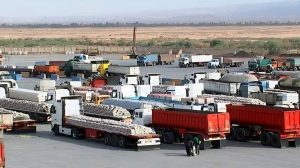
Smuggling is a phenomenon that controls a large share of Iran’s regime economy. Figures announced by official authorities indicate the extensive scale of this phenomenon. The head of the Economic Security Police of Iran’s Law Enforcement Command (FARAJA) has put the annual value of goods smuggling at around $30 billion to $35 billion. Regarding the volume of fuel smuggling, official authorities have also spoken of millions of liters per day.
Even if these figures are regarded as estimates, they raise a fundamental question. How can an economy subject to such extensive official oversight allow billions of dollars’ worth of unofficial goods to circulate?
Fuel is the clearest example of Iran’s smuggling economy. The subsidized price of petroleum products inside Iran, combined with price differences with neighboring countries, creates a powerful incentive for illegal exports. But the price gap alone cannot fully explain smuggling on the scale of tens of millions of liters. Such activity requires transportation networks, storage tanks, intermediaries, financing, and distribution channels.
Iran Regime Sets Conditions for Ending War and Threatens to Withdraw from the NPT
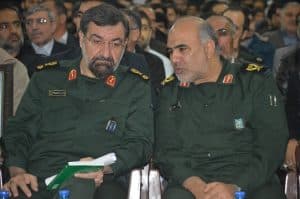
Mohsen Rezaei, secretary of Iran’s regime’s Supreme National Security Council, announced that Tehran had conveyed its conditions for ending the war and resuming negotiations with the United States through Qatari mediators and was awaiting Donald Trump’s response.
On Saturday, September 19, Rezaei told Al Jazeera that an end to the war on all fronts, the release of Iran’s frozen assets, and an end to the naval blockade were the Iranian regime’s three conditions for stopping the hostilities. At the same time, he claimed that Iran’s regime was prepared for a “decisive war” and stressed that accepting these conditions would be in the United States’ interest.
This position comes as previous negotiations and an understanding between Tehran and Washington have effectively collapsed following reciprocal attacks by the two sides, while military hostilities have continued. Iranian regime officials are now calling for the United States to return to that same understanding, a position also echoed by the regime’s interior ministry spokesperson and Massoud Pezeshkian.
School Costs Rise Across Iran as Private Tuition in Tehran Reaches 220 Million Tomans
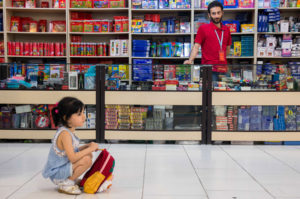
Schooling costs in Iran now range from several million tomans for school supplies and uniforms to 220 million tomans in tuition and extracurricular fees at some private schools in Tehran, while transportation, food and other expenses are charged separately to families.
As schools prepare to reopen in Iran, field reports from Tehran, Khuzestan and Chaharmahal and Bakhtiari point to rising education costs, from millions of tomans for the most basic school supplies to a ceiling of 220 million tomans in tuition and extracurricular fees at some private schools in Tehran. At the same time, expenses such as food, transportation, uniforms and educational activities are calculated separately and are repeated for families with more than one school-age child.
Mehr News Agency has estimated the cost of a basic set of stationery for one student at about 3.37 million tomans. In a case examined by the agency, a school uniform also costs about 2.5 million to 3 million tomans per student.
On that basis, a family with two schoolchildren would pay about 6.74 million tomans for stationery alone and 5 million to 6 million tomans for two school uniforms. Together, those two expenses amount to about 11.74 million to 12.74 million tomans, excluding transportation, food, educational classes and other costs during the school year.
Candlelight Vigils and Martyr Photo Exhibits Mark Final Days of New York Campaign Ahead of Sept. 22–23 UN Rallies
NEW YORK — With only two days remaining until major rallies outside the United Nations, supporters of the Iranian Resistance continued a weeklong public campaign in Manhattan on Saturday and Sunday, holding candlelight vigils, displaying photographs of those killed by the Iranian regime, and conducting street outreach to call for an end to executions and support for a democratic alternative.
The Organization of Iranian American Communities (OIAC) is leading the campaign, which began September 17 and runs through September 23. Activities have included information tables, public gatherings, and photo exhibitions of martyrs and victims of political executions. These efforts will continue Monday, September 21, one day before the main events.
In the shadows of @UN headquarters in New York City tonight, we remembered the fallen for freedom in Iran and celebrated their bravery – which is so vibrant in the youth of Iran. Their struggle for a democratic republic needs global support. @ReutersTV @NewsNation @VOAfarsi pic.twitter.com/4WwIGbjjAx
— OIAC: Organization of Iranian American Communities (@OrgIAC) September 19, 2026
On Friday, September 18, and Saturday, September 19, Iranian Americans gathered near UN headquarters for candlelight vigils. Participants lined streets with rows of victim portraits, candles, roses, and “Stop Execution” banners. They honored those executed by the regime, including political prisoners and protesters from recent uprisings, and expressed support for Iran’s organized opposition.
Paris Exhibition Honors Iran’s Executed Victims, From the 1988 Massacre to the 2026 Killings
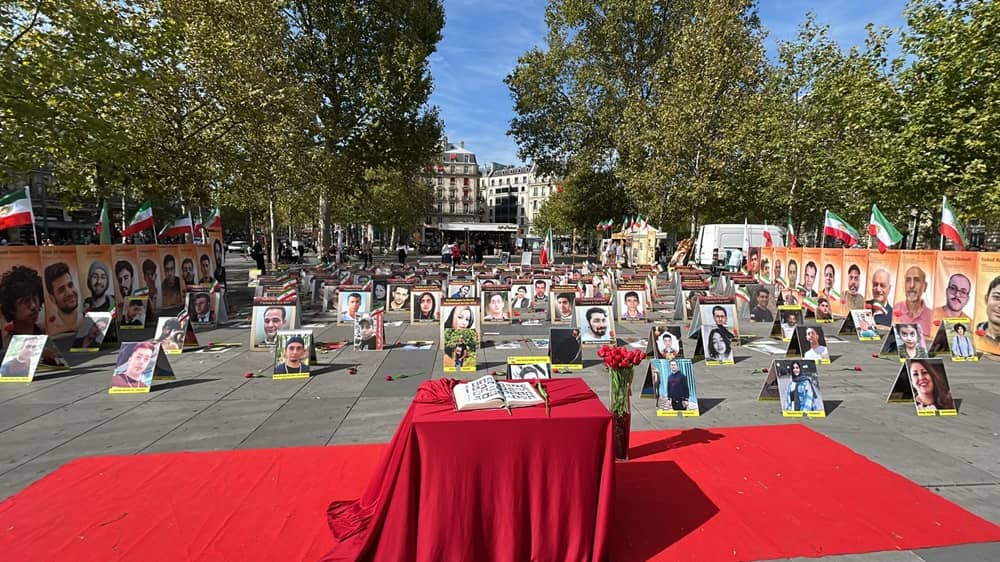
Paris, September 19, 2026 — A photo exhibition held at Place de la République in Paris on Saturday honored victims executed by the Iranian regime, spanning the 1988 massacre of political prisoners to those executed and killed during Iran’s recent nationwide protests.
Organized by supporters of the People’s Mojahedin Organization of Iran (PMOI/MEK) and the National Council of Resistance of Iran (NCRI), the exhibition drew attention to the regime’s continued use of the death penalty as a tool of political repression and called for an end to executions in Iran.
Photographs of the victims were displayed before passersby in the heart of Paris. Their faces, silent but striking, recalled the lives of men and women who, according to the organizers, sacrificed their lives for freedom and democracy in Iran.

The exhibition paid particular tribute to the victims of the 1988 massacre, when thousands of political prisoners were forcibly disappeared and extrajudicially executed following summary proceedings. Their families and human rights organizations have continued to demand truth, justice, and accountability for those responsible.
Stockholm: PMOI Supporters Rally Outside Sweden’s Foreign Ministry Against Executions in Iran
Stockholm, Sweden – September 19, 2026: Supporters of the People’s Mojahedin Organization of Iran (PMOI/MEK) held a rally outside Sweden’s Foreign Ministry to condemn the execution of political prisoners and protesters by Iran’s ruling regime and call for an end to the death penalty.
The demonstrators honored PMOI members who were killed for their political activities and called on the Swedish government to take decisive action against the Iranian regime over executions. Their demands included the closure of the Iranian regime’s embassy in Stockholm, as a hub for espionage and terrorism, as well as the immediate and unconditional release of all political prisoners in Iran.

The protesters also rejected all forms of dictatorship, whether monarchical or theocratic, emphasizing their opposition to both the rule of the Shah and the current mullah-led regime. They called for the establishment of a democratic republic in Iran and expressed support for the National Council of Resistance of Iran (NCRI) as a democratic alternative.