

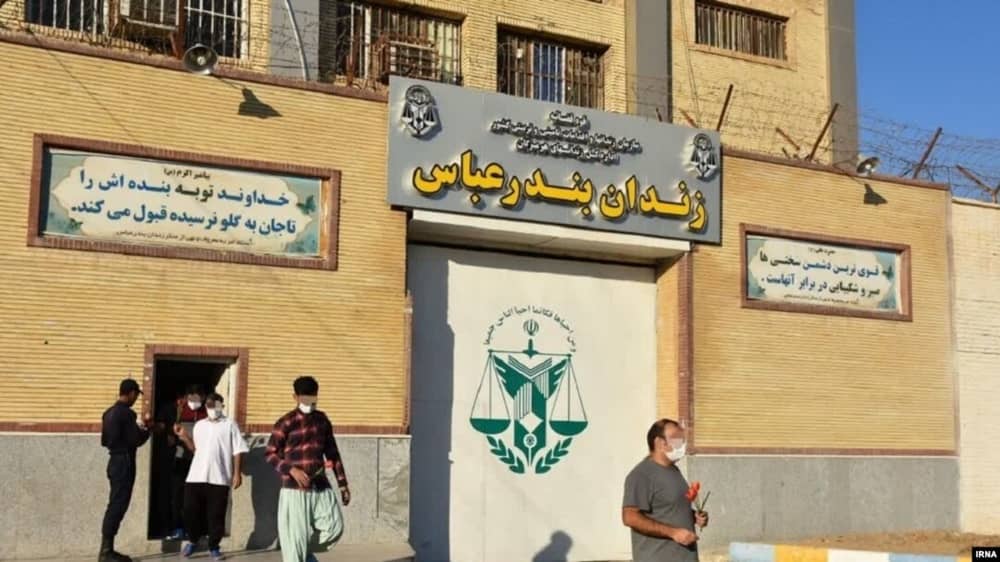
The “No to Execution Tuesdays” campaign issued its latest statement on September 22, 2026, marking its 139th consecutive week of protest. Organizers announced that the movement has now expanded to 64 prisons across Iran, with the new additions of Bandar Abbas Prison in the south and Ziabar Prison (Sowme’eh Sara) in the north.
The campaign’s statement highlighted the relentless pace of capital punishment by the state, noting that at least 448 executions have been recorded so far in the current Iranian calendar year (since late March 2026). The organizers specifically condemned the recent execution of Rezvan Asgharzadeh, a 45-year-old mother of six who was hanged on drug-related charges in Dastgerd Prison in Isfahan, framing it as an act by a “misogynistic and anti-human” government.
Despite the severe crackdowns, the campaign emphasized the resilience of the inmates: “Despite all these suppressions, the resistance in prisons still continues; such that with the joining of Bandar Abbas Prison and Ziabar Prison in Sowme’eh Sara in Gilan province, the number of participating prisons in this campaign has reached 64.”
The statement also connected the domestic struggle to recent international developments, pointing out that the state’s “horrific death toll” has not gone unnoticed by global monitors. It referenced a recent Amnesty International report that named 87 Iranian officials for criminal investigation regarding their roles in suppressing the 2022 protests, as well as condemnations from the European Parliament emphasizing the fundamental right to life.
Iran's “No to Execution Tuesdays” campaign enters its 139th week across 64 prisons, with Bandar Abbas and Someh Sara Ziabar joining. Prisoners protest executions as at least 448 have been recorded since March 21, 2026. #StopExecutionsInIran @theICTJ https://t.co/s1G3OHlNul
— IRAN HRM (@IranHrm) September 22, 2026
Calling for an end to diplomatic appeasement and demanding justice, the campaign stated: “We are opposed to policies that compromise with the killers of the Iranian people, ordinary prisoners, and political prisoners. We demand effective mechanisms for investigation and accountability regarding serious human rights violations in Iran. These individuals and other perpetrators and commanders of the massacre of prisoners and protesters must be punished.”
The organizers concluded that their ongoing strikes have transformed into a symbol of resistance that “reminds public opinion of the ‘right to life’ and the necessity of a fair trial.”
According to the statement, coordinated hunger strikes for Week 139 were carried out on September 22, 2026, across both male and female wards in the following 64 prisons:
- Tehran & Alborz: Evin (Men’s & Women’s Wards), Ghezel Hesar (Units 2, 3 & 4), Karaj Central, Fardis Karaj, Greater Tehran, Qarchak, and Khorin Varamin.
- Isfahan & Central: Asadabad Isfahan, Dastgerd Isfahan, Arak, and Choobindar Qazvin.
- Fars, Kohgiluyeh & Boyer-Ahmad: Adelabad Shiraz (Men’s & Women’s Wards), Shiraz Military Prison, Firozabad Fars, Yasuj, Dehdasht, and Gachsaran.
🚨 7 Executed in Isfahan in 10 Days, Including Two Mothers
Iranian authorities executed at least 7 prisoners at Dastgerd Prison in 10 days, including Rezvan Asgharzadeh, a mother of six, and Zeinab Rajabi, a mother of three.
At least 14 prisoners, including 3 women, have been… pic.twitter.com/QXFvbCnBC9
— SIMAY AZADI TV (@en_simayazadi) September 22, 2026
- Khuzestan, Bushehr, Lorestan & Hormozgan: Sheiban Ahvaz, Sepidar Ahvaz (Men’s & Women’s Wards), Ramhormoz, Behbahan, Khorramabad, Borujerd, Borazjan, and Bandar Abbas.
- Sistan & Baluchestan, Kerman & Yazd: Zahedan (Men’s & Women’s Wards), Iranshahr, Bam, Kahnuj, Kerman, Yazd (Men’s & Women’s Wards), and Tabas.
- Gorgan & Khorasan Provinces: Mashhad, Sabzevar, Gonbad-e Kavus, Nishapur, Central Birjand, and Gorgan.
- Caspian Coast (Gilan & Mazandaran): Rasht (Men’s & Women’s Wards), Rudsar, Haviq Talesh, Ezbaram Lahijan, Ziabar Sowme’eh Sara, Qaemshahr, and Noor.
- Kermanshah, Ilam & Chaharmahal and Bakhtiari: Dizelabad Kermanshah, Ilam, and Borujen.
- Northwest & Kurdish Regions (Azerbaijan, Kurdistan & Qom): Ardabil, Tabriz, Urmia, Salmas, Khoy, Naqadeh, Miandoab, Mahabad, Bukan, Saqqez, Baneh, Marivan, Sanandaj, Kamyaran, Ahar, and Langarud Qom.