

THIS PAGE WILL BE UPDATED WITH THE LATEST NEWS
UPDATE: 7:00 AM CEST
Iran’s New School Year Exposes the Widening Cost and Inequality of Education
When schools across Iran reopened for the 2026–2027 academic year, around 16.5 million students were expected to return to classrooms. About 1.15 million children were entering first grade. For families, however, the beginning of the school year has become much more than the familiar annual task of buying notebooks, uniforms and backpacks. It has become another test of whether household income can keep pace with the rising cost of education.
Consider two students.
For a student attending a non-government school in Tehran, officially approved tuition can now reach 2.2 billion rials for upper secondary education. The head of Iran’s Organization for Non-Government Schools said in September that approved fees ranged from around 300 million to 2.2 billion rials, depending on the province and level of education. Costs such as uniforms, transport, food and school trips can be charged separately.
At the other end of the economic spectrum is a student attending a public school, where tuition is formally free. Even there, the family must still pay for clothing, shoes, transportation and school supplies. According to estimates, a basic school-supplies package this year ranges from roughly 30 million to 170 million rials. One stationery seller said the price of a quality notebook had risen from 850,000 rials last year to 1.8 million rials this year.
Former Ambassador Marc Ginsberg Calls for Concrete Support for Iranians Seeking Democratic Change

Former U.S. Ambassador to Morocco Marc Ginsberg called Wednesday for international expressions of support for Iranians seeking political change to be translated into concrete policy, while emphasizing that Iran’s future leadership must ultimately be chosen by its own people.
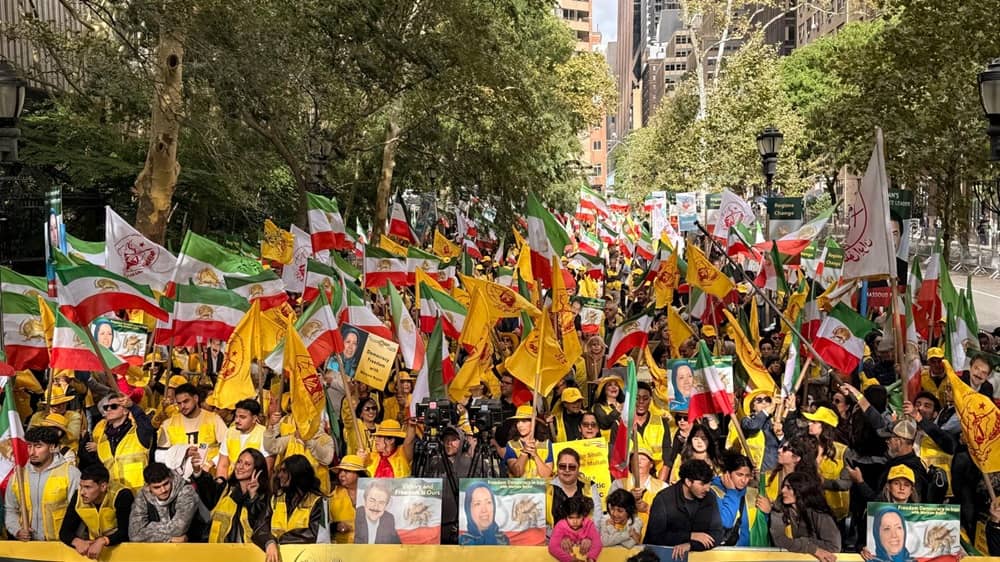
Addressing a National Council of Resistance of Iran (NCRI) rally outside United Nations headquarters in New York, Ginsberg referred to imprisoned protesters, victims of torture and families who lost relatives during anti-government demonstrations, saying their experiences required more than statements of condemnation.
Ginsberg pointed to the NCRI’s proposed transition framework and Maryam Rajavi’s Ten-Point Plan, which calls for free elections, political and religious freedoms, gender equality, separation of religion and state and a non-nuclear Iran.
He stressed that Americans should not decide who governs Iran, saying that decision belongs to Iranians themselves, while arguing that the United States and other democratic countries can support their ability to make that choice.
Ahvaz Court Forces Nine Arab Women to Choose Between “Thought Reform” and Five Years in Prison

On September 20, 2026, an Ahvaz Court sentenced nine Arab women to five years in prison each but made the reduction of their prison terms to one year conditional on their completing a mandatory one-year course described by the court as “thought reform” or “ideological-political correction.” The course, however, amounts to what has been described as brainwashing.
The Revolutionary Court of Ahvaz handed down the sentences after hearing the women’s defenses. The nine women had been arrested more than a year and a half earlier over their activities on social media.
The names of the nine women, all of whom are Sunni Arab citizens, are: Saeedeh Heydari-Rad, Amal Dahimawi, Kowsar Asakereh, Ayat Mohammadi, Fatemeh Savari, Khadijeh Havali, Eftekhar Rostamizadeh, Seyedeh Fatemeh Hosseini, and Ameneh Beit-Sayyah.
They are approximately between 45 and 50 years old, and several of them are heads of household.
The nine women were arrested more than a year and a half ago by intelligence forces because of their activities on social media. They spent several months in intelligence detention facilities under physical and psychological pressure before being released on bail pending the completion of judicial proceedings.
Iran’s Medication Crisis Deepens as Regime Policies Put Health Out of Reach
Iran’s medication crisis is moving beyond isolated shortages and becoming a broader threat to public health. As autumn begins and respiratory illnesses increase, Iranians are confronting delayed influenza vaccines, sharply higher medicine prices, unpaid support for patients with serious and rare diseases, and growing difficulties obtaining essential drugs.
The figures reported by Iranian officials themselves illustrate the scale of the problem. The head of the Food and Drug Administration has reported that the average price of medicines increased by approximately 103 percent since the beginning of the current Iranian year, while patients’ direct out-of-pocket payments increased by 35 percent. At the same time, the preferential foreign-currency allocation for medicines and medical equipment was reduced by approximately $900 million.
For Iranian families, these are not abstract budgetary figures. They determine whether a patient can obtain a prescription, whether a chronic illness can be treated consistently, and whether a seasonal infection can be prevented.
Iran Regime’s Warmongering Turns $600 Million in Oil Into a Symbol of National Loss
Nearly six million barrels of Iranian crude oil, valued at approximately $600 million, are currently crossing the Atlantic aboard three tankers seized by the United States, according to tanker-tracking data. The reported movement offers a stark illustration of how the Iran regime’s policy of military confrontation can translate directly into the loss of national wealth.
The three vessels—Majestic X, Tifani, and Lenore—together carry about 5.9 million barrels of Iranian crude. Kpler data showed two of the tankers, Majestic X and Tifani, off Brazil’s northern coast, while Lenore entered the Atlantic through the Cape of Good Hope on September 22 after being seized in the Indian Ocean in June. TankerTrackers reported that the combined cargo was heading toward the United States.
The episode is more than a dispute over three tankers. It demonstrates the economic consequences of turning Iran’s strategic position and energy resources into instruments of military confrontation.
NCRI and the Political Imperative of a Democratic Transition in Iran
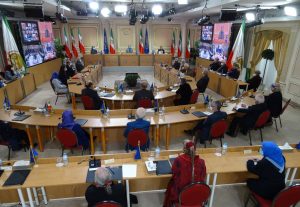
When a political movement seeks the complete overthrow of an entrenched political system, the question of what follows the regime cannot be postponed until the moment of victory. A movement that lacks a clear concept for political transition and the establishment of a democratic order risks leaving both its future and its present strategy unresolved.
For Iran’s resistance movement, this question has been central to the political project of the National Council of Resistance of Iran (NCRI) since its establishment in 1981.
The argument underlying the NCRI’s formation is that resistance to dictatorship must connect two tasks: dismantling the existing system and creating the political mechanisms through which sovereignty can be transferred to the Iranian people. In this view, the transition period is not an undefined interval between two political systems, but a crucial stage in establishing the foundations of a democratic future.
A resistance movement must ultimately answer two questions: What is it fighting against, and what political order does it seek to establish afterward?
4,000 Tons of Exported Iranian Agricultural Produce and Fresh Vegetables Returned

Iran’s agricultural exports are facing one of their most serious crises in recent years. More than 200 refrigerated containers carrying exported fruit, fresh vegetables, and produce have been returned by the government of the United Arab Emirates. The shipments are now stranded in the waters of the Persian Gulf, in the vicinity of Abu Musa Island. The shipments total 4,000 tons and are worth nearly $3 million.
Reza Nourani, head of National Union of Agricultural Products, reported the return of more than 200 40-foot refrigerated containers. These containers were carrying various types of exported fruit, fresh vegetables, and produce. According to him, the shipments are currently stranded in the Persian Gulf, and the UAE government has so far not announced an official reason for the action.
According to him, the perishable nature of agricultural products and the limited time they can be stored pose a serious risk to exporters. Nourani stressed: “Now is the time for decision-making and immediate action,” because every hour of delay turns part of the producers’ investment into perishable goods.
Until UAE officials make an official announcement, attributing the returns to quarantine or health standards remains merely a possibility. Many foreign trade experts believe the root cause of the issue lies in the political climate governing relations between the two countries.
More Than Two-Thirds of Households in Iran Face Severe Hardship as Tensions

Amid Iran’s difficult economic conditions, the continued rise in living costs has resulted in a situation where having a job does not necessarily mean having financial security and well-being. Some working households, despite having an income and even assets such as a home and a car, have faced difficulties covering expenses such as medical care, repairs, and travel—a phenomenon referred to as “the working poor.”
According to the state-run Eghtesadnews daily, economist Mehdi Pazouki said: “We are facing the phenomenon of ‘poor wealthy people’; there are currently people in northern Tehran who live in good properties or own very good cars but lack the necessary cash flow. The incomes of these people, who are mostly salaried employees or retirees, are very low, and they are unable to cover their daily expenses.”
Meanwhile, chronic inflation and economic instability have reduced purchasing power and narrowed households’ financial safety margins.
Iranian Regime Aviation Sector Faces 80% To 90% Decline in International Flights as U.S. Raises Pressure

The U.S. Treasury secretary said Washington’s aviation pressure campaign against the Iranian regime has taken effect faster than expected, and international flights from Iran have declined by 80% to 90%; a development seen as another sign of mounting economic and financial pressure on Tehran.
U.S. Treasury Secretary Scott Bessent said on Wednesday, September 23, that as part of an operation known as “economic exclusion,” the number of international flights from Iran has declined sharply. According to him, the decline has reached 80% to 90%.
Bessent stressed that the Iranian regime is now facing a level of U.S. pressure that, he said, has no precedent in the past. He also said that the fate of the Iranian regime’s delegation sent to New York to attend the United Nations meeting was unclear, adding that it was not known how members of the delegation intended to return to Iran.
The U.S. Treasury secretary warned that Washington has identified financial and commercial networks linked to the Iranian regime and will target companies and individuals that continue to finance or conduct trade with Tehran with sanctions and prosecution.
Iranian MP Says Fate of 56 Million Oil Barrels Is Unclear as Journalist Alleges $17 Billion in Oil Sales

An Iranian lawmaker says 86 million barrels of oil were handed over without guarantees and the fate of 56 million barrels remains unclear; days later, journalist Yashar Soltani alleged that Rouhollah Razavi, the son-in-law of the Paydari Front spokesman, had sold $17 billion worth of oil in recent years.
Two separate disclosures about how Iranian oil has been allocated and sold have raised new questions about oil intermediaries and competition among networks involved in the trade. Hossein Samsami, a member of parliament, first said that more than 86 million barrels of oil had been handed to one individual without guarantees and that the fate of most of it was unclear. Days later, journalist Yashar Soltani made allegations about the scale of another oil seller’s operations and his family ties to the spokesman of the Paydari Front.
On September 11, Samsami said: “More than 86 million barrels of the country’s oil were handed over to one person on credit and without obtaining guarantees, and only 30 million barrels were transferred to the final buyer, while the fate of more than 56 million barrels of oil remains unclear.”
PMOI Supporters in Paris Highlight Iran’s Human Rights Crisis Through Book Table and Photo Exhibition
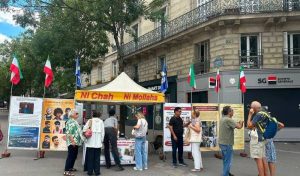
Paris, France – September 24, 2026 – In a show of solidarity with the Iranian people, supporters of the People’s Mojahedin Organization of Iran (PMOI/MEK) organized a public book table and photo exhibition in Paris, drawing attention to the deteriorating human rights situation in Iran. The event highlighted the regime’s use of the death penalty and executions targeting political prisoners and protesters detained during nationwide uprisings.
Organizers said the event reflected the Iranian people’s demand for a democratic republic and their aspirations for peace, freedom, justice, and fundamental rights. They also highlighted the Iranian Resistance’s call for greater international solidarity with the people of Iran.
The organizers urged the French public and the international community to recognize the suffering of Iranians and their rejection of dictatorship in both monarchical and theocratic forms.
Photographs, personal testimonies, and other materials showcased the courage and sacrifices of those who took part in the January 2026 uprising. The exhibition also drew attention to what organizers described as the Iranian regime’s ongoing human rights violations, including executions of political prisoners and the continued imprisonment of protesters.
Berlin Sit-In on 210th Day Calls for an End to Executions in Iran and Backs the NCRI Alternative
Berlin, Germany — September 25, 2026: Supporters of the People’s Mojahedin Organization of Iran (PMOI/MEK) have continued their sit-in protest outside the Iranian regime’s embassy in Berlin for the 210th consecutive day.
The protesters are calling for the closure of the embassy, as a center of espionage and terrorism operated by the Iranian regime in Germany. They are also demanding accountability for the regime’s systematic repression, human rights violations, and continuing executions in Iran.

The sit-in reflects the protesters’ opposition to both the clerical dictatorship and a return to the former monarchical system. Their position is expressed in the slogan, “Down with the oppressor, be it the Shah or the Supreme Leader.” They say Iran’s future should be based on a free and democratic republic rather than another form of dictatorship.