

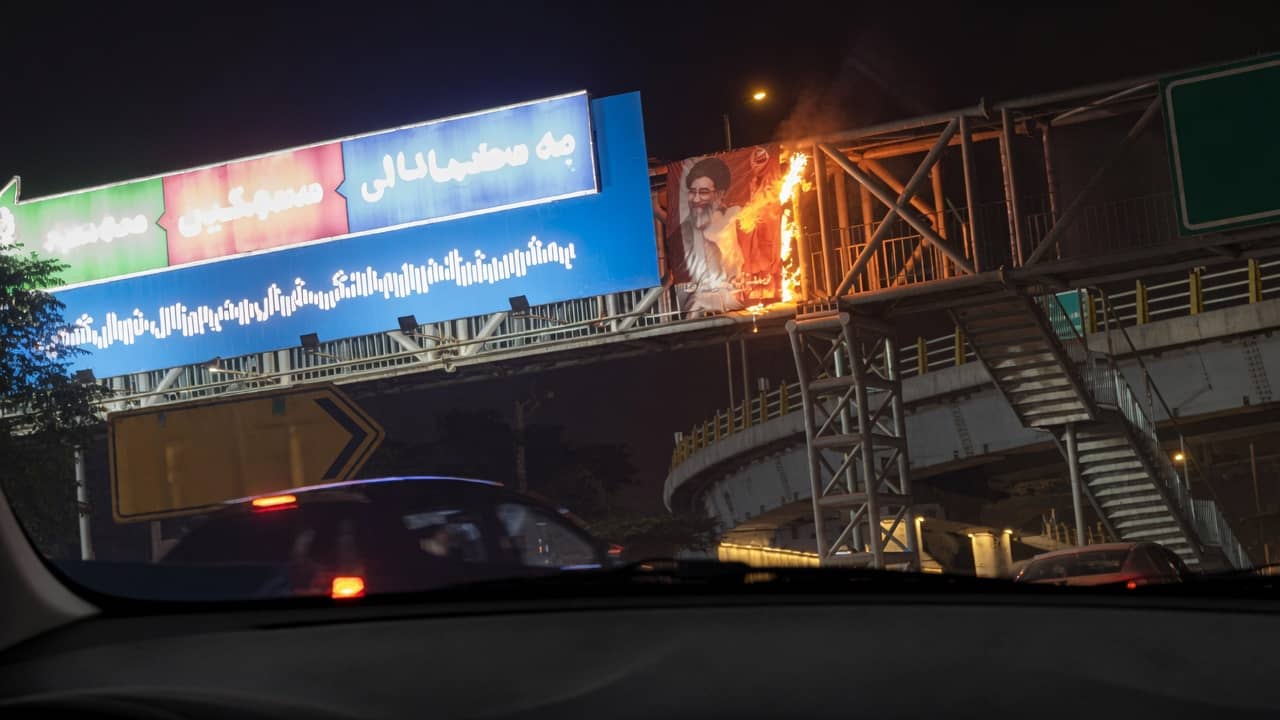
A coordinated wave of field actions, school-opening counter-propaganda, and anti-execution campaigns surged across more than 20 Iranian municipalities between September 20 and 26, 2026. Despite maximum security readiness from state authorities, PMOI-affiliated Resistance Units executed over 110 synchronized operations, targeting the state-wide security mobilization of the regime during the start of the academic year and commemorating historic nationwide uprisings. The widespread geographic distribution of these direct actions underscores an escalating domestic struggle, revealing the clerical establishment’s expanding difficulty in suppressing organized resistance across urban centers.
September 26, 2026
Resistance Units executed 60 coordinated direct actions across 17 municipalities while state security forces operated under maximum alert levels. Operations took place in Tehran, Karaj, Tabriz, Mashhad, Isfahan, Shiraz, Ahvaz, Sari, Kermanshah, Gorgan, Hamedan, Zahedan, Lahijan, Nahavand, Behshahr, Marvdasht, and Naft Shahr. The synchronized campaign commemorated the anniversary of the September 1981 nationwide uprising and paid tribute to 1,810 executed dissidents. In Tabriz, Shiraz, and Marvdasht, public messaging explicitly advocated armed defiance against state coercion, while Resistance Units in Isfahan focused on mobilizing youth in schools and universities. Public slogans in Zahedan and Hamedan firmly condemned both the former monarchy and current clerical leadership, asserting “Death to the oppressor, be it Shah or Leader”. Wall-writing campaigns in Ahvaz and Kermanshah reaffirmed calls for regime change, while specialized displays in Behshahr, Nahavand, and Zahedan honored fallen youth from historical and recent state massacres.
September 25, 2026
In Zahedan, the units mounted a public banner and placard campaign across major transit corridors to mark the anniversary of the 2022 “Bloody Friday” massacre and the 1981 youth mobilization. Participants displayed placards featuring statements from opposition figures Masoud Rajavi and Maryam Rajavi, emphasizing regional solidarity between Baluch resistance networks and the broader national movement. The public displays incorporated slogans asserting “Neither Shah nor mullah,” rejecting all forms of authoritarian rule and reaffirming the commitment to establish a democratic republic.
Resistance Units in Zahedan commemorate Bloody Friday and September 27 uprising https://t.co/kUTQfZ391A
— People's Mojahedin Organization of Iran (PMOI/MEK) (@Mojahedineng) September 26, 2026
September 22, 2026
Resistance Units mounted two distinct nationwide campaigns across more than a dozen cities. In the first push, the units executed 50 field actions marking the 2026–2027 academic year opening, distributing materials and painting slogans across Tehran, Karaj, Isfahan, Shiraz, Qazvin, Kerman, Gorgan, Lahijan, Abadan, and Mashhad. Public messaging urged students to expand Resistance Units within high schools and universities. In Tehran, poster campaigns extended to private vehicles, while two-person photo actions displaying opposition slogans were documented in Qazvin, Isfahan, and Kerman. In Mashhad, these groups deployed fabric banners urging student mobilization against clerical rule, while spray-painted graffiti appeared across Abadan.
Concurrently, with the “No to Execution Tuesdays” campaign on its 139th week, Resistance Units conducted public supportive actions Tehran, Karaj, Gorgan, Tabriz, Mashhad, Isfahan, Shiraz, Rasht, Ahvaz, Abadan, Bojnord, Yazd, Kerman, Khorramabad, Parand, Varamin, and Lahijan. In Tehran, participants placed floral tributes bearing photos of executed dissident Akbar Daneshvarkar while posting flyers calling for the abolition of capital punishment for all political prisoners. Targeted leaflet distributions took place in Karaj demanding the immediate revocation of Zahra Tabari’s death sentence, in Mashhad calling for reprieves for boxing champion Mohammad Javad Vafaei Sani, and across public venues in Tabriz and Isfahan demanding an immediate halt to state executions.
To mark the anniversary of the 2022 nationwide uprising, PMOI Resistance Units carried out 40 daring operations across Iran, targeting IRGC Basij bases, regime institutions, and propaganda installations featuring the regime's leaders. pic.twitter.com/Ry8Pvz77rI
— People's Mojahedin Organization of Iran (PMOI/MEK) (@Mojahedineng) September 25, 2026
The continuous execution of synchronized anti-regime actions across dozens of Iranian cities—occurring precisely during peak security mobilization for the academic year—exposes the structural limitations of state coercion. Rather than establishing deterrence, the regime’s heavy reliance on capital punishment and security sweeps has galvanized decentralized Resistance Units capable of penetrating urban spaces nationwide. By combining messaging against both clerical rule and monarchical restoration with direct challenges to state authority, these operations demonstrate that the establishment’s narrative of total internal control remains deeply fractured.