

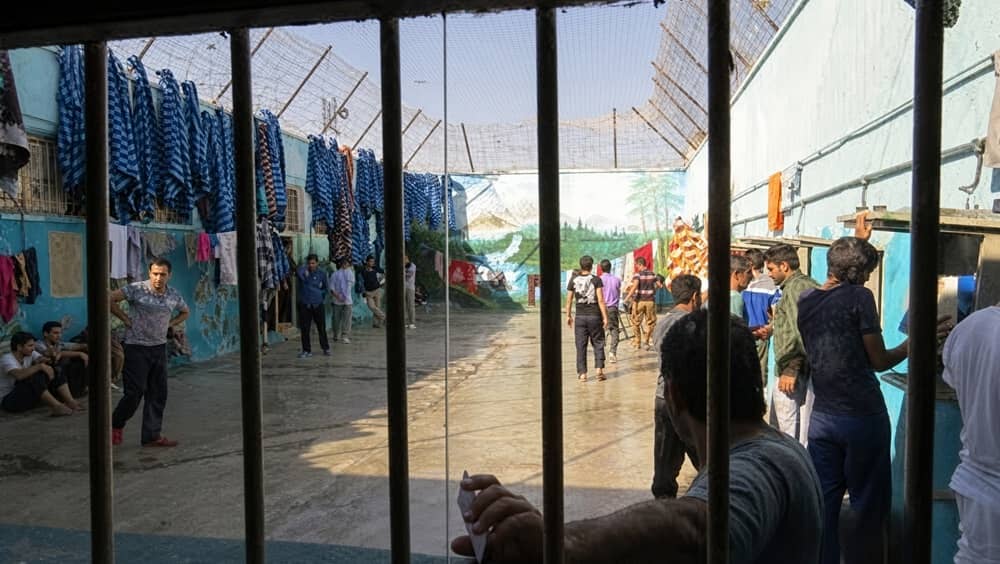
The “No to Execution Tuesdays” campaign issued its latest statement on October 6, 2026, marking its 141st consecutive week of protest. On the eve of the World Day Against the Death Penalty, inmates across 66 prisons in Iran engaged in coordinated hunger strikes, condemning the Iranian regime’s systemic reliance on capital punishment as an instrument of political terror and social suppression.
The statement drew attention to a sharp surge in state-sanctioned killings over the past week, recording at least 22 executions between September 29 and October 5, 2026. Among those executed were five detained protesters: Ali Hemmati and Majid Nikandish from Mashhad, Siavash Jamshidi Kheirabadi from Shahrekord, and Alireza Sepahi and Alireza Raeisi from Isfahan.
Addressing the political motivation behind the recent executions, the statement noted: “We believe that the ruling dictatorship in Iran attempts to securitize the atmosphere of society and intimidate the public by Intensifying executions; but against this policy, social resistance and solidarity are expanding day by day. The ‘No to Execution Tuesdays’ campaign is the voice of prisoners standing behind high prison walls against the death machine; the voice of families who see their loved ones on the brink of destruction, and the voice of a people shouting for the right to life, freedom, equality, and human dignity.”
“No to Execution Tuesdays” Campaign Reaches 66 Prisons Across Iran in Its 141st Week #StopExecutionsInIran #NoDeathPenalty #FreePoliticalPrisonershttps://t.co/InEmAwqQCW
— Iran Freedom (@4FreedominIran) October 6, 2026
The campaign highlighted international documentation of Iran’s execution record, citing a recent Amnesty International report indicating that Iranian authorities executed at least 2,159 people in 2025—the highest recorded figure globally. The statement also pointed to international diplomatic pressure, including a joint statement issued by 46 member states at the 63rd session of the UN Human Rights Council condemning Iran’s escalating use of the death penalty against protesters, women, and youth, a measure welcomed by UN Special Rapporteur Mai Sato.
Issuing a direct call to action to domestic civil society and international anti-death penalty advocates, the campaign organizers urged: “We call upon all the people of Iran, seeking-justice families, prisoners, civil and human rights activists, and all opponents of the death penalty inside and outside the country to support the ‘No to Execution Tuesdays’ campaign so that we may all unite against execution. Let us not allow gallows to become an instrument to silence the voice of society.”
🚨 Iran: “No to Execution Tuesdays” Expands to 66 Prisons
The campaign entered its 140th week as prisoners in Darreh Shahr and Meshgin Shahr joined the movement. It says 79 people, including 6 women and 10 Baluch citizens, were executed in the past month. pic.twitter.com/8PWqPmgvMK— SIMAY AZADI TV (@en_simayazadi) September 29, 2026
According to campaign monitors, coordinated hunger strikes for Week 141 were conducted on October 6, 2026, across both male and female wards in the following 66 prisons:
- Tehran & Alborz: Evin (Men’s & Women’s Wards), Ghezel Hesar (Units 2, 3 & 4), Karaj Central, Fardis Karaj, Greater Tehran, Qarchak, and Khorin Varamin.
- Isfahan & Central: Asadabad Isfahan, Dastgerd Isfahan, Arak, and Choobindar Qazvin.
- Fars, Kohgiluyeh & Boyer-Ahmad: Adelabad Shiraz (Men’s & Women’s Wards), Shiraz Military Prison, Firozabad Fars, Yasuj, Dehdasht, and Gachsaran.
- Khuzestan, Bushehr, Lorestan & Hormozgan: Sheiban Ahvaz, Sepidar Ahvaz (Men’s & Women’s Wards), Ramhormoz, Behbahan, Khorramabad, Borujerd, Borazjan, and Bandar Abbas.
- Sistan & Baluchestan, Kerman & Yazd: Zahedan (Men’s & Women’s Wards), Iranshahr, Bam, Kahnuj, Kerman, Yazd (Men’s & Women’s Wards), and Tabas.
- Gorgan & Khorasan Provinces: Mashhad, Sabzevar, Gonbad-e Kavus, Nishapur, Central Birjand, and Gorgan.
- Caspian Coast (Gilan & Mazandaran): Rasht (Men’s & Women’s Wards), Rudsar, Haviq Talesh, Ezbaram Lahijan, Ziabar Sowme’eh Sara, Qaemshahr, and Noor.
- Kermanshah, Ilam & Chaharmahal and Bakhtiari: Dizelabad Kermanshah, Ilam, Darreh Shahr, and Borujen.
- Northwest & Kurdish Regions (Azerbaijan, Kurdistan & Qom): Ardabil, Meshgin Shahr, Tabriz, Urmia, Salmas, Khoy, Naqadeh, Miandoab, Mahabad, Bukan, Saqqez, Baneh, Marivan, Sanandaj, Kamyaran, Ahar, and Langarud Qom.