
Three-minute read
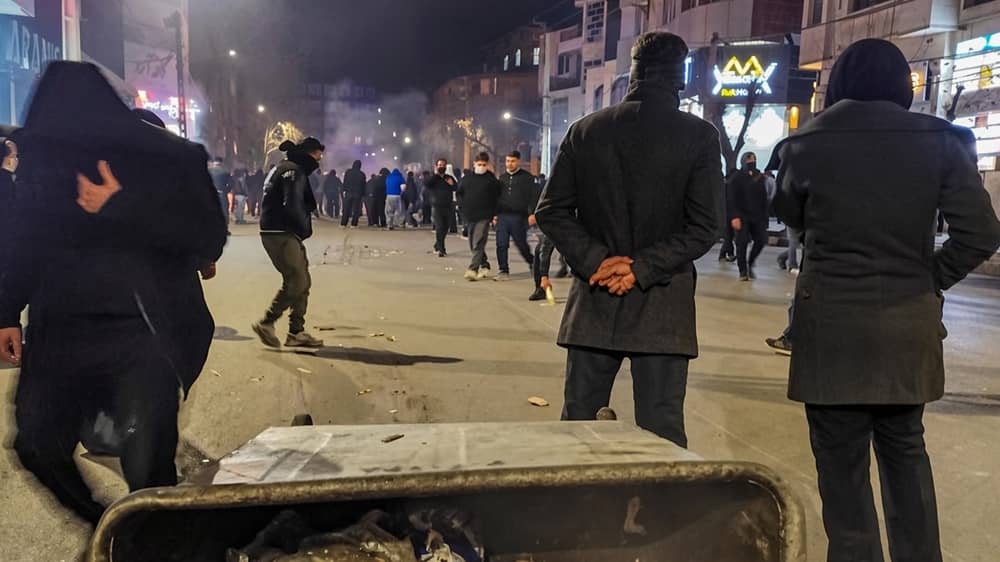
Heavy fighting in Sistan and Baluchestan on October 13 exposed the limits of the regime’s repeated claims that it has neutralized armed networks operating in the southeast. State media initially described an operation in the Chah-Ahmad/Korin area west of Zahedan as the destruction of a small armed cell, but their own reporting showed that combat continued for hours and required repeated operations against additional fighters. Tasnim first reported three people killed in a security operation, then five in a separate IRGC account, and by late afternoon acknowledged that fighting with remaining armed men was still continuing.
The IRGC said the confrontation began after an engineer working on a development project was abducted and claimed that five members of the group were killed, the hostage was freed and one IRGC member was killed. That is the regime’s version of events and has not been independently verified. More important than its characterization is what followed: Tasnim continued issuing updates into the afternoon, reporting another death and admitting that operations had not ended.
Local reporting suggested a substantially larger confrontation. A local source reported heavy fighting beginning around 6 a.m. in the Chah-Ahmad highlands of Taftan, with light, semi-heavy and heavy weapons in use, additional forces sent into the area and combat drones later deployed. Powerful explosions were also reported around Pirsuran in Korin. The source claimed more than 20 Fatemiyoun militiamen were killed. What is clear from both local and state reporting is that the confrontation was not the limited, quickly concluded operation implied by the regime’s initial presentation.
"The political picture over October 9–10 therefore cuts directly against #MojtabaKhamenei’s effort to portray the security establishment in Iran as an increasingly capable pillar of the system," writes @MansoreGolestan.https://t.co/dvwDLGukXa
— NCRI-FAC (@iran_policy) October 10, 2026
Internet restrictions folded into the same security doctrine
The government meanwhile made an unusually direct admission about controlling information flows. Spokeswoman Fatemeh Mohajerani said on October 13 that authorities sometimes deliberately reduce internet speeds, citing the protection of databases and internet-based services. Her explanation places degraded connectivity inside the regime’s continuing wartime-security framework rather than treating it as a technical problem.
That distinction matters because restrictions have substantial domestic costs. The government had previously acknowledged that many online businesses cannot withstand prolonged disruption and that internet restrictions impose large economic losses. Yet security institutions resisted a full reopening after the wartime shutdown, and users continued reporting degraded access. The government is therefore accepting economic damage and tighter information control as part of its broader security posture.
The same logic is visible beyond communications. In Kermanshah, the Intelligence Ministry announced the arrest of what it called two alleged weapons smugglers and claimed the seizure of 109 firearms, including 99 pistols and 10 Kalashnikovs, plus ammunition and magazines. The ministry presented the seizure as evidence of another disrupted security threat. Taken together with the southeast fighting, it points to a society under acute strain, where economic grievances, armed violence, political repression and deep distrust are converging in ways that make even localized incidents potentially destabilizing.
Two police officers were killed in another armed attack in Sistan and Baluchestan.
Meanwhile, the dollar remains near 270,000 tomans—and authorities now threaten websites that publish what they call “false” exchange rates.
On #WorldTeacherAppreciationDay, 47 Iranian teachers…
— NCRI-FAC (@iran_policy) October 5, 2026
Economic pressure reaches students and workers
Security escalation is occurring alongside continued deterioration in everyday living conditions. Student Welfare Fund acting head Reza Hojjati said government support for university meals is being reduced for students who study beyond eight semesters. The government contribution falls from a claimed 90% normally to 85% in semester nine, 80% in semester ten and 70% in semester eleven—tripling the student’s share from 10% to 30%. Hojjati acknowledged that sharply rising food and raw-material costs are placing additional pressure on university catering budgets.
Labor repression also continued. A human-rights group reported that more than ten dismissed Petropars workers in Hoveyzeh were subjected to sentences of 74 lashes and 20 million tomans in fines after protesting dismissals and non-renewal of their contracts. The workers had been convicted of obstructing a road and causing losses, yet reportedly continue weekly protests demanding reinstatement and recognition of their labor rights.
The political significance of October 13 is therefore not the regime’s claim to have destroyed another armed cell, but the widening gap between that rhetoric and the scale of resources still required to maintain control. Armed clashes are continuing despite repeated declarations of success; internet restrictions are being openly justified on security grounds; and coercive measures extend into labor disputes even as basic costs rise for students and households. The regime may portray each confrontation as an isolated threat being eliminated, but its own deployments and emergency measures point instead to multiple pressures demanding sustained coercive attention at the same time.