

THIS PAGE WILL BE UPDATED WITH THE LATEST NEWS
UPDATE: 7:30 AM CEST
PMOI Resistance Units Mark Anniversary of Maryam Rajavi’s Election as NCRI President-Elect with Nationwide Activities
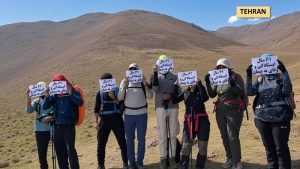
On October 19, 2026, PMOI/MEK Resistance Units carried out 50 activities across 18 Iranian cities to mark the upcoming 33rd anniversary of the introduction of Mrs. Maryam Rajavi as president-elect of the National Council of Resistance of Iran (NCRI).
From Tehran and Karaj to Mashhad, Shiraz, Isfahan, Ahvaz, and Iranshahr, Resistance Units displayed portraits, posters, banners, and handwritten slogans promoting democracy, popular sovereignty, and a free Iran. The nationwide campaign was carried out despite the regime’s repressive security apparatus being on full alert.
In Tehran, a five-member group displayed Maryam Rajavi’s portrait with the slogan, “Democracy, freedom with Maryam Rajavi.” Other posters declared that the voice of freedom would never be silenced and described Rajavi as a symbol of national solidarity for Iran’s freedom.
In Mashhad, two-member teams organized nighttime displays and held handwritten banners expressing support for the Resistance leadership. In Shiraz, three Resistance Unit members displayed messages emphasizing women’s role in bringing about change. In Bushehr, another three-member group carried a banner celebrating women’s ability to shape history.
UN Rapporteur Documents Executions, Mass Arrests, and Deepening Repression in Iran Amid War
A new report submitted to the United Nations General Assembly documents a deepening human rights crisis in Iran, where military conflict has coincided with continued executions, mass arrests, restrictions on civil society, and worsening living conditions.
In her report covering February 1 to August 31, 2026, Mai Sato, the UN Special Rapporteur on the situation of human rights in Iran, describes a population caught between external military attacks and internal repression. The report concludes that the two sources of harm have compounded one another, while the Iranian regime has used wartime conditions to intensify its crackdown on dissent.
Presented in document A/81/371 and transmitted by the UN Secretary-General on September 14, the report documents killings during the December 2025–January 2026 protests, executions that continued during the war, arrests on national-security charges, secret detention, and serious restrictions on access to information.
“The war has not loosened the Iranian authorities’ repression of its own population; it has tightened it,” Sato writes in the report’s conclusion.
The report also stresses that the documented cases represent only part of the abuses that have occurred. Internet shutdowns obstructed the transmission of information, while some witnesses withdrew their consent to provide information because they feared consequences for themselves or their families.
Iran’s Retirees Take to the Streets Over Poverty, Executions, and Political Repression
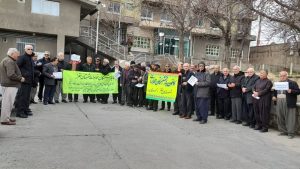
Iranian retirees are once again taking to the streets to demand their basic rights, denouncing a system in which decades of work have failed to secure even a dignified retirement. On October 18, 2026, pensioners from the Social Security Organization, as well as retired steel and mining workers, staged protests in several cities, linking their economic grievances to broader opposition to repression, executions, and corruption.
From Rasht and Ahvaz to Kermanshah, Tehran, Isfahan, and Shush, protesters voiced a common message: pensions no longer provide a secure livelihood amid relentless inflation, rising living costs, and deteriorating access to healthcare. Their slogans also made clear that they see their hardship as part of a wider political and economic crisis, rather than an isolated problem affecting retirees.
People who spent their working lives serving the country now find themselves compelled to demonstrate in the streets to obtain rights they regard as fundamental. Their protests reflect mounting frustration over the gap between the promises of economic security and the daily reality of poverty.
One recurring slogan captured their determination: “Our rights can only be won in the streets.”
Organization of Islamic Cooperation: Iran’s Regime Faces Complete Isolation
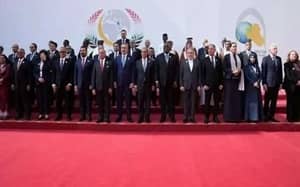
The meeting of foreign ministers of the Organization of Islamic Cooperation (OIC) in Baghdad concluded with the adoption of a resolution against the Iranian regime’s interference in Yemen. The resolution calls on Tehran to respect international law and stop engaging with the representative of Yemen’s Houthi militants in Iran’s capital.
This position places Iran’s regime under collective pressure from the member states of the organization.
At the end of the two-day meeting of foreign ministers of the Organization of Islamic Cooperation in Baghdad, a resolution was adopted that specifically targets the Iranian regime’s ties with Yemen’s Houthi militants and the presence of the group’s representative in Tehran.
Under the resolution, Iran’s regime is called on to respect international law, the United Nations Charter, and the Vienna Conventions on diplomatic and consular relations, and to refrain from engaging with the Houthis’ representative in Tehran.
Iran: Fatal Medical Neglect, Prison Abuses, and Flogging Sentences
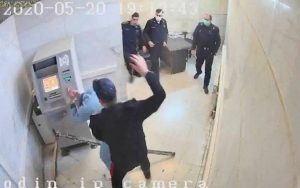
This report documents a severe escalation in systematic human rights violations and breaches of international law across Iranian prisons between August and October 2026. The documented evidence reflects an organized pattern of physical violence by prison guards, intentional medical deprivation resulting in death, physical and psychological torture, and reliance on brutal corporal punishment—specifically flogging—to suppress civil society, protesters, and labor rights activists.
 During a violent raid by prison guards on Hall 4 of Ward 7, political prisoner Amirhossein Moradi was severely beaten. Attempts by guards to transfer him to an undisclosed location met with vocal protests from fellow inmates, triggering further physical violence from security personnel. Officers forcibly moved several prisoners to a punitive facility referred to as “the cage”—a restricted area associated with disciplinary physical isolation—and subsequently transported them to unknown locations. No verifiable information regarding their physical condition or whereabouts has been made available.
Previous Raids (August 2026)
- August 8, 2026: Approximately 50 prison guards raided Halls 3 and 4 of Ward 7 at 11:00 AM, physically assaulting prisoners, destroying and confiscating personal belongings purchased at the inmates’ own expense, and forcibly removing four political prisoners: Amirhossein Moradi, Hassan Amidi, Ehsan Rostami, and Mojtaba Taghavi.
Iranian Officials and Lawmakers Discuss Nuclear Weapons, NPT Exit and Doctrine Change
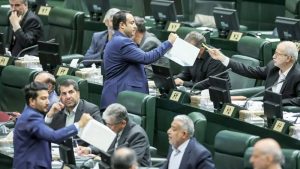
Recent statements by several lawmakers, a senior diplomat and Tehran’s Friday prayer leader indicate that debate over revising Iran’s nuclear doctrine and its membership in the NPT has moved further into the public sphere, although no official decision has yet been announced to build nuclear weapons or change the nuclear fatwa.
Ahmad Naderi, a member of the Iranian parliament’s presiding board, called on October 18 for Iran to build an atomic bomb and said his reading of Ayatollah Mojtaba Khamenei’s positions was that the Islamic Republic’s new leader might hold a different view on nuclear weapons from his father. His remarks were the latest in a series of statements in recent weeks that have brought nuclear deterrence, withdrawal from the Treaty on the Non-Proliferation of Nuclear Weapons and changes to Iran’s nuclear doctrine into public debate.
Naderi said: “From the conduct of His Excellency Ayatollah Seyed Mojtaba Khamenei, the Supreme Leader of the Revolution, I understand that his fatwa will be different and that he will have different views on this matter.” He also explicitly said that Iran should build an atomic bomb.
Berlin Protest Condemns Executions in Iran, Backs MEK Resistance Units
On the 232nd day of their sit-in outside the Iranian regime’s embassy in Berlin, supporters of the PMOI/MEK demanded an end to executions, closure of the embassy, and support for the Resistance Units.
On October 17, on the 232nd day of their protest sit-in outside the mullahs’ regime embassy in Berlin, supporters of the People’s Mojahedin Organization of Iran (PMOI/MEK) condemned the Iranian regime’s ongoing executions and demanded an immediate end to the death penalty. The demonstrators particularly denounced the killing of political prisoners and the wave of executions targeting protesters arrested during uprisings across Iran.

The protesters called for the closure of the Iranian regime’s embassy in Berlin as a center of espionage and terrorism operating on German soil. They also demanded accountability for the regime’s systematic repression, human rights violations, and continued executions in Iran.
MEK Supporters Rally in Hamburg Against Executions in Iran
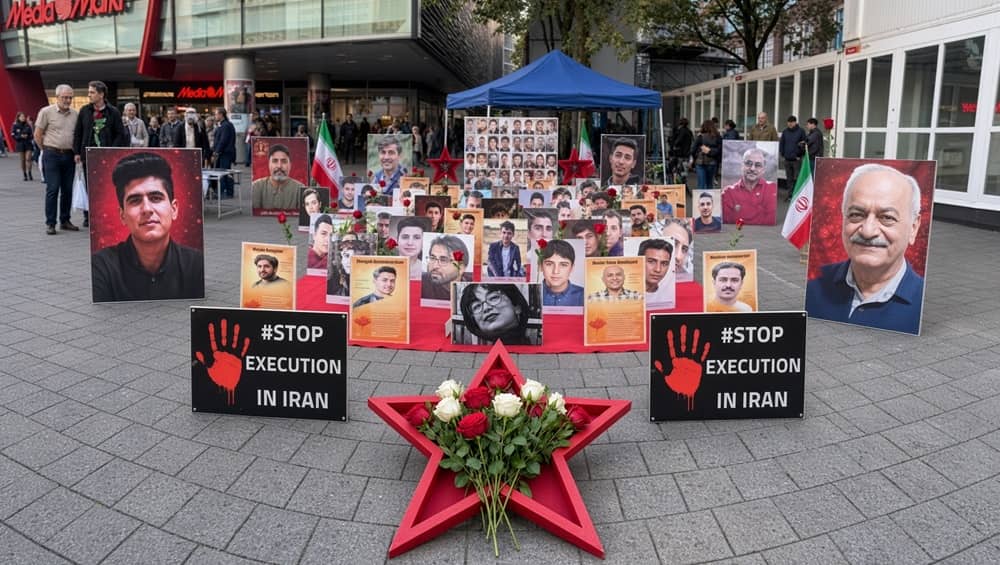
Hamburg, Germany – October 17, 2026 — Supporters of the People’s Mojahedin Organization of Iran (PMOI/MEK) held a rally and photo exhibition in Hamburg to protest executions in Iran and call for an end to the death penalty.
Participants condemned the execution of political prisoners and the continued use of capital punishment against protesters arrested during the January 2026 uprising. They called on the international community to take concrete measures to halt executions and expressed solidarity with the “No to Executions” campaign, which advocates the abolition of the death penalty in Iran.

The demonstrators displayed photographs of victims of executions, highlighting what they described as the Iranian regime’s persistent human rights violations. They called on the German government to adopt a firm policy toward Tehran and take immediate steps to address the ongoing executions.