
THIS PAGE WILL BE UPDATED WITH THE LATEST NEWS
UPDATE: 7:30 AM CEST
Iran’s Protests Reveal a Growing Struggle for the Right to a Dignified Life
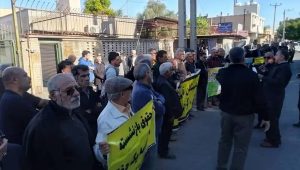
Why should retirees who spent their lives working have to march to demand the pensions and benefits they are owed? Why must workers protest to protect their jobs, students to demand safe food, and families to recover their savings? Across Iran, these questions are being raised in demonstrations by people whose livelihoods are under pressure.
On October 18 and 19, another wave of rallies brought retirees and investors into the streets of several cities, exposing an economic crisis that has become a confrontation with the policies and institutions of the clerical regime.
On October 18, Social Security retirees protested in Tehran, Kermanshah, Shush, Rasht, and Ahvaz. Steel and iron industry retirees held a separate rally in Isfahan. Their gatherings challenged the erosion of pensions, declining purchasing power, and the handling of retirees’ assets.
The following day, telecommunications retirees protested in Kurdistan, Kermanshah, Isfahan, Hamedan, and Ilam provinces. In Isfahan, they gathered outside the governorate, demanding justice and condemning the loss of their rights.
Exclusive Interview With Simay Azadi | UN Special Rapporteur Leopoldo Maldonado on Iran’s Execution Crisis
In an exclusive interview with Simay Azadi, Maldonado pointed to what he described as the unprecedented scale of executions in Iran. He said Amnesty International had recorded at least 2,159 executions in 2025, while information he had received indicated that at least 46 political prisoners and protesters had reportedly been executed since March 19 and more than 100 others were reportedly on death row. He also said protesters, political prisoners, and people accused of opposition affiliation were facing capital charges amid serious allegations of torture and violations of fair-trial rights.

Maldonado also discussed the legacy of the 1988 massacre of political prisoners, warning that impunity for past atrocities could create conditions for serious violations to recur. He called for urgent diplomatic action, a moratorium on executions, access to lawyers, independent monitoring, and investigations into allegations of torture.
When Media Celebrity Is Mistaken for Opposition Leadership
Belgium’s Chamber of Representatives has decided not to extend an official invitation to Reza Pahlavi, son of Iran’s deposed Shah, after Foreign Minister Maxime Prévot warned about the political implications of welcoming him to Parliament. The decision, reported by Belga news agency, came on October 21 after parliamentary leaders failed to reach a consensus on hosting Pahlavi. In earlier remarks reported by Belga, Prévot cautioned against extending an official welcome that could be interpreted as favoring one figure over other opposition figures. He emphasized that neither Pahlavi nor his political ambitions enjoy unanimous support among Iranians.
The controversy began after Belgium’s Reformist Movement (MR) proposed hosting Pahlavi at Parliament on November 5. He is reportedly expected to address the Royal Military Academy the following day at the invitation of Defense Minister Theo Francken.
Prévot’s most consequential observation concerned political legitimacy: Belgium, he said, has no preference for any individual or faction that might govern Iran in the future. That choice belongs exclusively to the Iranian people.
The minister’s intervention, followed by the Chamber’s decision, comes as European institutions increasingly confront controversies over the political significance of giving a highly publicized but divisive exile figure a platform. (EUalive)
Denial of Medical Care to Female Prisoners Poses Serious Health Risks
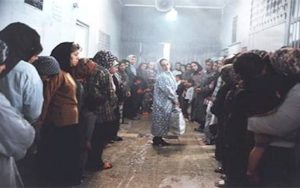
Denial of medical care to female prisoners in Iran continues to raise serious concerns as reports indicate that several incarcerated women suffering from severe and potentially life-threatening illnesses remain deprived of adequate medical treatment, medical furlough, and the implementation of official medical recommendations.
Masoumeh (Farah) Nassaji, a 64-year-old political prisoner held in Evin Prison, continues to serve her sentence despite suffering from multiple medical conditions, including heart disease, asthma, chronic joint pain, and bone disorders. Although Iran’s Legal Medicine Organization has confirmed that she is medically unfit to endure imprisonment, no action has been taken to suspend her sentence or secure her release.
Ms. Nassaji was previously sentenced to five years and four months in prison and has been held in the women’s ward of Evin Prison since September 2022. She has also spent 48 days in solitary confinement.
Responsible Statecraft’s selective attack on Iran’s opposition conceals Tehran’s AI operations

An article published by Responsible Statecraft, titled “How the UAE and MEK weaponize AI to spread propaganda,” offers another example of how allegations against Iran’s organized opposition can overshadow the clerical regime’s documented activities.
Written by Nick Cleveland-Stout, a researcher at the Quincy Institute, co-founded by former National Iranian American Council (NIAC) president Trita Parsi, whose Iran-policy advocacy has long faced accusations of favoring Tehran, the article follows a familiar pattern of attacks on the Iranian Resistance.
Using Anthropic’s September 2026 threat intelligence report, it omits the PMOI’s explicit denial, converts suspicions into established facts, and largely ignores the report’s extensive findings about the Iranian regime’s own AI-enabled propaganda and surveillance operations.
On September 13, 2026, the People’s Mojahedin Organization of Iran (PMOI/MEK) issued a detailed statement categorically rejecting the allegations.
The PMOI declared that they had no knowledge of or involvement in the activities described by Anthropic. They rejected accusations of fraudulent AI operations, reiterated their commitment to complying with AI platform regulations, and requested specific evidence of any alleged violations.
Monarchist Attacks on Iran’s Dissidents: A Repeating Pattern Since the January Protests
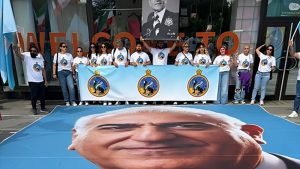
From harassment at PMOI events to threats against businesses and the cancellation of a major Paris rally, the growing pattern of intimidation associated with the monarchist current exposes an authoritarian approach to political opposition—one that echoes the methods Iran’s ruling regime uses to silence dissent.
Since Iran’s January 2026 protest wave, a disturbing pattern has emerged across the Iranian diaspora. Supporters of Reza Pahlavi have been implicated in incidents involving harassment, threats, disruption, and physical violence against PMOI supporters, Kurdish and leftist activists, journalists, business owners, and other critics who reject the restoration of the monarchy.
These incidents span several countries and target people with different political backgrounds. What connects them is not merely disagreement over Iran’s future, but the apparent unwillingness of some monarchist activists to accept the legitimacy of competing opposition currents. From confrontations at political events to pressure on businesses and threats against rival dissidents, the recurring pattern raises a fundamental question: is a movement that claims to offer Iran a democratic future prepared to respect the political freedoms it promises?
Iran’s Deepening International Isolation: A Growing Challenge to the Regime’s Survival
Mounting condemnation from Europe, Gulf states, Lebanon, and the wider Islamic world exposes the costs of Tehran’s regional aggression and domestic repression. Sustained international pressure can help create the conditions for democratic change in Iran.
Iran’s regime has spent decades presenting itself as a regional power capable of projecting influence far beyond its borders. Its network of armed proxies, interference in neighboring countries, and threats against international security have been central to that strategy. Yet a series of diplomatic developments in October 2026 points to a growing problem for Tehran: the policies designed to expand its influence are increasingly generating opposition from countries that once had to accommodate them.
Within approximately 48 hours, several developments highlighted this mounting pressure. European Union leaders condemned the regime’s regional conduct, including its actions concerning the Strait of Hormuz, as well as human rights violations and repression inside Iran. Tehran responded by summoning Ireland’s ambassador, Ireland holding the rotating presidency of the European Union, and Germany’s ambassador.
Inflation Near 90% in Iran as Production Drops By 10%
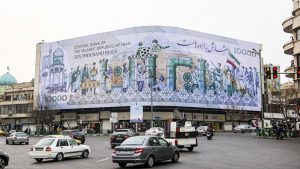
Official figures from Iran’s Statistical Center show that in the spring of 2026, the country’s economy entered its most severe period of stagflation in recent decades, with an annual inflation rate of 73.6% and economic growth of negative 10.1%.
According to Rouydad24, a state-run Iranian news outlet, Iran’s economy is experiencing two alarming records simultaneously in 2026: inflation has reached historically high levels, while economic growth has fallen into negative territory. This combination has placed the economy in a state of stagflation, in which households’ purchasing power is being squeezed by rising prices, while declining production and economic activity are undermining prospects for employment and investment.
However, comparing the current situation with a single year or administration is not enough to understand its full scale. Iran’s economic history shows that the country has previously endured periods of war, revolution, sanctions, recession, and inflation. What distinguishes the current situation is the simultaneous occurrence of a sharp economic contraction and inflation at a level that was not recorded even during the most difficult years of war and revolution.
A review of Iran’s economic performance from the 1980s to the present reveals a changing trajectory: from a decade of double-digit economic growth and single-digit inflation, to the 1990s, which ended with five consecutive years of negative growth; the 1980s, when the eight-year Iran-Iraq War put the economy under pressure; the 1990s, when economic adjustment shocks pushed inflation to nearly 50%; and finally, the 2000s and 2020s, when sanctions, instability, and chronic inflation became defining features of the economy.
Higher Food Vouchers: A Temporary Fix for Rising Prices and Declining Purchasing Power of Iranian People

The increase in Iran’s electronic food voucher from 10 million to 15 million rials for certain groups may appear to indicate that the Iranian regime is concerned about people’s livelihoods. However, the fundamental question is whether an increase of 5 million rials can make a meaningful difference in household living standards under current inflationary conditions. The reality is that nominal increases in government assistance cannot address the growing pressure of living costs without controlling price hikes and preserving people’s purchasing power.
The announced 50% increase in the food voucher may seem significant at first glance, but the real criterion for evaluating this policy is not the percentage increase; it is the quantity of essential goods that households can purchase with the amount provided. When food, housing, and other daily necessities become more expensive, the real value of government assistance also declines. The government must therefore explain how this increase is supposed to offset some of the economic pressure on the public.
An increase in the exchange rate, particularly when it occurs over a short period, leads to higher production and import costs and ultimately drives up the prices of goods. If, as reported, a 400,000-rial increase in the exchange rate over four days leads to higher living costs, its impact could far outweigh the benefit of the increased food voucher. On the one hand, the Iranian regime creates inflationary pressure through its policies; on the other, it expects limited assistance payments to fully compensate for the resulting damage.
Tehran Weighs Strait of Hormuz Pressure and Diplomacy as War Fears Grow
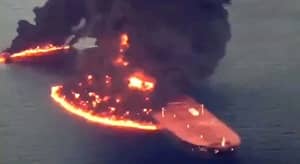
As signs of preparations for a new round of attacks on Iran increase and public warnings about the resumption of military operations grow, figures and media outlets close to Tehran’s ruling establishment are putting forward two different approaches: maintaining pressure in the Strait of Hormuz and using military power to extract concessions, or showing flexibility and moving toward an agreement to prevent another war. Fresh reports of preparations for possible new attacks on Iran, along with continued military threats, have made Tehran’s decision over the next stage of the confrontation more urgent. Inside the Islamic Republic, one side of the debate favors maintaining control of the Strait of Hormuz and using the vital energy export route and military power as tools of pressure and deterrence; the other supports negotiations, regional mediation and de-escalation before a new round of war begins.
The Khorasan newspaper has argued that granting Washington a “major concession” is not a way out of the crisis and that Tehran should improve its position by increasing its strength and applying pressure on the other side’s economic interests.
PMOI Supporters in Gothenburg Back the NCRI as a Democratic Alternative for a Democratic Republic in Iran
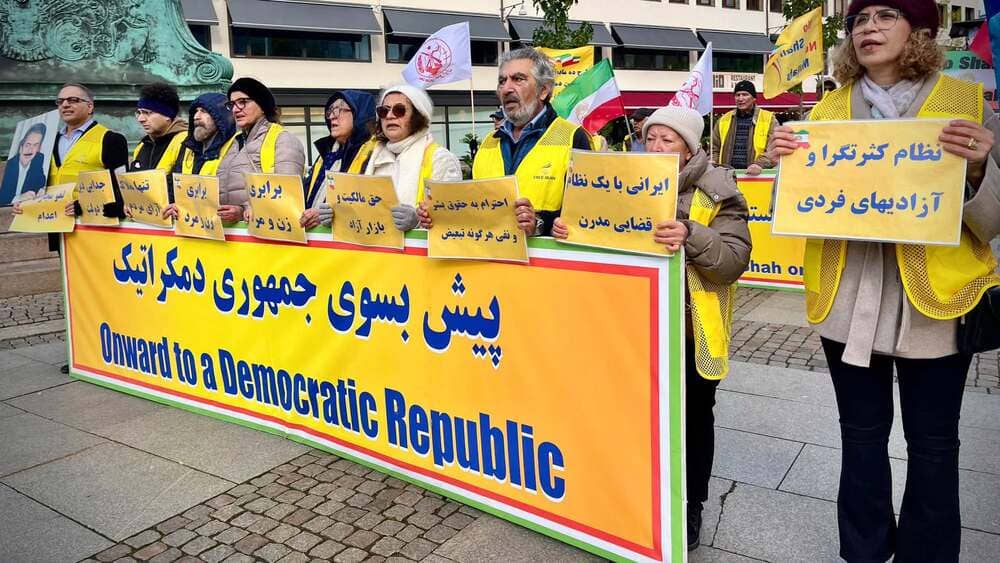
Gothenburg, Sweden – October 17, 2026 – Supporters of the People’s Mojahedin Organization of Iran (PMOI/MEK held a rally in Gothenburg to reaffirm their support for the National Council of Resistance of Iran (NCRI) as a democratic alternative to Iran’s ruling religious dictatorship. The gathering took place ahead of the anniversary of October 22, 1993, when the NCRI elected Maryam Rajavi as president-elect of the provisional government for a transitional period leading to the establishment of a democratic republic in Iran.

Under the proposed transition, the provisional government would have a six-month mandate to prepare for elections to a Constituent Assembly, paving the way for the transfer of sovereignty to the Iranian people.
Participants expressed their support for the NCRI’s democratic platform and Maryam Rajavi’s Ten-Point Plan for Iran’s future, which advocates a democratic republic and rejects all forms of dictatorship, whether a restoration of the former monarchical system or the continuation of the current religious dictatorship.
Iranian Resistance Supporters in Brussels Back “No to Execution Tuesdays” Campaign
Brussels, Belgium – October 20, 2026 – Supporters of the Iranian Resistance from the Iranian community in Belgium held a solidarity gathering in Brussels on Tuesday, October 20, in support of the “No to Execution Tuesdays” campaign and Iranian political prisoners opposing executions in Iran.
The gathering took place in response to Leopoldo Maldonado Gutiérrez joining the campaign and announcing a hunger strike in solidarity with political prisoners in Iran on October 20, 2026.

During the gathering in Brussels, Iranian Resistance supporters expressed their support for Maldonado and the political prisoners participating in the “No to Execution Tuesdays” campaign. They reaffirmed their opposition to executions in Iran and highlighted the importance of international solidarity with prisoners protesting against executions and human rights violations.
UN Special Rapporteur Leopoldo Maldonado Joins “No to Execution Tuesdays” Hunger Strike as It Enters 143rd Week
Leopoldo Maldonado Gutiérrez, the United Nations Special Rapporteur on the promotion and protection of the right to freedom of opinion and expression, has joined the “No to Execution Tuesdays” campaign with a 24-hour hunger strike. On Monday, 19 October 2026, he announced that he would begin the action at midnight Iran time, coinciding with Tuesday, 20 October — the 143rd consecutive week of the prisoners’ weekly protest.
Sammen med en række andre medlemmer af EU Parlamente viste jeg i dag min solidaritet med de politiske fanger i Iran og krævede et øjeblikkeligt stop for henrettelserne her. pic.twitter.com/5UhAPvaXjd
— Per Clausen (@PerClausen3) October 20, 2026
Maldonado stated: “I am joining a solidarity action with political prisoners in Iran participating in #NoToExecutionTuesdays. At 12 am Iran time, I’m going to start a 24-hour hunger strike.”
He later confirmed: “I have begun my solidarity action in support of political prisoners in Iran and those participating in #NoToExecutionTuesdays. I stand with those facing persecution for their political opinions, expression and peaceful dissent, and reiterate my call for an immediate halt to executions.”