
Three-minute read
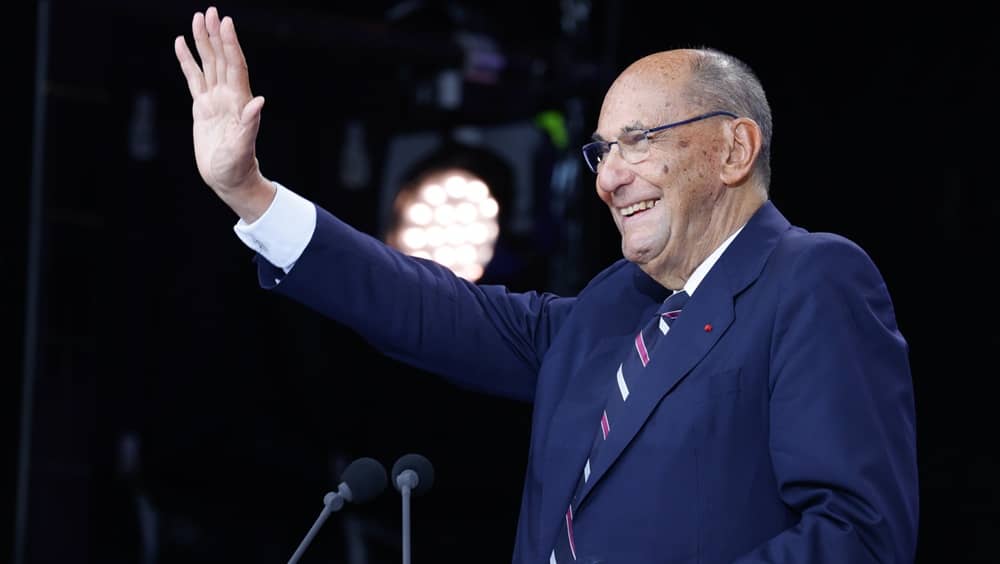
Spanish prosecutors have formally concluded that the clerical regime ruling Iran was behind the 2023 attempt to assassinate former European Parliament Vice President Alejo Vidal-Quadras in Madrid, marking the clearest judicial attribution yet in a case that has increasingly exposed Tehran’s use of European criminal networks against opponents abroad.
In an indictment reported by major Spanish outlets on October 23, prosecutors requested prison terms of up to 27 years for seven defendants accused of participating in the November 9, 2023, attack, when a gunman shot Dr. Vidal-Quadras in the face near his Madrid home.
The significance lies less in the sentences requested than in how prosecutors now describe the operation.
EFE quoted the prosecution as stating that Iran has been involved in covert operations to “persecute, intimidate and even assassinate opponents, dissidents and critical voices outside its borders.” Prosecutors say the criminal group involved in the Dr. Vidal-Quadras attack operated from Iran.
From an “Iranian Lead” to a Prosecutorial Conclusion
For nearly three years, Spanish investigators referred cautiously to the pista iraní—the “Iranian lead.”
That formulation has now hardened.
EL PAÍS Traces Fugitive ‘Pacho’ Linked to Assassination Attempt on Vidal-Quadras to #Iranhttps://t.co/Yqmy1Fxnyy
— NCRI-FAC (@iran_policy) August 20, 2025
El País reported that prosecutors place Iran behind the assassination attempt and consider it part of an international campaign against opponents of the clerical establishment. The paper noted that investigating judge Santiago Pedraz had already concluded that the attack was connected to Dr. Vidal-Quadras’s role as a prominent European supporter of the Iranian opposition and particularly the People’s Mojahedin Organization of Iran (PMOI/MEK).
Dr. Vidal-Quadras had played an important role in efforts to remove the MEK from European terrorist lists. Tehran subsequently placed him on a sanctions list in October 2022, accusing him of supporting terrorism.
Spanish prosecutors now regard that history as central to motive.
La Vanguardia reported that the indictment specifically recalls Tehran’s designation of Dr. Vidal-Quadras and links the shooting to his political support for the Iranian opposition.
A Warning Five Days After the Shooting
One detail in the prosecution case is particularly striking.
Five days after Dr. Vidal-Quadras was shot, Iran’s Fars News Agency published a warning to Spain concerning the MEK. According to La Vanguardia, prosecutors interpret the message as connected to the assassination attempt.
Spanish court says attempt on former politician's life linked to opposition to Iran leadership – https://t.co/sYXs4Y3Z49
— Reuters Iran (@ReutersIran) July 9, 2025
The warning said Spain should avoid becoming part of an MEK “scenario” and that hosting or allowing the organization to operate on Spanish soil would have “serious consequences.”
The timing now forms part of the Spanish prosecution’s reconstruction of the political context surrounding the attack.
The alleged operational structure was deliberately indirect. Prosecutors identify Sami Bekal Bounouare as the organizer who gave instructions for the assassination. He remains a fugitive. Spanish investigators believe he fled through Morocco, Qatar, Brazil, Colombia and Turkey before ultimately reaching Iran. El País reported in 2025 that investigators believe he has been sheltering there.
Tehran’s Criminal Proxies in Europe
The case also fits a broader pattern increasingly examined by European security services: the Iranian regime outsourcing violence to criminal organizations rather than deploying identifiable state operatives.
The suspected gunman, Mehrez Ayari, has been linked by investigators to the Mocro Maffia, a loose network of organized-crime groups operating largely in the Netherlands and Belgium.
How Prof #VidalQuadras Landed on #Tehran’s Hit Listhttps://t.co/wFUg91YS2P
— NCRI-FAC (@iran_policy) November 12, 2023
EFE reported in 2024 that investigators considered the Mocro Maffia connection an important reinforcement of the Iranian hypothesis because Tehran had previously been accused of employing criminals associated with the network.
The case became still more significant when Ayari was arrested in the Netherlands while allegedly preparing another politically motivated killing. Dutch authorities were also investigating him over a suspected plot against an Iranian activist and journalist.
Dutch intelligence subsequently went further. As El País reported in April 2025, the Netherlands’ AIVD intelligence service identified the Dr. Vidal-Quadras attack as fitting Tehran’s strategy of using criminal networks to silence opponents abroad.
That method provides obvious advantages: distance between the state and the trigger man, criminal intermediaries who can be discarded, and plausible deniability if an operation fails.
A Case Larger Than One Victim
Dr. Vidal-Quadras survived because he turned his head as the shot was fired and received immediate medical assistance.
The prosecution’s latest filing, however, transforms the significance of his case.
Prof. @VidalQuadras: Arrested Man Planned to Kill Me at #Iranian Regime’s Behesthttps://t.co/QOMtTGQeK5
— NCRI-FAC (@iran_policy) June 21, 2024
What began in November 2023 as a shooting on a Madrid street is now being presented by Spanish prosecutors as one episode in a wider campaign extending beyond Spain—one in which political targets are identified by Tehran, criminal intermediaries allegedly provide operational distance, and violence is outsourced across European borders.
As elDiario.es summarized the prosecution’s position, the assassination attempt was part of “a covert operation by Iran.”
For European governments, that wording carries implications far beyond the seven defendants now awaiting trial.