
THIS PAGE WILL BE UPDATED WITH THE LATEST NEWS
UPDATE: 7:30 AM CET
Iran Drops to 144th in Gender Gap Index; State Media Admits to the Crisis

The World Economic Forum’s annual report, titled “Global Gender Gap 2026,” paints a shocking picture of the critical condition facing women in Iran under the mullahs’ regime. According to this official report, as reflected in state-run media, Iran ranks 144th among 145 countries with an overall score of 0.585, standing just above Chad at the very bottom of the table.
These documented figures reveal that the deepening gender gap under the clergy’s rule has prevented women from securing an equitable share in the economy, management, and decision-making, despite achieving high levels of education.
According to the data, Iran’s educational attainment parity index stands at 98.4%, yet the parity score for female labor force participation is registered at a mere 20.9%, and for managerial and legislative positions at 25.5%.
This vast disconnect demonstrates that the regime exploits female human capital merely as cheap labor, while erecting iron curtains around the distribution of income and wealth.
Analyses indicate that the estimated earned income parity score for women relative to men has plummeted over the past two decades from 28.5% in 2006 to 16.3% in 2026, a decline of 12.2 percentage points.
Belgian Legal Scholars and Political Figures Warn Against Legitimizing Reza Pahlavi
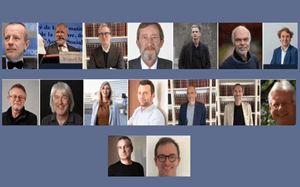
In a letter addressed to Maxime Prévot, Belgium’s deputy prime minister and foreign minister, the signatories expressed deep concern over the invitation extended to Pahlavi to speak at the Belgian parliament before the invitation and planned appearance were canceled. They urged the Belgian government to oppose such invitations and defend the Iranian people’s right to determine their political future through an inclusive democratic process.
The letter draws a clear distinction between supporting the Iranian people’s struggle for freedom and granting political legitimacy to a figure whose family history and proposed transition arrangements, the signatories argue, raise fundamental questions about democracy and the concentration of power.
“We stand firmly with the people of Iran in their struggle for freedom, democracy, and human rights,” the letter states. “Precisely for this reason, Belgium should not legitimize an individual whose political project represents a return to another form of dictatorship.”
Iran’s Regime Faces Mounting International Pressure on Oil, Banking, and Nuclear Activities
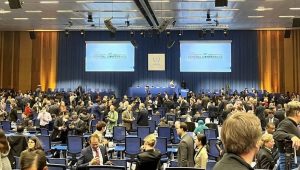
The developments point to growing scrutiny of the regime’s conduct across several distinct areas. Restrictions on oil revenues threaten a major source of foreign currency, European measures are tightening the financial environment, and international institutions are raising concerns about nuclear verification and support for regional armed groups. Meanwhile, executions, torture, and the repression of political opponents remain central to international criticism of the regime.
Together, these pressures are creating a more restrictive environment for Tehran, limiting its options across economic, diplomatic, and security policy.
Iran Regime Revives Internet Control Plan as Power Struggle Deepens
The renewed initiative comes as internet access has yet to return fully to normal following months of restrictions. Rather than restoring unrestricted access, the regime is moving to institutionalize a more centralized system of surveillance and control, adding new layers of bureaucracy to an already heavily restricted digital environment.
The bill revives the central objectives of an earlier internet-control initiative that encountered public opposition during the previous parliamentary term. Although the new version is reportedly shorter and contains fewer provisions, its key mechanisms would significantly strengthen the authorities’ ability to regulate online activity.
Iran’s Drug Crisis: Soaring Prices, Shortages, and Mounting Pressure on Patients
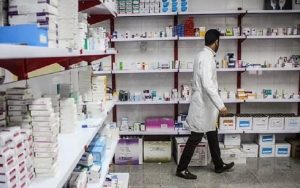
Iran’s pharmaceutical market faces a range of problems, including shortages of certain medicines, difficulties for patients in accessing the medications they need, rising prices, and the rationing of some drugs. These conditions have heightened concerns among patients with chronic illnesses, including diabetes, cancer, and neurological and psychiatric disorders.
Mohammad Hashemi, spokesperson for Iran’s Food and Drug Administration, responded to a question from Rokna, a state-run news agency, about problems with medicine supplies. Referring to restrictions that he said had intensified over the past year, he identified the growing delay in payments owed as one of the main challenges.
He explained that some payments previously took around six to seven months to settle, but the period has now increased to 12 to 13 months.
For patients, however, the main issue is not simply the rising cost of production or the final price of medicines. It is whether the medications they need are available, how much they cost, when they can be obtained, and in what quantities.
As Renewed War Fears Push Oil Above $117, Iranian Officials Debate Hormuz Strategy

As preparations increase for a possible new round of attacks and Brent crude rises above $117, officials and media outlets within the Islamic Republic are offering different approaches to using the Strait of Hormuz, widening the scope of war and keeping diplomacy open.
The growing risk of renewed attacks on Iran, alongside Brent crude moving above $117, has brought the debate over how Tehran should confront another round of war into the Islamic Republic’s political establishment. Officials and media outlets close to ruling factions are, on one side, emphasizing the use of the Strait of Hormuz and an expansion of potential targets to raise the cost of war, while other voices are calling for restraint in maximalist rhetoric, the preservation of diplomatic channels and a defined path toward ending the crisis.
Mohsen Rezaei, secretary of Iran’s Supreme National Security Council, has said that if diplomacy cannot convince the other side of the costs of military action, the range of Iranian targets in the next war could expand. Shargh reported him as saying that data centers, communications cables and artificial intelligence facilities could also be included among potential targets in such a scenario.
PMOI Supporters in Paris Expose Iran’s Executions Despite Stormy Weather
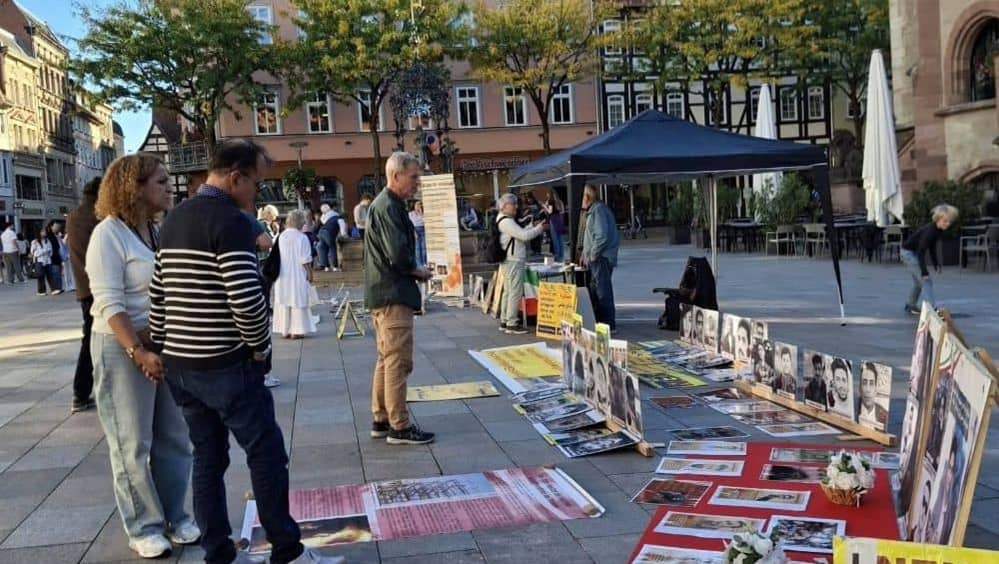
Paris, October 23, 2026 — Despite rainy weather and strong winds, supporters of the People’s Mojahedin Organization of Iran (PMOI/MEK) held a book table and photo exhibition in Paris, drawing attention to Iran’s deepening human rights crisis and the regime’s systematic executions of political prisoners and protesters detained during nationwide uprisings.
Participants urged the French public and the international community to recognize the suffering of the Iranian people and their clear rejection of dictatorship in both its monarchical and theocratic forms.

Photographs, personal testimonies, and related materials highlighted the courage and sacrifices of those who took part in Iran’s nationwide uprisings. The exhibition also drew attention to the regime’s ongoing human rights violations, including the execution of political prisoners and the prolonged imprisonment of protesters.
New Milton, UK: Campaign Calls for End to Executions in Iran and Rejects All Forms of Dictatorship
New Milton, Hampshire, UK — 24 October 2026: Members of the Academics in Exile Association in the UK, which supports the Iranian Resistance (NCRI), took to the streets of New Milton with a clear message: Iran’s executions must stop.
Through a book table and photo exhibition, the organizers sought to raise public awareness of the Iranian regime’s escalating executions, systematic repression, and serious human rights violations. Through photographs and publications, they highlighted the human cost of repression in Iran and the suffering endured by ordinary people.
NEWFOREST- NEWMILTON, UK — 24 October 2026
Members of Academics in Exile and supporters of the NCRI took to the streets of New Milton with a clear message: Iran’s executions must stop.
Through a book table and photo exhibition, we exposed the Iranian regime’s escalating… pic.twitter.com/dD4GgYGaeo
— Academics In Exile Association (@iranianacademic) October 24, 2026
The public response was powerful. People expressed solidarity with the Iranian people’s struggle for freedom, democracy, justice, and a secular republic. Many also signed petitions calling on the United Nations and the international community to take concrete action to stop executions and support the Iranian people’s democratic aspirations.