
THIS PAGE WILL BE UPDATED WITH THE LATEST NEWS
UPDATE: 7:30 AM CET
PMOI Resistance Units Launch Nationwide Operations to Commemorate Iran’s November 2019 Uprising
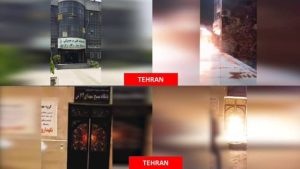
On November 14, 2026, Resistance Units affiliated with the People’s Mojahedin Organization of Iran (PMOI/MEK) carried out 30 operations against the Iranian regime’s centers and symbols of repression across the country, marking the seventh anniversary of the November 2019 uprising.
The operations took place in Tehran and 16 other cities, targeting bases of the Islamic Revolutionary Guard Corps (IRGC) Basij, regime-affiliated institutions, and propaganda symbols featuring current and former regime leaders. Conducted under tight security measures and surveillance, the operations commemorated the more than 1,500 protesters killed during the November 2019 uprising and underscored the Resistance Units’ determination to continue the struggle against the regime.
A significant portion of the operations targeted institutions associated with the regime’s security and repressive apparatus.
In Tehran, Resistance Units targeted a regime building and set fire to the entrances of two IRGC Basij bases. In Ahvaz and Rask, they targeted Basij bases, while in Khorramabad and Iranshahr, they set fire to signs identifying Basij facilities. In Kermanshah, another Basij base was targeted.
Iran’s Executioners Are Running Amok While the World Looks Away

How many more young Iranians must hang from the gallows before the international community finally finds its voice? How many more prisoners must be tortured, beaten, and condemned by sham courts before Western governments recognize that expressions of concern are a woefully inadequate response to crimes against humanity?
Iran’s clerical dictatorship is conducting a campaign of terror against its own people. The executioners are working overtime. The prisons are overflowing. Families are being intimidated into silence. Yet the response from much of the democratic world remains depressingly familiar. Statements are issued, concern is expressed, diplomatic protests are lodged, and the killing continues.
At least 37 people arrested during January’s nationwide uprising had reportedly been executed by October 22. Another 158 protesters had been identified as facing death sentences. Five further executions in early November brought the documented toll to at least 42, assuming no overlap in the reported cases. These are human beings, many of them young people whose apparent crime was to demand freedom from a brutal theocracy.
Women Retirement in Iran: Longer Working Years, Fewer Opportunities
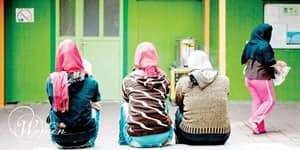
Women Retirement in Iran is becoming increasingly difficult under the regime’s new Social Security law, which requires many women to work longer before qualifying for retirement benefits. The change comes as women continue to face discrimination in employment, higher unemployment rates, job insecurity, and unequal access to economic opportunities throughout the labor market.
Under the new Social Security retirement law, many women must accumulate more years of employment records before becoming eligible for retirement benefits. In some cases, additional months are added to the required years of service, effectively delaying retirement for many working women. (Eghtesaad24, November 13, 2026)
Under Article 76 of Iran’s Social Security Law, women have traditionally been able to retire under three different arrangements: at age 45 with 30 years of insurance contributions, at age 42 for female workers with 20 years of work history, or at age 55 with 20 years of contributions and eligibility for a full minimum pension.
Iran’s Successive Uprisings Have Changed Society Beyond Recognition
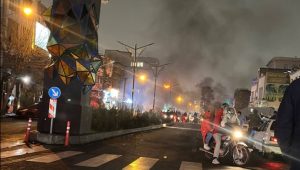
The most important development is not simply that more Iranians have become politically conscious. It is that successive confrontations with dictatorship have changed the way growing sections of society understand the source of their problems and the possibility of resolving them. The January 2026 uprising, following the nationwide protests of 2017–2018, November 2019, and 2022, brought this accumulated transformation into particularly sharp focus.
Under the rule of the mullahs, political disengagement has never been an incidental objective. It has been an essential instrument of maintaining power. An authoritarian system built around absolute religious authority cannot tolerate an independent society that questions the legitimacy of its rulers, challenges their decisions, or demands a meaningful role in determining its future. Consequently, the regime has invested heavily in propaganda, ideological indoctrination, religious coercion, surveillance, imprisonment, and executions to discourage political participation and preserve obedience.
Regime Insiders Warn of More Violent Protests as Economic Collapse Pushes Iran’s Middle Class into Poverty
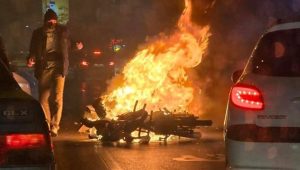
Two striking admissions by figures within Iran’s ruling establishment expose the growing economic and political pressures confronting the regime. While a government-affiliated analyst warns that mounting economic and social dissatisfaction could produce another round of protests, potentially more violent than the 2025 uprising, a member of parliament acknowledges that the country’s middle class has effectively disappeared and that further price increases of 30 to 40 percent are approaching. Taken together, their remarks reveal growing concern within the establishment that the regime’s economic policies, declining living standards, and inability to address public grievances are creating conditions for renewed unrest.
Parviz Amini, a regime-affiliated political analyst, has openly warned that worsening economic and social conditions could lead to a new wave of protests, potentially more violent than those witnessed in 2025.
Speaking to the state-affiliated Khabar Online website, Amini identified the combination of declining external war-related threats and increasing domestic dissatisfaction as a particularly dangerous scenario for the regime.
Air Pollution in Tehran: When the Regime’s Policies Make It Hard for People to Breathe!
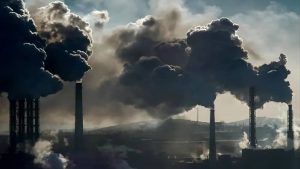
On Sunday, November 15, Tehran ranked as the world’s second most polluted major city, recording an air pollution index of 193. This level, classified as “unhealthy,” has once again exposed the scale of a deep environmental and public health crisis that can no longer be attributed to temperature inversions, reduced wind speeds, or seasonal conditions. Air pollution in Iran has become a structural problem whose roots must be traced to energy, transportation, and industrial policies, as well as the way national resources are managed. According to data from the international website IQAir, Tehran’s Air Quality Index reached 193 that day, with fine particulate matter (PM2.5) identified as the main pollutant. Because of their extremely small size, these particles can penetrate the respiratory system’s natural defenses and even enter the bloodstream. The World Health Organization has emphasized that exposure to these pollutants increases the risk of heart disease, stroke, lung cancer, and chronic respiratory diseases.
From an environmental perspective, the most dangerous feature of the air pollution crisis is its persistence. When people are exposed to particulate matter and toxic pollutants over months and years, the resulting harm is not limited to coughing, shortness of breath, and temporary discomfort. The health of the heart, lungs, and nervous system—and even children’s physical and cognitive development—is affected.
95% of Iranians Are Affected by Drought

Iran’s water crisis has entered a new phase, one in which increased rainfall no longer means an end to water shortages. The latest figures from Iran’s Water Resources Management Company, as of November 1, show that the country’s dam reserves have reached 22.58 billion cubic meters. Although this figure represents a 30% increase compared to last year, it fills only 43% of the dams’ total capacity, leaving 57% of their reservoirs empty.
According to Rokna, a state-run news agency, when it rains, the city breathes a sigh of relief for a moment. The streets get wet, the air feels lighter, and many people think the crisis has passed. But behind the concrete walls of dams and deep beneath the ground in underground aquifers, the reality tells a different story: that of a country still teetering on the brink of water shortages despite a relative increase in rainfall.
The country’s dams are, on average, only 43% full. This means that more than half of Iran’s water storage capacity, or 57% of its total reservoir capacity, remains empty.
Import Costs Soar 14-Fold as Trucks Remain Stranded at Iran’s Borders

Iran’s trade is increasingly besieged by numerous restrictions, ranging from a 14-fold increase in import costs to trucks being stranded at border crossings. These disruptions are driving up the prices of consumer goods every day and placing an increasing burden on Iranian households.
In this regard, Eghtesad News, a state-run economic news outlet, has addressed some aspects of this crisis. Iran’s foreign trade has faced a series of restrictions and disruptions in recent months. Changes in transportation routes, difficulties accessing certain trade gateways, and restrictions on cross-border traffic have forced businesses to pay higher costs to obtain raw materials, components, and essential goods.
The consequences of these disruptions are spreading across various sectors of the economy. Higher transportation, insurance, and trade transaction costs can increase production costs.
Morteza Kuhnavard, a member of the board of directors of the Alborz Chamber of Commerce and a member of the Iran Chamber of Commerce’s board of representatives, has warned about the consequences of the U.S. “Iron Gate” initiative targeting Iran. He says expanding restrictions could place enormous pressure on customs facilities, production, and the country’s supply chain.
Iran-Linked Cyber Operations Target Infrastructure in the U.S. and Europe

According to reporting by The Wall Street Journal and statements attributed to U.S. and European officials, cyber incidents since the summer of 2026 have included attacks or attempted intrusions involving water systems, maritime networks and commercial refrigeration infrastructure.
Cybersecurity officials and researchers cited in these reports have said the incidents indicate an increased focus by Iranian-linked actors on operational technology, including programmable logic controllers, or PLCs, that manage industrial and infrastructure systems.
This report examines those incidents, the methods attributed to Iranian-linked groups and how their activities differ from cyber operations associated with China, Russia and North Korea.
According to The Wall Street Journal, investigators have examined several categories of cyber incidents since the summer of 2026 in which hackers linked to Iran are suspected of involvement.
Operators of water facilities in several U.S. states reportedly lost access to control systems following cyber intrusions.
Brussels Rally Honors Iran’s 2019 Uprising Martyrs, Calls for Democratic Republic
Brussels, Belgium — November 14, 2026 — Supporters of the Iranian Resistance, associated with the NCRI and PMOI/MEK, held a rally and photo exhibition at Schuman Square in Brussels to mark the anniversary of Iran’s November 2019 uprising. The event honored more than 1,500 people killed during the nationwide protests.
Participants condemned the Iranian regime’s use of executions as a tool of repression. They called for an end to state violence, the immediate abolition of the death penalty, and the release of all political prisoners.

The exhibition displayed photographs of victims of Iran’s nationwide uprisings in 2022 and 2026, as well as political prisoners and protesters executed by the Iranian regime, particularly in recent months.
They also paid tribute to the martyrs of Iran’s nationwide uprisings and to executed political prisoners and protesters by laying flowers before their photographs.
PMOI Supporters Rally in Copenhagen to Mark November 2019 Uprising, Condemn Executions in Iran
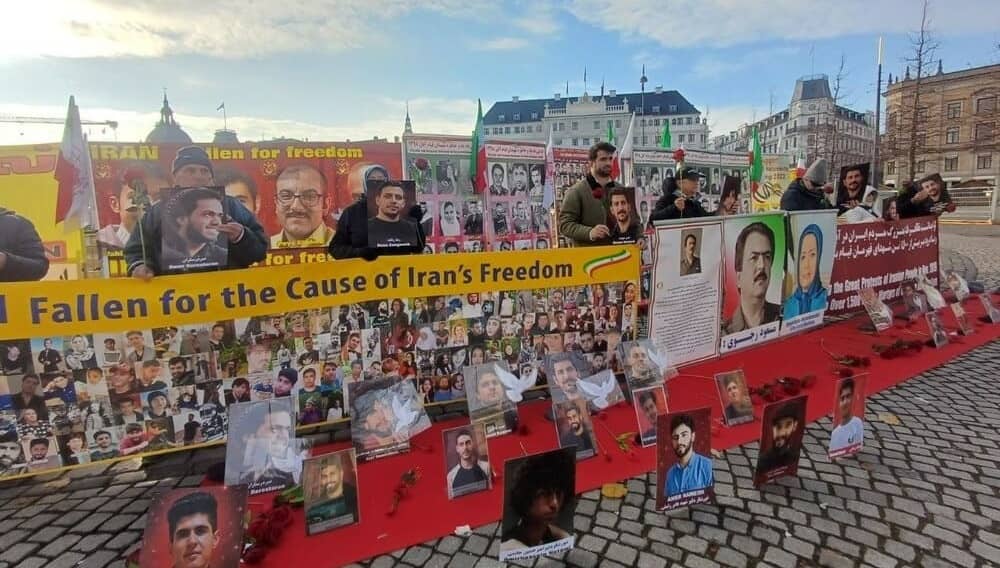
Copenhagen, Denmark – November 14, 2026 – Supporters of the People’s Mojahedin Organization of Iran (PMOI/MEK) held a rally in Copenhagen to mark the seventh anniversary of the nationwide November 2019 uprising and pay tribute to those who lost their lives during the protests. The rally also condemned the Iranian regime’s continued use of the death penalty and drew attention to the cases of political prisoners and protesters at risk of execution.

Participants called for regime change in Iran and urged the Danish government to adopt a firm stance against the regime’s ongoing human rights violations. They also called for the closure of the Iranian regime’s embassy in Denmark as a center for espionage and terrorism.
Aarhus Rally Marks November 2019 Uprising Anniversary, Calls for End to Executions in Iran
Aarhus, Denmark – November 14, 2026 – Supporters of the People’s Mojahedin Organization of Iran (PMOI/MEK) held a rally in Aarhus to mark the seventh anniversary of the nationwide November 2019 uprising and honor those who lost their lives. The event also condemned the Iranian regime’s continued use of the death penalty and highlighted the cases of political prisoners and protesters facing execution.

The demonstrators called for regime change and urged the Danish government to take a firm stance against the Iranian regime’s ongoing human rights violations. They also called for the closure of the Iranian regime’s embassy in Denmark as a center for espionage and terrorism.
Amsterdam Rally Honors Iran’s 2019 Uprising Martyrs, Calls for Halt to Executions in Iran
Amsterdam, Netherlands – November 14, 2025 — Supporters of the People’s Mojahedin Organization of Iran (PMOI/MEK) and members of Iranian communities, including Iranian Kurds and other Iranian groups, held a rally and photo exhibition at Museumplein in Amsterdam to mark the seventh anniversary of Iran’s nationwide November 2019 uprising and to honor its martyrs. The event also protested the Iranian regime’s continued use of the death penalty and drew attention to political prisoners and protesters facing execution.
Demonstrators condemned the threatened execution of political prisoners and protesters arrested during recent nationwide uprisings. They called for an immediate halt to all executions in Iran and an end to the use of the death penalty in all its forms.

The rally commemorated the seventh anniversary of Iran’s nationwide November 2019 uprising and paid tribute to the martyrs of that protest movement. Organizers said the event reaffirmed the enduring legacy of those who rose against repression and demanded freedom and justice.
Hamburg Rally Honors Iran’s 2019 Uprising Martyrs, Demands Halt to Executions
Hamburg, Germany — November 14, 2026 — Supporters of the People’s Mojahedin Organization of Iran (PMOI/MEK) held a rally and photo exhibition in Hamburg to mark the seventh anniversary of Iran’s nationwide November 2019 uprising and honor its martyrs. The event also protested the Iranian regime’s continued use of the death penalty and drew attention to political prisoners and protesters facing execution.
Demonstrators condemned the threatened executions of political prisoners and protesters arrested during recent nationwide uprisings. They called for an immediate halt to all executions in Iran and an end to the use of the death penalty in all its forms.

Participants also expressed support for Mohammad Javad Vafaei Sani, a political prisoner and boxing champion currently held in a high-security prison in Mashhad under a death sentence.
They welcomed his receipt of the prestigious Magnitsky Award on November 12 in recognition of his defense of human rights. Demonstrators called for the abolition of his death sentence and his immediate release.