
THIS PAGE WILL BE UPDATED WITH THE LATEST NEWS
UPDATE: 9:00 AM CET
Iran: Kowkab Badaghi Pegah’s Second Retrial Request Rejected
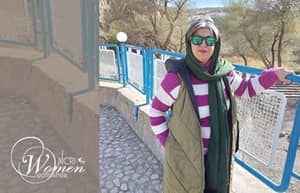
The clerical regime’s Supreme Court has rejected for the second time the retrial request submitted by Kowkab Badaghi Pegah, a teacher and teachers’ rights activist from Izeh of Khuzestan province. Following the rejection, her case has been referred to the sentence enforcement branch for implementation of a one-year prison sentence.
Kowkab Badaghi Pegah had previously been sentenced to one year in prison. The sentence was upheld in August 2026 by the Khuzestan Province Court of Appeals. With the rejection of her second request for retrial, the prospect of her imprisonment has moved significantly closer.
In July 2026, Bedaghi Pegah was also summoned to the Preliminary Board for Administrative Violations of the Khuzestan Department of Education. Earlier, in September 2025, the Appeals Board for Administrative Violations of the Khuzestan Education Department sentenced her to three months’ suspension from employment.
Kowkab Badaghi Pegah is a well-known teachers’ rights activist in Khuzestan Province who has repeatedly faced security pressure, summonses, judicial cases, and administrative penalties because of her union activities and advocacy for teachers’ rights.
Iranian Regime’s Terror Networks Exposed Across Europe and the United States
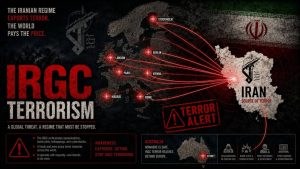
The Iranian regime’s activities beyond its borders have come under renewed scrutiny following a series of developments in Europe and the United States. Within days, German authorities banned an organization accused of supporting Hezbollah, North Macedonia announced the dismantling of an Iranian-linked network preparing an assassination in Greece, and a Pakistani operative convicted of plotting to assassinate U.S. political leaders was sentenced to 27 and a half years in prison.
Although the cases involve different organizations, individuals and methods, they point to several dimensions of the regime’s foreign operations: ideological and financial support networks, the recruitment of criminal intermediaries, and the use of operatives to organize targeted killings abroad.
On November 17, 2026, Berlin authorities banned the association El-Irschad e.V. and three affiliated organizations over their support for Hezbollah, the Iran-backed Lebanese organization designated as a terrorist organization by Germany.
Iran’s Fuel Price Crisis Exposes the Cost of Regime Policies, Fuel Smuggling, and Privileged Institutions
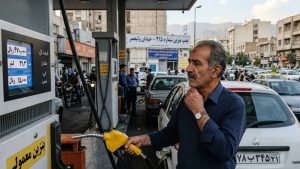
The Iranian regime is once again moving toward higher gasoline prices, but its contradictory statements and shifting announcements reveal the political sensitivity of the issue.
Government officials, lawmakers, and state-affiliated media have repeatedly offered conflicting accounts of possible price increases, with decisions sometimes announced and subsequently withdrawn. Behind this uncertainty lies a familiar economic strategy: transferring the costs of the regime’s financial and policy failures onto ordinary citizens.
The argument most frequently advanced by officials is that gasoline is too cheap in Iran compared with prices in other Middle Eastern countries and therefore needs to be brought closer to international levels. But this comparison deliberately ignores a fundamental difference: Iranian wages are also dramatically lower.
Even using an estimated average monthly wage of 30 million tomans, workers earn only around €100 a month. Comparing fuel prices without accounting for purchasing power and income levels presents a distorted picture of the economic burden on households. While gasoline may be cheaper in nominal terms than in neighboring countries, the ability of ordinary Iranians to afford it is also far more limited.
Iran’s Electricity Industry Faces Severe Problems and Imbalance as Winter Approaches

Concerns over a stable electricity supply during the cold months of the year are linked less to electricity consumption levels than to the availability of fuel for power plants. Falling temperatures and increased demand for natural gas for heating change the dynamics of energy supply during winter. Under these circumstances, even if electricity generation capacity is sufficient to meet demand, restrictions on power plants’ access to the fuel they need can jeopardize the stability of the electricity grid.
In this regard, Mehdi Masaeli, secretary-general of the Iran Electricity Industry Syndicate, told the state-run Eghtesad Online newspaper that the imbalance between electricity generation and demand must be distinguished from the shortage of fuel for power plants. He explained that Iran does not face a shortfall in electricity generation capacity during winter and that the likely cause of power outages in this season would be fuel supply constraints, particularly shortages of natural gas.
Masaeli pointed to differences in electricity consumption patterns between summer and winter, stating: “The difference in peak electricity demand between these two seasons is approximately 30,000 megawatts. In summer, the electricity grid is expected to meet demand of around 75,000 megawatts, whereas this figure falls to approximately 48,000 megawatts in winter.”
U.S. Sanctions Financial Networks of the IRGC Quds Force and Lebanese Hezbollah
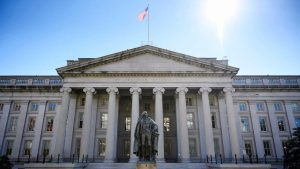
On Wednesday, November 18, the U.S. Department of State announced new sanctions against a front organization affiliated with Lebanese Hezbollah and a gold and cash smuggling network linked to the Quds Force of Iran’s Islamic Revolutionary Guard Corps (IRGC).
According to a statement by the U.S. Department of the Treasury, three Lebanese nationals, “Afif Abdel Rida Chouman”, “Hassan Kheche”, and “Ibrahim Khechen”, along with three commercial and front entities, have been targeted by the sanctions.
The sanctioned entities are “Wa Ta’awanu Association” in Lebanon, “Gold Global”, a company based in Lebanon, and “Sankari Gold”, a company based in Turkey.
The U.S. Department of State stated that “Wa Ta’awanu Association”, which claims to provide emergency assistance to residents of southern Lebanon, has in fact been used to transport Hezbollah personnel, store weapons, and channel foreign financial assistance to the group’s activities.
“Hassan Kheche” and his brother, “Ibrahim Khechen”, have also been accused of working with Hezbollah financial officials to transfer funds belonging to the IRGC Quds Force to Lebanon through a network involved in smuggling cash and gold bars.
Iran’s Baluch Minority, Fall 2026: Executions, Repression, Structural Poverty and Statelessness
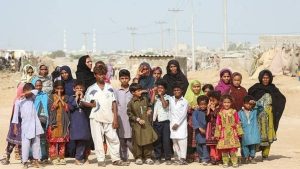
During the reporting period, the Baluch minority in Iran continued to face a range of interconnected human rights violations, affecting rights ranging from the right to life and the right to a fair trial to the rights to education, health, identity, development, and equal participation in public life.
During Mehr and Aban 1405 (September–November 2026), multiple executions of Baluch prisoners were reported, including prisoners charged with political and security-related offences. At the same time, reports pointed to the persistence of structural problems in prisons across the province, including Zahedan Central Prison, Zabol Prison, and Iranshahr Prison. The killing of fuel carriers continued economic deprivation, the expansion of security-oriented approaches, and the prolonged crisis affecting people without identity documents further indicate that the Baluch population faces multiple forms of structural deprivation and discrimination.
This report argues that the situation of the Baluch population cannot be adequately explained by examining isolated cases of execution, arrest, or poverty. Rather, the evidence points to an interconnected pattern of economic deprivation, security control, limited participation in development, a disproportionate burden of the death penalty, and the continued denial of fundamental rights.
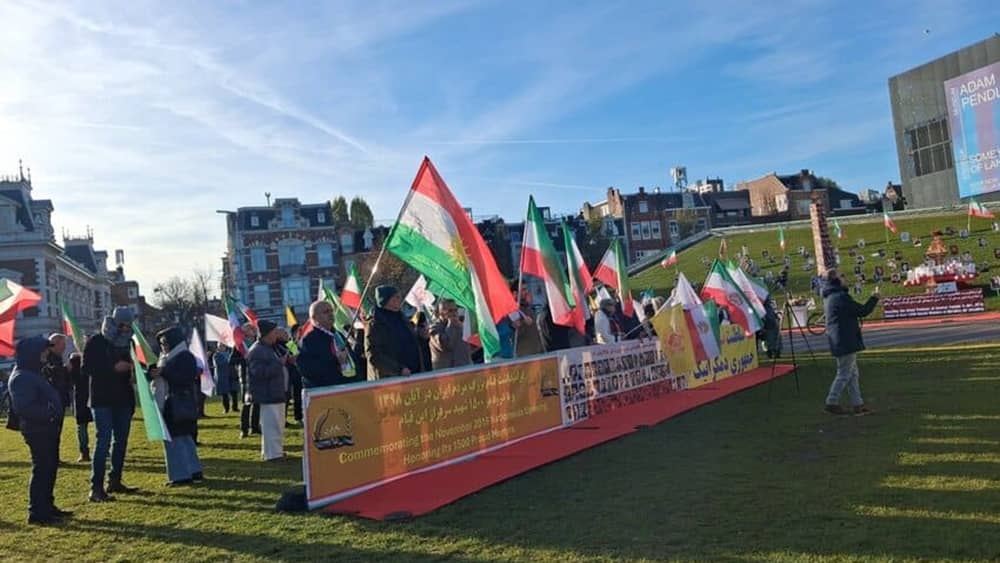
Oslo Rally Marks Seventh Anniversary of Iran’s November 2019 Uprising, Calls for End to Executions
OSLO, Norway — November 14, 2026: Supporters of the Iranian Resistance gathered in Oslo to mark the seventh anniversary of Iran’s nationwide November 2019 uprising, honoring those killed during the protests and reaffirming their call for freedom, democracy, and an end to executions in Iran.
Participants commemorated more than 1,500 protesters who were killed during the November 2019 uprising. The demonstrations, which spread across Iran, reflected widespread public demands for freedom, justice, and fundamental rights.
Speakers emphasized that although the authorities violently suppressed the protests, the aspirations of those who lost their lives remain alive. They said their sacrifices continue to inspire the struggle for a free and democratic Iran.

The rally strongly condemned the Iranian regime’s continued use of the death penalty, drawing attention to political prisoners and protesters reportedly facing the threat of execution.
Copenhagen Rally Backs ‘No to Execution Tuesdays,’ Calls for End to Executions in Iran
Copenhagen, Denmark – November 10, 2026 — Supporters of the People’s Mojahedin Organization of Iran (PMOI/MEK) held a rally in Copenhagen in support of the “No to Execution Tuesdays” campaign. They called for an end to executions in Iran, the release of political prisoners, and the establishment of a democratic republic.
They also voiced their support for awarding the 2026 Magnitsky Award to Iranian political prisoner and boxing champion Mohammad Javad Vafaei Sani, demanding the annulment of his death sentence and his immediate release.

The protesters called for regime change and urged the Danish government to take a firm stance against the Iranian regime’s ongoing human rights violations. They also called for the closure of the Iranian regime’s embassy in Denmark as a center for espionage and terrorism.
French MPs Demand Immediate Cancellation of Death Sentence for Magnitsky Winner Mohammad Javad Vafaei-Sani

French legislators have voiced strong support for Iranian boxing champion and political prisoner Mohammad Javad Vafaei Sani , calling for the immediate cancellation of his death sentence.
The 31-year-old athlete from Mashhad, a national silver medalist and coach, remains on death row in Vakilabad Prison after being sentenced to death three times. Vafaei-Sani was arrested in 2020 following his participation in the November 2019 nationwide protests and accused of supporting the People’s Mojahedin Organization of Iran ( PMOI/MEK ).
On November 12, 2026, Vafaei-Sani was awarded the 2026 Magnitsky Award for Outstanding Human Rights Activist at a ceremony in London. Unable to attend in person, he sent a message from prison in which he accepted the award on behalf of those imprisoned, tortured, or sentenced to death for seeking a free Iran, including members of the Resistance Units . He stated that the regime demands repentance and surrender, but “we will never surrender; we will never submit to humiliation.”
London Event Highlights Iran’s Executions Crisis and Calls for International Action
London, UK — November 17, 2026 — Members of the Academics in Exile Association in the UK, along with supporters of the Iranian Resistance and the National Council of Resistance of Iran (NCRI), held a book exhibition and photo display in Trafalgar Square, London, as part of their “No to Executions” campaign. The event aimed to raise public awareness of human rights violations and the escalating number of executions in Iran.
The event received an overwhelmingly positive and encouraging response from the public.
On 19 November, members of Academics in Exile took to London city with an information stall alongside photo exhibition, highlighting the escalating executions and human rights abuses in #Iran .
We received tremendous support and encouragement from the public.
The world must… pic.twitter.com/ANIUnizWJB
— Academics In Exile Association (@iranianacademic) November 19, 2026
Organizers collected signatures on petitions condemning the regime’s human rights abuses and death sentences. Many members of the public signed appeals calling on the United Nations and the international community to take concrete action to halt executions and support the Iranian people’s aspirations for democracy.