

THIS PAGE WILL BE UPDATED WITH THE LATEST NEWS
UPDATE: 8:00 AM CET
PMOI Resistance Units in Zahedan Denounce Executions and Reject Both Clerical and Monarchical Dictatorship
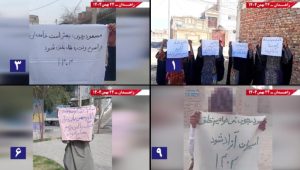
On November 20, 2026, PMOI Resistance Units affiliated resumed their weekly anti-regime activities in Zahedan, southeastern Iran, displaying placards in public places to reaffirm their commitment to overthrowing the clerical regime and rejecting all forms of dictatorship, whether religious or monarchical.
The activities highlighted several pressing issues facing Iran, including the regime’s escalating campaign of executions, the plight of political prisoners, growing economic hardships, and the prospect of renewed popular uprisings. The Resistance Units also celebrated the international recognition of political prisoner Mohammad Javad Vafaei Sani and reiterated their rejection of both the ruling theocracy and attempts to restore the former monarchy.
“The overthrow of the regime and the establishment of a free Iran is the responsibility of our people and Resistance,” read one placard.
The activities followed the November 13 campaign in Zahedan commemorating the seventh anniversary of the November 2019 uprising, during which Resistance Units emphasized their determination to continue the struggle for freedom and democracy.
Flood Disasters in Iran Expose the Consequences of Corruption and Infrastructure Mismanagement
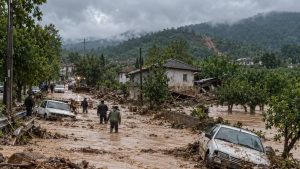
Every rainy season brings renewed danger to communities across Iran. Instead of replenishing water resources after years of drought, rainfall frequently turns into destructive floods, inundating streets, destroying homes, disrupting transportation, and claiming lives. From major cities such as Tehran, Mashhad, and Shiraz to smaller towns and rural communities, inadequate drainage systems and poorly planned infrastructure have repeatedly left people exposed to flooding.
Although floods are natural phenomena, the scale of their destruction is often determined by human decisions. In Iran, decades of inadequate planning, abandoned flood-control projects, construction in natural waterways, and infrastructure built without sufficient drainage capacity have contributed to disasters that could have been substantially mitigated.
The consequences are particularly evident in several major flood disasters that have exposed the weaknesses of the country’s infrastructure and the absence of effective accountability.
The devastating flood at Shiraz’s Quran Gate during the Iranian New Year holidays in March 2019 remains one of the clearest examples of how infrastructure decisions can magnify natural hazards. More than 20 people died as torrents of water swept away vehicles, piled them against one another, and devastated the area.
Iran’s Regime Deploys 60,000 Security Forces in Tehran Amid Fears of Renewed Uprising
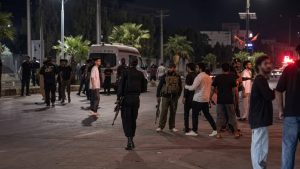
Iran’s regime has placed approximately 60,000 security personnel on full alert across Greater Tehran, expanding its military-style presence in the capital amid mounting economic pressures, public discontent, and fears of renewed nationwide protests.
The deployment, reportedly initiated on November 15, includes 35,000 Islamic Revolutionary Guard Corps (IRGC) and Basij forces, 21,000 state security personnel, and 4,000 Iraqi and Afghan proxy fighters. Additional measures include armed Basij neighborhood patrols, round-the-clock checkpoints, weapons storage in schools, and surveillance of residents and motorists.
The scale and nature of the deployment point to growing concern within the ruling establishment about the possibility of another uprising, particularly as economic hardship, energy shortages, and rising living costs intensify public dissatisfaction.
A Voice from Amirkabir University: The Fight for Independent Student Resistance in Iran
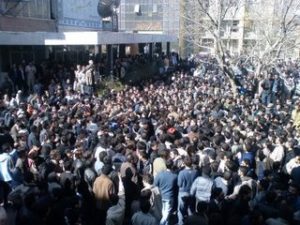
As protests and political developments continue to reshape Iran’s universities, independent student activists are speaking out against both state repression and attempts at external manipulation. In the following powerful letter, Raha, a 24-year-old engineering student at Amirkabir University of Technology in Tehran, offers a firsthand account of the stifling atmosphere on campus, the struggle to preserve the independence of the student movement, and the enduring hope for a free and democratic Iran.
Hello, my name is Raha, and I am 24 years old. I am writing to you from Tehran. For obvious reasons, I cannot reveal my real name.
I have been an engineering student at Amirkabir University of Technology, one of Iran’s most prestigious universities, for several years. During this time, I have witnessed firsthand the changing political atmosphere on campus and the struggles of the student movement. I lived through the 2022 uprising and have also experienced the more recent wave of protests.
Power Outages in Tehran to Begin on November 22!

As December approaches, two-hour power outages are set to return to Tehran, Iran’s capital. Reports indicate that power outage schedules have been reactivated for electricity subscribers in various parts of the city, including the Khazaneh neighborhood and the Farabi electricity district.
On November 20, Tasnim News Agency, affiliated with Iran’s Islamic Revolutionary Guard Corps (IRGC), reported the resumption of scheduled power outages in Tehran in an article titled “The Quiet Return of Two-Hour Power Outages to the Capital!”
According to the report, schedules for two-hour power outages, under the label of “energy management,” have once again been activated for Tehran electricity subscribers. Residents in some areas have been notified of the exact dates and times when their electricity will be cut off and restored.
The Farabi electricity district and the Khazaneh neighborhood are among the areas included in the announced outage schedules. Electricity subscribers in these areas have already been informed of the power outage timetable for November 21.
Abdanan: When Protest Over the Death of 13 Engineers & Workers Was Answered with suppression
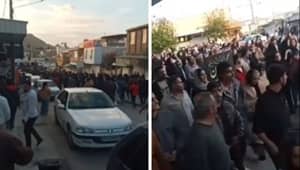
On the evening of 14 November 2026, a bus carrying staff and engineers of the Dehloran oil and gas complex overturned on the Dasht Abbas to Murmuri road in Abdanan, Ilam Province. According to subsequent reports, 13 people were killed and 14 injured. Three days later, on Tuesday 17 November 2026, hundreds and then several thousand residents of Abdanan took to the streets to demand clarification of the cause of the accident, accountability of officials, and action on unsafe roads and unsafe transport of workers. The response to this gathering was extensive deployment of security and police forces, firing tear gas and reports of pellet gun fire, severe disruption of internet access, and the arbitrary detention of at least 7 people. Among those detained was a 15-year-old child who, after two hours of interrogation at the Abdanan Intelligence Office, was released on a written undertaking. As of the time of writing, no information is available on the place of detention, status, or charges against most of the detainees.
This crackdown took place only one day after Gholamhossein Mohseni Ejei, Head of the Judiciary, on Monday 16 November 2026, ordered the full implementation of the directive to reduce the prison population and to refrain from unnecessary detentions. At the same time as this order, the issuance of death sentences and long prison terms for detainees of the nationwide protests of December 2025- January 2026 continued, and two protesters in Karaj were executed on 8 November.
This report shows that the order of 15 November is not a sign of a change of approach by the Head of the Judiciary, but part of the dual conduct of the same authority who bears institutional and command responsibility for the judicial apparatus.
Iran Lawmakers Push Inflation-Linked Wages as Government Faces Questions Over Broken Pledges

A parliamentary push to tie minimum wages to inflation exposes tensions between President Pezeshkian’s campaign promises and his government’s economic policies, as soaring prices erode workers’ purchasing power.
Iranian lawmakers have advanced legislation that would require minimum-wage increases to keep pace with inflation, opening a new dispute over workers’ purchasing power and President Masoud Pezeshkian’s economic commitments. Parliament’s Social Affairs Commission approved the general principles of an amendment to Article 41 of Iran’s Labor Law on November 16, according to Tasnim News Agency.
The proposal comes as year-on-year inflation reached 88.7% in October, far exceeding the 60% increase in the minimum wage approved earlier this year.
Government representatives opposed the amendment during committee discussions, according to the newspaper Nobonyad, despite Pezeshkian’s earlier promise to align wages with inflation.
Paris Exhibition Highlights Iran’s Human Rights Crisis and Executions
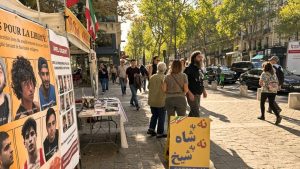
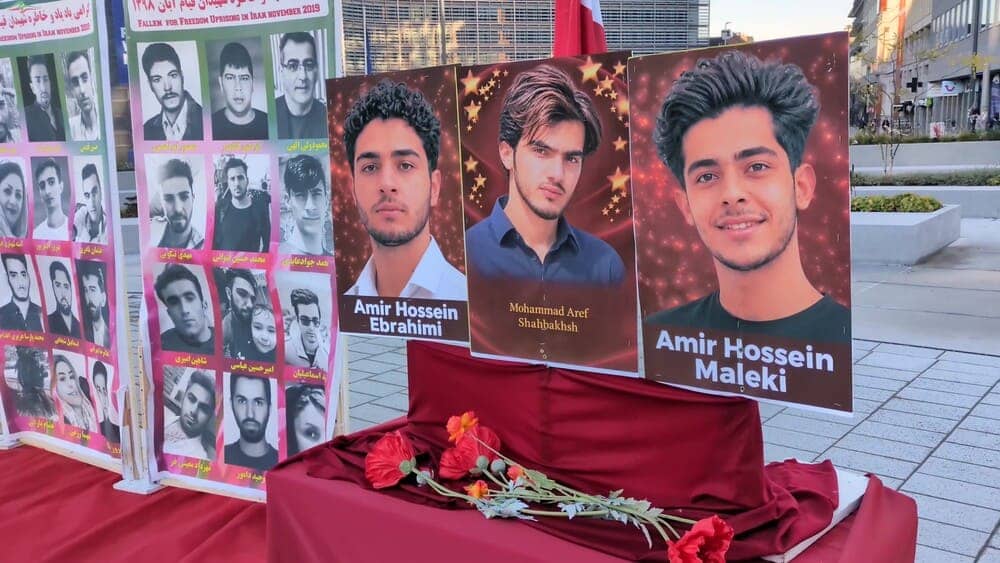
Paris — November 20, 2026 — Supporters of the People’s Mojahedin Organization of Iran (PMOI/MEK) organized a book table and photo exhibition in Paris to draw attention to Iran’s deepening human rights crisis and the regime’s systematic execution of political prisoners and protesters detained during nationwide uprisings.
Participants called on the French public and the international community to recognize the suffering of the Iranian people and their rejection of dictatorship in both its monarchical and theocratic forms. Photographs, personal testimonies, and related materials highlighted the courage and sacrifices of those who took part in Iran’s nationwide uprisings.
The exhibition also drew attention to the regime’s continuing human rights violations, including the execution of political prisoners and the prolonged imprisonment of protesters.
Organizers called on the international community to stand with the Iranian people, take concrete action against executions and human rights abuses, and support a free, democratic, and secular future for Iran.
Academics in Exile in the UK Urge Global Action to Stop Executions in Iran
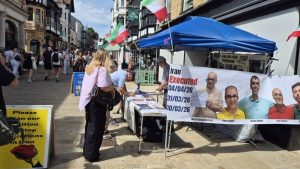
London, UK — November 19, 2026 — Members of the Academics in Exile Association an organization supporting the Iranian Resistance held an information stall and photo exhibition in London’s Trafalgar Square on 19 November, calling for an end to executions and human rights abuses in Iran.
The event formed part of the “No to Executions” campaign and sought to raise public awareness of the growing number of executions in Iran and the wider human rights situation under the Iranian regime. Organizers presented photographs, publications and personal testimonies documenting repression and the human cost faced by ordinary Iranians.
Members of the public responded with strong support and encouragement, according to the organizers. Visitors engaged with the exhibition, learned about conditions in Iran and added their voices to calls for international action.