
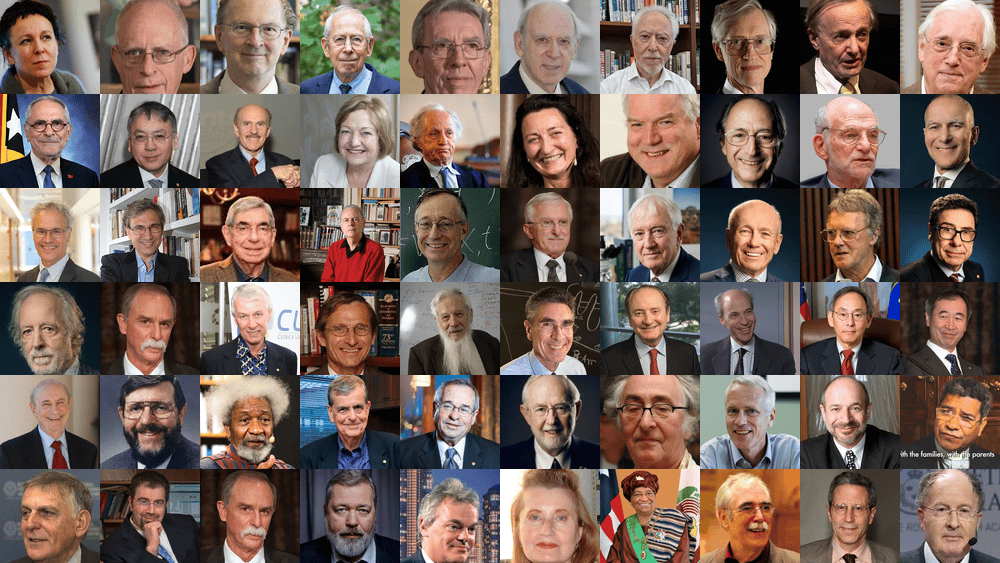
Sixty Nobel laureates across peace, literature, economics, medicine, chemistry, and physics have issued a joint appeal urging immediate international intervention to save the life of Mohammad Javad Vafaei-Sani, an Iranian boxing champion and political prisoner under sentence of death in Iran.
Addressed to Sir William Browder, head of the Global Magnitsky Justice Campaign, the November 2026 letter commends the Magnitsky Foundation for bestowing its 2026 International Human Rights Award upon Vafaei-Sani. The laureates argue that the recognition goes far beyond honoring an individual’s courage in the face of state repression, calling it an affirmation of human dignity, justice, and self-determination.
Vafaei-Sani, a supporter of the People’s Mojahedin Organization of Iran, has spent years behind bars and faced repeated judicial pressure over his political beliefs. According to the letter, the reaffirmation of his death sentence underscores how Tehran uses capital punishment to silence dissent.
The signatories describe Vafaei-Sani as a symbol for a generation rejecting both the former monarchy and the ruling religious establishment in pursuit of a free and democratic Iran. They warn that the award must not end with the ceremony itself, urging the United Nations, foreign governments, national parliaments, and human rights groups to press Iranian authorities to halt his execution, free all political prisoners, and abolish the death penalty for political detainees.
The full text of the joint statement and the list of signatories are attached below.
The Joint Letter of Nobel Laureates Commending the Awarding of the Magnitsky International Human Rights Award to Mohammad Javad Vafaei-Sani and Calling for Urgent Action to Save His Life
November 2026
Sir. William Browder,
Head of the Global Magnitsky Justice Campaign
Dear Sir William,
We, the undersigned Nobel Laureates, express our profound appreciation for the Magnitsky Foundation’s commendable decision to bestow the 2026 International Human Rights Award upon Mohammad Javad Vafaei-Sani, an Iranian boxing champion and a political prisoner currently facing a death sentence, in recognition of his extraordinary courage and commitment to human rights.
The presentation of this award, transcends a mere tribute to an individual’s bravery in the face of repression and oppression. It serves as a powerful affirmation of the universal principles of human dignity, freedom, justice, and the right of nations to self-determination. We applaud the Magnitsky Foundation for this principled and timely decision.
Today, Mohammad Javad Vafaei-Sani has become a symbol for the aspirations of a generation that refuses to see Iran’s future confined to a choice between two forms of dictatorship: the royal autocracy of the past or the current religious tyranny. His struggle reflects the vision of a free and democratic Iran
For years, Vafaei-Sani as a member of the MEK democratic opposition has endured imprisonment, persecution, and repression due to his steadfast adherence to his beliefs and political stances. The reaffirmation of his death sentence is a harrowing illustration of the Iranian regime’s use of capital punishment as a tool for political repression.
We believe that the significance of this award should not be confined to the ceremony itself. It must serve as a starting point for sustained international action aimed at saving Vafaei-Sani’s life and securing the release of all political prisoners in Iran. Therefore, we call upon the United Nations, the governments of the free world, national parliaments, international human rights organizations, and all those committed to human dignity to take urgent and effective action to pressure the authorities of the Islamic Republic to halt the execution of Mohammad Javad Vafaei-Thani and to end the use of the death penalty against political prisoners in Iran.
Mohammad Javad Vafaei-Sani must live and be set free. His voice, and the cause of freedom he represents must never be silenced.
Respectfully,
Signatories:
- President Jose Ramos-Horta, Nobel Prize, Peace 1996, Timor-Leste. President of Timor-Leste Since 2022
- Ellen Johnson Sirleaf, Nobel prize, Peace 2011, Liberia, Former President of Liberia (2006-2018)
- Oscar Arias, Nobel prize, Peace 1987, Costa Rica, Former President of Costa Rica (1986 to 1990 and 2006 to 2010)
- Professor Philippe Aghion, Nobel prize, Economics 2025, France
- Professor Harvey J Alter, Nobel Prize, Medicine 2020, USA
- Professor Robert Aumann, Nobel Prize, Economics 2005, USA-Israel
- Professor Moungi Bawendi, Nobel prize, Chemistry 2023, USA-Tunisia-France
- Professor Bruce Beutler, Nobel prize, Medicine 2011, USA
- Professor Mario Capecchi, Nobel Prize, Medicine 2007, Italy-USA
- Professor Jerome Friedman, Nobel prize, Physics 1990, USA
- Professor Oliver Hart, Nobel prize, Economics 2016, USA
- Professor Michael Houghton, Nobel prize, Medicine 2020, UK
- Professor Louis Ignarro, Nobel prize, Medicine 1998, USA
- Elfriede Jelinek, Noble prize, Literature 2004, Austria
- Professor Steven Chu, Nobel prize, Physics 1997, USA
- Professor Brian Josephson, Nobel prize, Physics 1973, UK
- Professor Aaron Ciechanover, Nobel prize, Chemistry 2004, Israel
- Professor Takaaki Kajita, Nobel Prize, Physics 2015, Japan
- Professor Brian Kobilka, Nobel Prize, Chemistry 2012, USA
- Professor Roger D. Kornberg, Nobel prize, Chemistry 2006, USA
- Professor Robert Lefkowitz, Nobel prize, Chemistry 2012, USA
- Professor Eric Maskin, Nobel prize, Economics 2007, USA
- Professor John Coetzee, Noble prize, Literature 2003, South Africa-Australia
- Professor John Mather, Nobel Prize, Physics 2006, USA
- Dmitry Muratov, Nobel prize, Peace 2021, Russia
- Professor Arthur McDonald, Nobel prize, Physics 2015, Canada
- Professor Paul Milgrom, Nobel prize, Economics 2020, USA
- Professor Patrick Modiano, Nobel prize, Literature 2014, France
- Professor James Peebles, Nobel prize, Physics 2019, USA-Canada
- Professor Paul Modrich, Nobel prize, Chemistry 2015, USA
- Professor Edvard Moser, Nobel Prize, Medicine 2014, Norway
- Professor May-Britt Moser, Nobel Prize, Medicine 2014, Norway
- Professor Michael Levitt, Nobel prize, Chemistry 2013, USA, South Africa
- Professor Orhan Pamuk, Nobel Prize, Literature 2006, Turkey-USA
- Professor Robert Merton, Nobel prize, Economics 1997, USA
- Professor John Polanyi, Nobel Prize, Chemistry 1986, Canada
- Professor Sir Richard J. Roberts, Nobel prize, Medicine 1993, UK-USA
- Professor William Phillips, Nobel prize, Physics 1997, USA
- Professor Jean-Pierre Sauvage, Nobel prize, Chemistry, 2016, France
- Professor Richard Schrock, Nobel prize, Chemistry 2005, USA
- Professor Danny Shechtman, Nobel prize, Chemistry 2011, Israel
- Professor Wole Soyinka, Nobel prize, Literature 1986, Nigeria
- Professor Jack Szostak, Nobel prize, Medicine 2009, USA
- Professor Olga Tokarczuk, Nobel Prize, Literature 2018, Poland
- Professor Arieh Warshel, Nobel prize, Chemistry 2013, USA-Israel
- Professor Eric Wieschaus, Nobel prize, Medicine, 1995, USA
- Mairead Corrigan, Nobel Peace Prize, 1976, Northern Ireland
- Professor David J. Wineland, Nobel prize, Physics 2012, USA
- Professor Gregory Winter, Nobel prize, Chemistry 2018, UK
- Professor Sir Peter Ratcliffe, Nobel prize, Medicine 2019, UK
- Professor Peter Doherty, Nobel prize, Medicine 1997, Australia
- Carlos Filipe Ximenes Belo, Nobel Prize, Peace 1996, East Timor
- Professor Joachim Frank, Nobel Prize in Chemistry, 2017, USA
- Sir Kazuo Ishiguro, Nobel prize, Literature, 2017, UK
- Professor Peter Howitt, Nobel prize, Economics 2025, Canada
- Professor Pierre Agostini, Nobel Prize, Physics 2023, France
- Professor Michael Rosbash, Nobel prize, Medicine 2017, USA
- Professor Daron Acemoglu, Nobel prize, Economics 2024, Turkey-USA
- Professor Sir John Walker, Nobel prize, Chemistry 1998, UK
- Professor Victor Ambros, Nobel prize, Medicine 2024, USA