

Two-minute read
What is unfolding in Iran today is not a sporadic protest or a fleeting emotional outburst. The renewed uprising that has surged in recent weeks and months is, in both scope and political clarity, more expansive and more radical than any previous wave. This time, a society has taken to the streets that has learned from experience, accumulated political consciousness, and found its direction. Iran’s streets are witnessing the return of a people whose demands extend far beyond economic relief to an unmistakable call for fundamental change and an end to the entire structure of tyranny.
These uprisings cannot be dismissed as “spontaneous.” Their roots lie in more than forty-five years of continuous struggle by the Iranian people and an organized resistance that has endured repression, imprisonment, executions, and exile—and emerged politically mature. The lessons of earlier uprisings—from January 2018 and November 2019 to the nationwide uprising of 2022—made clear that Iranian society has entered a new phase: one in which protest becomes organized, sustained, and explicitly targets the apex of power.
Within this trajectory, the persistent, day-to-day activities of the MEK Resistance Units, especially since the 2022 uprising, have been decisive. These networks prevented the flame of resistance from being extinguished. Through continuous, targeted, and inspirational actions, they kept the path of uprising alive. Today, the same rebellious youth are carrying that line forward in the streets—an entire generation that no longer believes in reform, retreat, or cosmetic change to authoritarianism.

For years, the Iranian Resistance has warned that Iran is an “explosive society,” one in which any economic, social, or political shock can ignite a nationwide uprising. That assessment has now become reality. The collapse of livelihoods, the imposition of a future without prospects, structural corruption, and naked repression have together produced an accumulation of social rage—rage that has now found both direction and purpose.
Confronted with this reality, the regime is pursuing two parallel tracks. On the one hand, it relies on overt repression; live ammunition, mass arrests, and executions. On the other hand, it wages psychological warfare and political deception. The regime’s cyber apparatus is actively promoting monarchist narratives and amplifying figures such as Reza Pahlavi. This is a well calculated mover: the regime understands that such currents pose no real threat to its survival. The aim is to create discord among the protesters and marginalize the genuine democratic alternative and manufacture a pretext to brand the uprising as “foreign-backed.”
Within this same framework, the regime has deployed plainclothes agents and Basij forces into demonstrations to chant slogans favoring a return to monarchical dictatorship. These images are then circulated, often manipulated or dubbed, to create a false narrative.
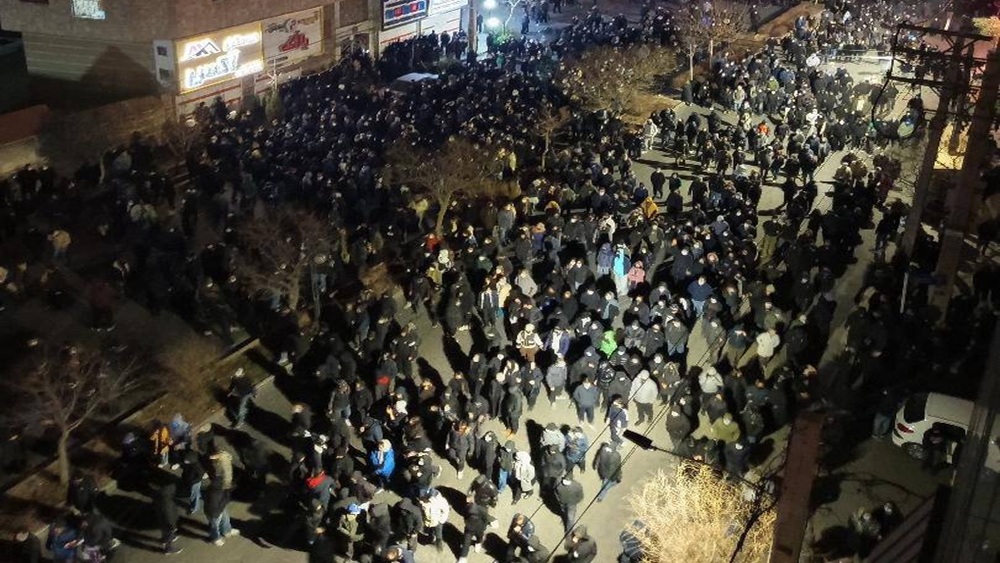
On Monday night, on the sixteenth day of Iran uprising, with wounded bodies and grieving hearts yet with unbreakable resolve, the people of Tehran, Isfahan, Shiraz, Meshkan in Fars Province, Falahieh (Shadegan), and many other cities once again took to the streets.
Hand in hand… pic.twitter.com/YI2j558Txq— Maryam Rajavi (@Maryam_Rajavi) January 13, 2026
Yet the Iranian people are not deceived. A society that has fought for freedom for over four decades, with imprisonment, exile, and countless lives, will not turn back. The unambiguous chants heard in the streets, rejecting both religious and monarchical dictatorship, testify to a clear collective choice. The Iranian people seek freedom and democracy, not the recycling of a past they once rose up to overthrow.
Those who have devoted their lives, their property, and their very existence to Iran’s liberation will accept nothing short of freedom. Propaganda designed to legitimize a former dictatorship does not mislead the Iranian people; it merely exposes its promoters before the court of public conscience. Today’s uprising is the continuation of a historical trajectory—one forged in resistance—and it will persist until freedom is achieved.