

Three-minute read
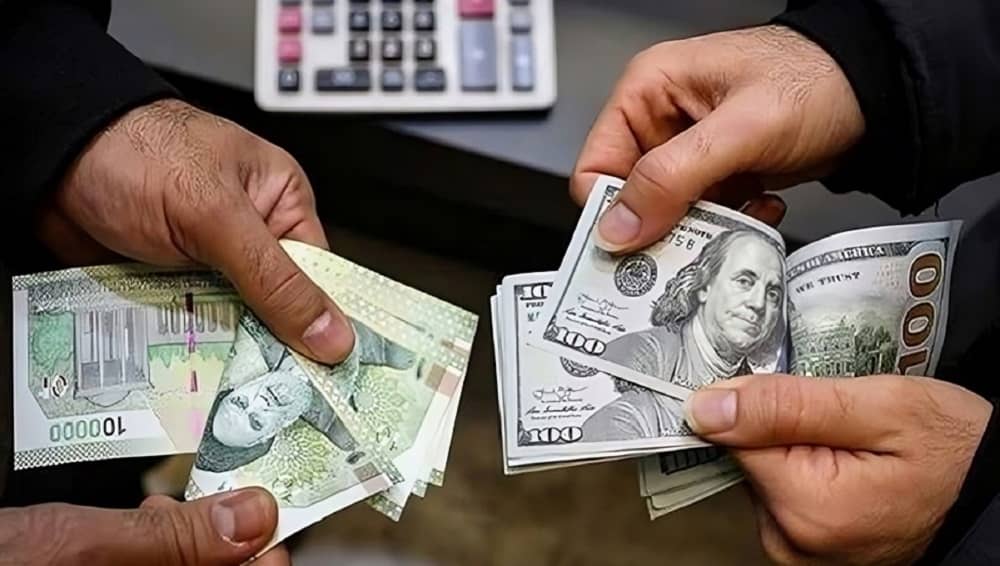
Iran’s economic crisis intensified on September 2, 2026, as the free-market dollar crossed 220,000 tomans, extending a run of daily records from 206,400 on August 29 to 208,000, above 210,000 and then 213,700 before Wednesday’s new high. The widening gap with the regime’s controlled market has itself become a measure of the loss of confidence in the rial. Tasnim acknowledged that the gap between the free and managed rates had reached about 35 percent. The attached market data put the pound near 296,000 tomans and the Emami gold coin around 224 million tomans.
Central Bank governor Abdolnaser Hemmati nevertheless insisted on September 1 that Iran had sufficient foreign currency, dismissed talk of economic collapse and announced that the bank was prepared to inject as much as $2 billion to stabilize the market. Yet his own remarks acknowledged that inflation was hurting households and that unemployment had increased. More damaging politically was an admission from Mohammad Jafar Ghaempanah, executive vice president under the Iranian regime’s president Masoud Pezeshkian: “Because our budget is unbalanced, we are forced to print money.” He acknowledged that printing money itself feeds inflation and said bluntly that “the economic situation is not good” and that the greatest pressure is falling on ordinary people.
Gasoline remains another pressure point, although the important development is now the regime’s fear of what comes next. Long queues continued in Mashhad and Saravan, while Ghaempanah argued that gasoline notionally costing 70,000 tomans per liter cannot indefinitely be sold for 1,500. MPs simultaneously warned that household purchasing power has been so eroded that another price shock could spill rapidly into transportation, production and food costs. One warned that 10,000-toman gasoline could become “a spark for a new round of price rises.”
Tehran isn’t solving the #gasoline shortage. It’s sequencing the pain. @HakamianMahmoud shows how the regime tests an 87,200-toman price, retreats, then floats 10,000 as “moderate”—while stretching supply with weaker blends. The shock isn’t canceled. It’s postponed into queues,…
— NCRI-FAC (@iran_policy) September 2, 2026
Mojtaba’s “Unity” Produces More Warfare
Those economic admissions are feeding the very factional conflict Mojtaba Khamenei has been trying to suppress. IRIB chief Peyman Jebelli appeared to answer Pezeshkian’s criticism of state television by declaring that its broadcasts would carry no “narrative of weakness, humiliation or fear,” but instead a narrative of “power” and “authority.” Parliament deputy speaker Hamid-Reza Haji-Babaei then exposed the underlying dispute even more openly, saying unity could not mean that “one person says I seek vengeance and another says I am pursuing the economy.” The formulation lays bare the division between harderline forces demanding confrontation and Pezeshkian’s camp, which increasingly invokes the economic costs of that course.
Hardline MP Hamid Rasaee has turned the same argument directly against the regime’s president. He accused Pezeshkian of repeatedly displaying “weakness and inability” and rejected attempts to use Mojtaba’s call for unity as protection from criticism. Unity, Rasaee argued, means unity around velayat-e faqih, not around individual officials. He went as far as raising the possibility of “political incompetence,” saying that if an officeholder discovers he cannot carry the burden, he should admit it and surrender his seat. Mojtaba’s order has therefore not ended the factional warfare; hardliners are using it as another weapon against Pezeshkian for publicly describing the regime’s economic weakness.

Meanwhile, economic grievances are continuing to reach the street. On August 31, telecom retirees demonstrated in Tehran, Hamadan, Shiraz, Sanandaj and other cities; social-security retirees protested in Shush; workers at Arian Steel in Qazvin protested unemployment and unpaid wages; and drivers at the Mehran terminal went on strike. Families in Sanandaj subsequently protested delays in a state housing project, while demonstrations by unemployed young men near industrial facilities in Khuzestan and Gachsaran were met with reported police gunfire.
The clerical dictatorship therefore faces a convergence it cannot resolve through messaging. The rial is plunging despite official assurances, deficit financing is being acknowledged from inside the executive branch, and livelihood protests are spreading. At the same time, hardliners attack Pezeshkian for admitting the damage while Mojtaba demands unity and fewer public displays of weakness. The regime is increasingly trapped between concealing the depth of the crisis and taking economic measures that could make its social consequences still harder to contain.