

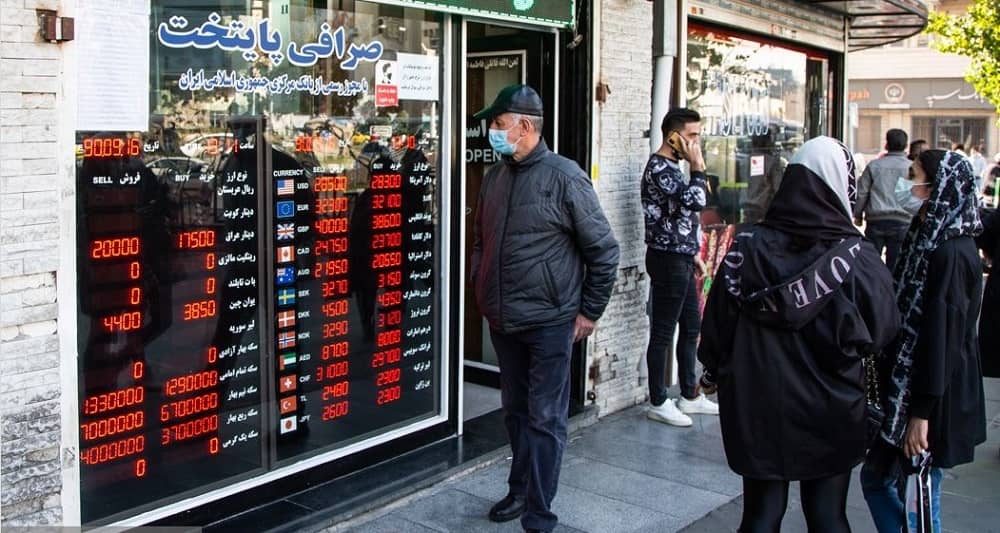
Iran’s economy is facing escalating challenges as the national currency continues its decline and the stock market struggles to recover. Today, the Iranian rial hit a new low, with the U.S. dollar trading at 64,500 tomans on the open market, while gold prices surged, with the price of a new-design gold coin crossing 55 million tomans. This marks a historic high for gold coins, reflecting the growing economic uncertainty driven by both internal mismanagement and external pressures.
The Tehran Stock Exchange has also been deeply affected. On October 19, the main index fell by over 24,000 points, dropping to 2,041,106 points, marking a 1.19% decline. According to Eghtesad Online, “The market’s downward trend has continued, driven by systemic risks and an exodus of funds, with no signs of a near-term recovery.”
Experts attribute the economic instability to the regime’s mismanagement, prioritization of political and military engagements over economic investments, and failure to stabilize the currency and stock markets. A recent report from Donya-e-Eqtesad on October 20 highlighted that, in the seventh month of the Iranian calendar year, over 5.5 trillion tomans of individual investment had left the stock market, the highest outflow recorded in 2024. “The market remains stuck at the two-million-point level,” the report noted, underscoring how political uncertainties have sapped investor confidence.
#Iran’s #StockMarket Bubble
What miracle has happened in Iran’s #economy that the #Tehran Stock EXCHANGE has risen by 250 percent compared to the rest of the world? https://t.co/U7sCLyCsjS— NCRI-FAC (@iran_policy) May 31, 2020
Recent geopolitical tensions, including fears of an Israeli attack, have also sent shockwaves through Iran’s financial markets. “Systematic risks persist, and the hope for reversing the current trend, at least in the short term, seems minimal,” Tejarat News reported on October 19, pointing to the shadow of conflict and sanctions that looms over the economy.
Despite some attempts at market intervention, including a temporary restriction on trading volatility, the Iranian government has struggled to regain control. According to Donya-e-Eqtesad, government officials have been criticized for failing to implement measures that could stabilize the economy, such as supporting the rial or bolstering investor confidence through concrete policy changes. The publication stated, “Political crises have diverted attention from economic reforms, leaving the stock market in a prolonged slump.”
With soaring inflation and a depreciating currency, Iranian citizens face rising basic goods and services costs. The regime’s focus on military expenditures and foreign interventions has drained resources from crucial domestic sectors, leading to what experts describe as a “cycle of economic decline.” As the situation remains dire, the international community continues to monitor Iran’s economic trajectory, wary of how internal mismanagement and regional instability could further aggravate the crisis.