

Two-minute read
Masoud Pezeshkian‘s presidency has done nothing to halt the systemic economic decay gripping Iran. Instead, his administration is presiding over, and often justifying, a deepening crisis that is making basic survival untenable for millions.
Across the country, the cost of essentials—from a loaf of bread to a bus ticket to a ream of paper—is spiraling out of control, revealing that the regime’s chronic mismanagement and corruption, not the face in the presidential palace, are the root cause of the nation’s suffering.
A Loaf of Bread Becomes a Luxury
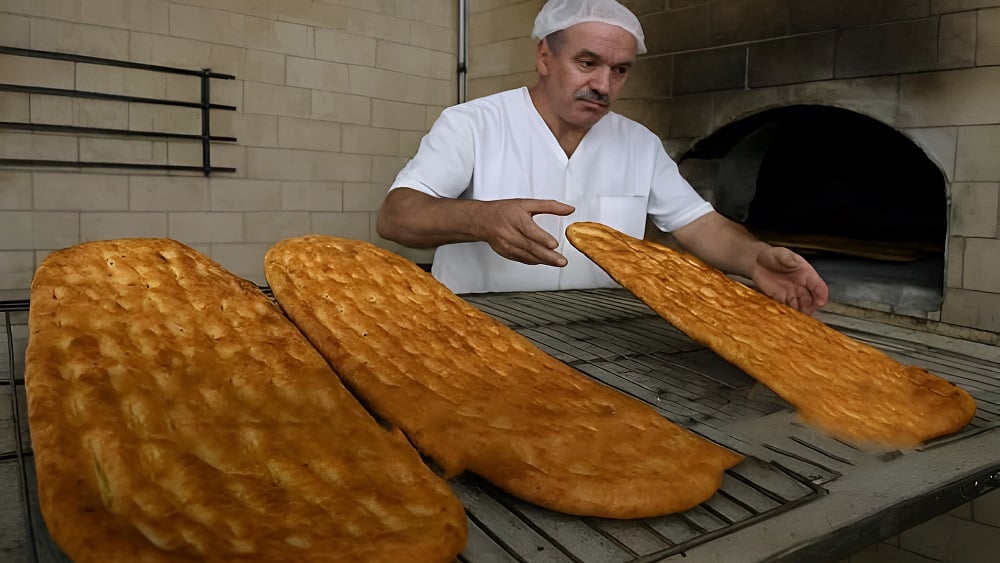
The most fundamental staples are now beyond the reach of many. In the capital, Tehran, the official price of a Barbari flatbread is set at 3,500 tomans, but on the street, it sells for as much as 7,000 tomans. This de facto doubling of prices in the capital follows official price hikes already implemented in provinces like Qom, Khorasan Razavi, Hamedan, and Gilan. The regime cannot even control the price of bread.
More images of protest rally by bakers in Tehran, protesting the destructive results of the state-run Nanino bread and floud management system.#IranProtests pic.twitter.com/eBSO51gSYf
— People's Mojahedin Organization of Iran (PMOI/MEK) (@Mojahedineng) July 13, 2025
Meanwhile, Pezeshkian’s Agriculture Minister, Gholamreza Nouri Qezeljeh, has already signaled the government’s surrender on high food costs. Regarding the price of red meat, he bluntly stated, “We must accept that red meat will never reach the price of chicken. Red meat is red meat, and naturally, its price is higher… One cannot expect the producer to subsidize from their own pocket.” This is an open declaration that the Iranian people should expect no relief.
The Collapse of Public Transport
The ability to travel, essential for work and family life, is also being dismantled. Intercity bus tickets, the lifeline for working and middle-class Iranians, have surged by a staggering 80% in just one year, while wages have lagged far behind with a maximum increase of around 30%. The disparity is starkly illustrated on the high-traffic route between Tehran and Isfahan. A one-way ticket that cost 260,000 tomans in the summer of 2024 now costs approximately 470,000 tomans as of July 2025. For a family of four without a car, a simple round-trip journey now costs nearly 4 million tomans for bus fare alone.
This crisis is a direct result of the regime’s industrial negligence. In just four years, the nation’s intercity bus fleet has plummeted from 16,500 vehicles to only 5,000. Simultaneously, the price of a single new bus has exploded from 1.5 billion to 33 billion tomans.
The #Iranian Regime's Economic Warfare Creates a Multi-Front Crisis for the Peoplehttps://t.co/KoEgu32dxd
— NCRI-FAC (@iran_policy) July 9, 2025
The Tax on Thought: Strangling Culture and Knowledge
The regime’s economic failure now extends to an attack on intellect and culture. The price of paper has seen a five-fold increase in the past five years, with a single ream reaching 1.6 million tomans in early July 2025. This inflation directly threatens the publishing industry, making books a luxury and shrinking access to knowledge. The crisis is rooted in the regime’s failed policies, as Iran remains dependent on foreign markets for 70% of its paper supply.
The crises in Iran’s bakeries, bus terminals, and publishing houses are not isolated incidents. They are interconnected symptoms of a single, terminal illness: a corrupt and incompetent clerical regime. Under this system, Iranians are told to accept their impoverishment, are trapped in their own cities, and are cut off from the world of ideas. The facts demonstrate that no matter who holds the title of president, the trajectory of the nation remains one of decline. The suffering of the Iranian people is a direct and inevitable consequence of this system, and only its fundamental change can offer a path to recovery and freedom.