

THIS PAGE WILL BE UPDATED WITH THE LATEST NEWS
UPDATE: 08:00 PM CEST
Naive Brussels Is backing the Wrong Horse on Iran

At a critical juncture for Iran, Europe must resist the temptation of easy narratives. The Iranian people are demanding a democratic future of their own making, not a return to discredited systems.
Having served for years in the European Parliament, including within its leadership structures, I have followed Iranian affairs closely. The European Parliament reflects the values and aspirations of the peoples of Europe—freedom, human rights, and the rule of law. We expect those rights for ourselves, and we believe they should be universal.
UPDATE: 06:00 PM CEST
Economic Fury Targets Iran-Backed Iraqi Militia Commanders
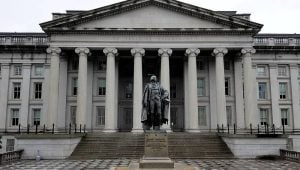
WASHINGTON—Today, the U.S. Department of the Treasury’s Office of Foreign Assets Control (OFAC) designated seven Iraqi militia commanders responsible for planning, directing, and executing attacks against U.S. personnel, facilities, and interests in Iraq. The individuals targeted in today’s action are leaders of some of Iraq’s most violent Iran-aligned militia organizations, including Kata’ib Hizballah, Kata’ib Sayyid Al-Shuhada, Harakat Al-Nujaba, and Asa’ib Ahl Al-Haqq. These militias operate with near impunity, attacking U.S. personnel and innocent civilians across Iraq, siphoning Iraq’s wealth to finance their terrorist activities, and undermining Iraq’s sovereignty and democratic processes.
“We will not allow Iraq’s terrorist militias, backed by Iran, to threaten American lives or interests,” said Secretary of the Treasury Scott Bessent. “Those who enable these militias’ violence will be held accountable.”
UPDATE: 09:00 AM CEST
Kurdish Female Fighters among Three Killed in Iranian Regime’s Strikes

Three Iranian Kurds, including two Kurdish female fighters, were killed in drone and rocket strikes in Iraq’s northern Kurdistan region on Friday, April 17, according to the Kurdistan Democratic Party of Iran (KDPI), which blamed the Iranian regime for the attack.
The group said three of its members were killed in a drone attack carried out by the Iranian regime, including two Kurdish female fighters. The Kurdish female fighters were identified as Neda Miri and Samira Allahyari. In the same attack, a father and son were also targeted, resulting in the death of Shahin Azar Barzin, while his father, Nader, was seriously injured.
Detainee Killed, Others Disappear After Transfer to Unknown Locations in Iran

A prisoner’s death in custody and transfers to undisclosed locations have intensified fears over missing detainees and lack of transparency in Iran. A detainee has been killed in custody in Iran, while others have disappeared after being transferred to unknown locations, according to HRANA and Hengaw. Among those missing are Saghar Gholami, 19, along with Mohsen Pirayesh and MirYousef Younesi, who were moved from Evin Prison without any official information on their whereabouts. According to HRANA, a prisoner died in detention under unclear circumstances. No official explanation has been provided regarding the cause of death. The case adds to ongoing concerns about deaths in custody and the absence of accountability in Iran’s prison system.
BFM TV Highlights Expanding Activities of MEK Resistance Units Inside Iran
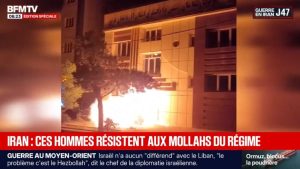
A recent report by BFM TV has highlighted the expanding activities of MEK Resistance Units inside Iran, presenting what it described as an organized and growing resistance movement. According to the report, footage showed coordinated nighttime operations carried out in various cities, including acts targeting symbols associated with the regime. These actions were conducted swiftly and in multiple locations. BFM TV reported that on a single night, around 30 coordinated operations took place across the country, indicating the presence of an organized network behind these activities. The videos, recorded and released by the Resistance Units, demonstrated the scale and coordination of their actions.
Strait Of Hormuz Declared Open Again; Trump: Naval Blockade Against Iran’s Regime Will Continue
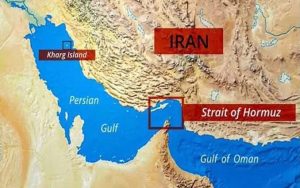
Abbas Araghchi, the foreign minister of Iran’s regime, announced in a post on the social media platform X that following the establishment of a ceasefire in Lebanon, the passage of all commercial vessels through the Strait of Hormuz will be fully open until the end of the ceasefire period. According to him, this decision was made within the framework of recent agreements and will be implemented until the specified deadline. The ceasefire between the United States and Israel on one side and Iran’s regime on the other began on April 7 and is set to last for two weeks. However, Araghchi emphasized that vessel traffic must take place only through pre-designated routes coordinated with the Ports and Maritime Organization, a state body overseeing Iran’s shipping and port operations.
Reza Pahlavi Calls It Heritage – History Calls It Dictatorship
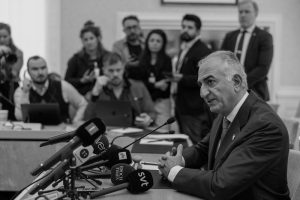
Reza Pahlavi’s defense of his family’s rule exposes a stark contradiction between democratic rhetoric and an unrepentant embrace of authoritarian legacy. On April 13, 2026, in Stockholm, Reza Pahlavi sat before a microphones, the self-appointed face of a democratic alternative to the current Iranian theocracy. When a journalist asked a straightforward question about whether he took issue with any of the actions of his father, the late Mohammad Reza Shah, the room grew quiet. Pahlavi did not offer a nuanced reflection on the complexities of power or an acknowledgment of past abuses. Instead, he bristled, dismissing the inquiry as a fixation on the past before declaring his “immense pride” in a heritage defined by absolute rule.