

THIS PAGE WILL BE UPDATED WITH THE LATEST NEWS
UPDATE: 07:30 PM CEST
Iranian Resistance Urges EU to Act Against Regime Executions

BRUSSELS, April 22 – “The decisive war is the one between the Iranian people and the religious dictatorship.” This was stated by the President-elect of the National Council of Resistance of Iran, Maryam Rajavi, as she called on the European Parliament for the EU to adopt a tougher stance toward Tehran and the death sentences ordered by the ayatollahs. “The silence of European leaders in the face of this wave of executions is unjustifiable. It not only encourages the regime to continue, but also signals weakness,” Rajavi denounced, noting that in Iran “16 political prisoners have been executed in a single month” and that “at least 11 detainees are at risk of imminent execution.”
The leader called for “the halt to executions, demanded by the Iranian people, to become a fundamental condition in any international agreement” with Tehran.
“Today, the mullahs are exploiting the war to intensify repression and prevent new uprisings,” she added.
US Suspends Dollar Shipments to Iraq due to Concerns over ‘Iran-backed Militias’

Washington has halted shipments of US dollars to Iraq and paused security cooperation programs with its military in an effort to dismantle “Iranian-backed militias,” the Wall Street Journal reported Tuesday, citing officials.
Treasury Department officials recently stopped a cargo plane carrying close to $500 million in cash due to concerns about these militias, the report said.
The report noted that this was the second planned dollar transfer to Iraq’s central bank that Washington had postponed since the Iran war began on Feb. 28. It came after “weeks of militia attacks on American facilities in Iraq and neighboring countries,” the report said.
Washington has also notified Baghdad that it is suspending financial support for certain counterterrorism initiatives and military training programs until militia attacks cease and Iraqi authorities take action to disband these armed factions, it added.

Iranian Opposition Steps Up Pressure on Brussels to Break with Tehran

The National Council of Resistance of Iran (NCRI), a coalition of dissident groups founded in 1981, which advocates for the overthrow of the Islamic regime, launched a new political offensive at the European Parliament on Wednesday. NCRI demands that the European Union definitively break with Tehran following the latest wave of executions of opposition figures and protesters in Iran.
NCRI’s leader, Maryam Rajavi, called for tougher sanctions, the closure of Iranian embassies in Europe, and for Brussels to stop treating the Iranian regime as an unavoidable interlocutor. “The silence of European leaders and member states in the face of this wave of executions is unjustifiable,” she said.
Rajavi stated that at least 16 political prisoners have been executed in the past month, including eight members of the People’s Mojahedin Organization of Iran (MEK) and several young people who had taken part in the January uprising. According to the NCRI, eleven more prisoners are facing imminent execution.
Brussels: Protesters Call on the EU to Act over Executions in Iran

According to the organizers, the Iranian regime has taken advantage of the international focus on regional conflicts and post-war issues to intensify repression against opponents. In the past month alone, at least 13 political prisoners have been executed. Among them were six members of the People’s Mojahedin Organization of Iran (PMOI/MEK), described as the main opposition movement to the ruling power.
The organizers also claim that Iran’s head of the judiciary, Gholam-Hossein Mohseni-Ejei, has publicly called for accelerating death sentences. In this context, new execution orders have been issued against activists, particularly young people arrested during the 2026 uprising. Four young individuals, including one woman, have recently been sentenced to death, according to the NCRI.
UPDATE: 03:00 PM CEST
From “Fighting Abroad” to “Urban Warfare”… Has Khamenei’s Prophecy Come True Inside Iran?

Tehran, Iran – In a scene reflecting unprecedented security panic, Iranian streets have been transformed into something resembling open military barracks. A marked increase in the public deployment of pro-Tehran militias has been observed, particularly the proxy forces brought in from abroad.
According to observers and eyewitness accounts, these moves are part of the regime’s “iron fist” strategy to prevent a widespread popular uprising. This comes amidst crippling economic crises and the repercussions of recent military confrontations.
Importing “repression”: The entry of Iraqi militias and the “Fatimiyoun”
Hossein Daei-Eslam, a member of the National Council of Resistance of Iran, revealed to (Voice of Emirates) intelligence indicating that the Iranian regime has recently begun deploying large numbers of its militia members from Iraq into Iranian cities. According to Daei-Eslam, the aim of this move is to utilize elements who do not hesitate to use excessive violence against civilians to control the internal situation. This deployment is not limited to Iraqi militias; last week, armed patrols belonging to the Afghan Fatemiyoun militia were seen roaming the streets of Tehran in SUVs. These actions were clearly intended to intimidate the population. This heavy deployment is particularly concentrated in sensitive border regions such as Kurdistan, Sistan and Baluchestan, and Khuzestan (Ahvaz). These areas are hotbeds of protests demanding national and civil rights.
EU Reaches Political Agreement to Sanction Those Who Impede Freedom of Navigation
European Union foreign ministers reached a political agreement on Tuesday to expand the legal framework for sanctions against Iran, allowing the EU to impose restrictive measures on those who violate the right to freedom of navigation in the Strait of Hormuz.
«Today we also reached the political agreement to widen our sanctions regime to also target those responsible for breaches to freedom of navigation,» announced EU High Representative for Foreign Affairs and Security Kaja Kallas at a press conference following a Council of Ministers meeting in Luxembourg.
Kallas recalled that the EU has already imposed far-reaching sanctions on Iran through legal regimes that address human rights violations and Tehran’s support of Russia’s invasion of Ukraine.
One of the issues addressed by the Council on Tuesday was the Middle Eastern crisis caused by the United States’ and Israel’s war against Iran and Tehran’s attacks against other countries in the region.
Economic Fury Targets Iranian Missile and UAV Procurement Networks
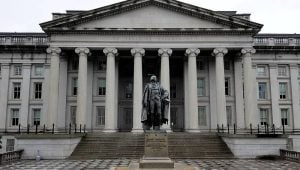
WASHINGTON—Today, the U.S. Department of the Treasury’s Office of Foreign Assets Control (OFAC) is sanctioning 14 individuals, entities, and aircraft based in Iran, Türkiye, and the United Arab Emirates (UAE) for their involvement in procuring or transporting weapons or weapons components on behalf of the Iranian regime. As the United States continues to deplete Iran’s ballistic missile inventories, the regime is seeking to reconstitute its production capacity. Iran is increasingly relying on Shahed-series one-way attack unmanned aerial vehicles (UAVs) to target the United States and its allies, including energy infrastructure in the region. These designations support Economic Fury in response to the Iranian regime’s continued threats to global security.
“The Iranian regime must be held accountable for its extortion of global energy markets and indiscriminate targeting of civilians with missiles and drones,” said Secretary of the Treasury Scott Bessent. “Under President Trump’s leadership, as part of Economic Fury, Treasury will continue to follow the money and target the Iranian regime’s recklessness and those who enable it.”
UPDATE: 12:00 PM CEST
Iran’s Future Does Not Lie in War nor In the Past

The fragile ceasefire surrounding the confrontation between Iran, the United States and Israel has highlighted not only the risks of regional escalation, but also the limits of the competing political narratives seeking to define the country’s future. It has revealed, with particular clarity, a fundamental question: who truly reflects the aspirations of Iranian society and who merely claims to do so from abroad.
In this context, it is becoming increasingly evident that Reza Pahlavi, son of the deposed Shah, has aligned himself not with the political sensitivities of Iranian society, but with the logic of external military pressure. During the conflict, he went beyond supporting sanctions or diplomatic isolation and openly encouraged Western military action, presenting it as “humanitarian intervention”.
This position may resonate in certain international circles. Inside Iran, however, it takes on a very different meaning. Large segments of the population may oppose the current system, but that does not imply acceptance of their country being bombed or destabilised. Any figure who claims to represent the nation while supporting military pressure against it risks undermining their own legitimacy.
UPDATE: 07:30 AM CEST
Who Are the Resistance Units in Iran?

History has repeatedly shown that, despite the military power and advanced technology of repressive forces, they are ultimately unable to eradicate an organized movement that is deeply rooted in society and founded on the ideal of freedom.
Since 2016, a new phenomenon has emerged in the struggle of the Iranian people against authoritarianism: the “Resistance Units.” This network was created by the People’s Mojahedin Organization of Iran (PMOI), the main opposition force.
Over nearly a decade, these units have reached a significant level of organization. At the same time, Iranian authorities have tried by all means to prevent the international community from fully recognizing the existence and expansion of this network across the country.
A striking example of their activities is the operation of February 23, 2026, carried out shortly before the outbreak of the war. During this operation, around 250 individuals linked to the Resistance Units attacked a highly secured complex associated with Ali Khamenei. According to available information, about one hundred people were killed or arrested, while another 150 managed to withdraw. It appears that government forces suffered significant losses. In addition, the identities of 82 individuals who were killed or arrested (aged 18 to 69) were reportedly transmitted to the United Nations.
Iran’s Regime Executes Another Youth from Recent Nationwide Uprising

On the morning of Tuesday, April 21, the Iran’s regime hanged Amir Ali Mirjafari, a 24-year-old student and computer technician, in Tehran. Mirjafari was a rebellious youth who had been arrested during the massive December-January uprisings.
Iran’s brutal regime continues to utilize its killing machine to exact revenge on the courageous youths who brought the ruling establishment to its knees during the recent nationwide protests. In a desperate bid to terrorize the public and delay the next inevitable uprising, the regime has launched a fresh execution spree across its prisons.
Following his arrest by the Islamic Revolutionary Guard Corps (IRGC) Intelligence Organization, the regime’s judiciary subjected Mirjafari to a slew of fabricated charges. The judiciary’s Mizan News Agency labeled him a “leader of anti-security actions” and “one of the leaders of the enemy’s collaborative network.”
Iranians Abroad Face Coordinated Intimidation—Including from Monarchist Networks
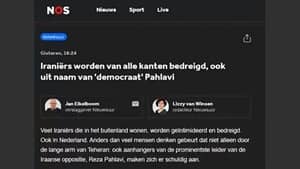
A recent report by Dutch public broadcaster NOS highlights a disturbing trend: Iranian dissidents living in Europe are increasingly subjected to threats, intimidation, and harassment—not only by agents linked to Tehran, but also by networks associated with monarchist factions aligned with Reza Pahlavi.
The investigation documents how a segment of the Iranian diaspora, particularly in countries such as the Netherlands and Belgium, has become the target of coordinated campaigns of intimidation. These actions include online harassment, public defamation, and, in some cases, direct physical threats.
Central to the report is a Telegram channel known as “The Mercenaries,” where more than 170 Iranians residing in the Netherlands and Belgium have reportedly been listed, labeled as “accomplices of the regime.” Those targeted include lawyers, academics, and journalists—individuals with no formal ties to the Iranian government but who are critical of monarchist narratives.
Iran Regime Expands “Tiered Internet” Policy with Selective Access for Businesses

Amid mounting criticism over unequal internet access in Iran, officials of the Iran regime have unveiled a new plan that formalizes selective connectivity under the label of “International Stable Internet.” The initiative, approved by the Supreme National Security Council, is being presented as a measure to support economic activity—but critics argue it entrenches a system of digital discrimination. Reza Alizadeh, head of the Parliament’s Industries and Mines Commission, announced that the plan will initially grant stable international internet access to holders of commercial cards—primarily business owners and exporters—subject to unspecified “security considerations.” In later phases, access will be extended to organizations involved in industry, production, and trade.
While Alizadeh repeatedly emphasized the plan’s role in facilitating business operations and removing restrictions for economic actors, he made no reference to restoring access for the general public, which has faced severe internet disruptions for weeks. Iran has now experienced more than 50 days of widespread internet restrictions, with independent monitoring group NetBlocks confirming that ordinary citizens largely remain disconnected from the global network.
Bread Shortages and Soaring Prices Deepen Economic Strain in Iran
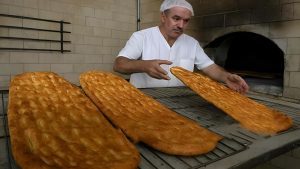
Reports from across Iran indicate a worsening shortage of bread, one of the country’s most essential food staples, as citizens face growing difficulty accessing affordable supplies. Sharp price increases and disruptions in flour distribution have intensified pressure on households already struggling under high inflation.
Residents in multiple regions describe long queues at bakeries and limited availability. In Malard, west of Tehran, one citizen reported that many bakeries are facing flour shortages and are unable to meet the high demand, leaving people waiting in extended lines for basic provisions.
Others point to dramatic price hikes following the recent conflict involving the Iran regime. According to citizen reports, the price of traditional flatbreads has surged well beyond official rates. Barbari bread is reportedly being sold for around 25,000 tomans, while Sangak has reached 35,000 tomans—figures significantly higher than the government’s last approved prices of approximately 5,500 and 7,600 tomans, respectively.
Iran Regime Refuses Direct Aid for War-Damaged Homes, Reviving Longstanding Pattern of Neglect
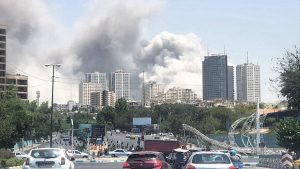
As the human and material costs of the recent conflict involving the Iran regime continue to unfold, growing numbers of citizens are voicing frustration over the government’s refusal to provide direct financial support for rebuilding destroyed homes. The situation has reignited criticism of what many see as a longstanding pattern: mobilizing the country into conflict while leaving ordinary people to bear the consequences. Reports from Tehran indicate that a newly proposed reconstruction plan has deepened a sense of abandonment among residents who expected the state to assume responsibility for damages caused by war. Instead, the government has opted against direct compensation, despite earlier rhetoric suggesting a commitment to recovery and support.
According to official estimates cited by state-affiliated media, tens of thousands of residential units have been affected. One provincial official reported that nearly 40,000 housing units in Tehran province alone sustained damage. Other assessments suggest that around 45,000 residential and non-residential properties were impacted during the conflict, with approximately 1,000 units requiring complete reconstruction.
How Do the Children of Iranian Regime Officials Manage Smuggled Wealth?

Sky News published a report on April 19 about the children of Iran’s ruling elites, who are known as “Aghazadehs” and, as people call them, “parasite-born.”
The decision by the government of Dominica to revoke the citizenship of one of the children of Iranian regime officials, Abolfazl Shamkhani, son of Ali Shamkhani, a senior official and former secretary of Iran’s Supreme National Security Council, has revealed a new dimension of financial influence networks through which the children of Iran’s ruling elites are believed to manage vast sums of money abroad; this comes amid growing accusations that they serve as fronts for managing wealth linked to the Iranian regime and the Islamic Revolutionary Guard Corps (IRGC).
Dominica’s decision to revoke Shamkhani’s citizenship came after he was accused of concealing key information when applying for what is known as a golden passport. An investigation by the Organized Crime and Corruption Reporting Project found that he had obtained citizenship under the alias Sami Haik before the data manipulation was exposed and his citizenship was subsequently revoked.
The Collapse of Livelihoods in Tehran; Housing Rent Has Become a Nightmare

An examination of rental listings in Tehran’s Districts 4 and 5 shows that the average asking rates in April have reached about 10 billion rials as a deposit and 310 million rials in monthly rent (approximately $6,700 and $205); heavy and shocking figures that clearly demonstrate the depth of the housing crisis and the growing inability of households to secure shelter.
This is while the minimum wage of a worker with two children barely reaches about $100 per month.
In these two districts, unlike the overall city average where the main pressure is more concentrated on the deposit, landlords have assigned approximately equal weight to the deposit and monthly rent. The average size of the units offered is 91 square meters, and the average building age is reported to be 5.5 years.
Iranian Resistance Supporters Rally in The Hague to Protest Executions in Iran

The Hague, Netherlands – April 20 2026: Supporters of the Iranian Resistance held a rally outside the Iranian regime’s embassy to protest the execution of PMOI political prisoners Hamed Validi and Mohammad (Nima) Masoom Shahi, who were executed by the Iranian regime on April 20.
Iranian Resistance Supporters Rally in Toronto and Vancouver to Protest Executions in Iran

Canada – April 20, 2026: Supporters of the Iranian Resistance held rallies in Toronto and Vancouver to protest the execution of PMOI political prisoners Hamed Validi and Mohammad (Nima) Masoom Shahi, who were executed by the Iranian regime on April 20.
Bern Protest Condemns IRGC Attacks on Iranian Kurdish Parties and Executions, Calls for Firm Action

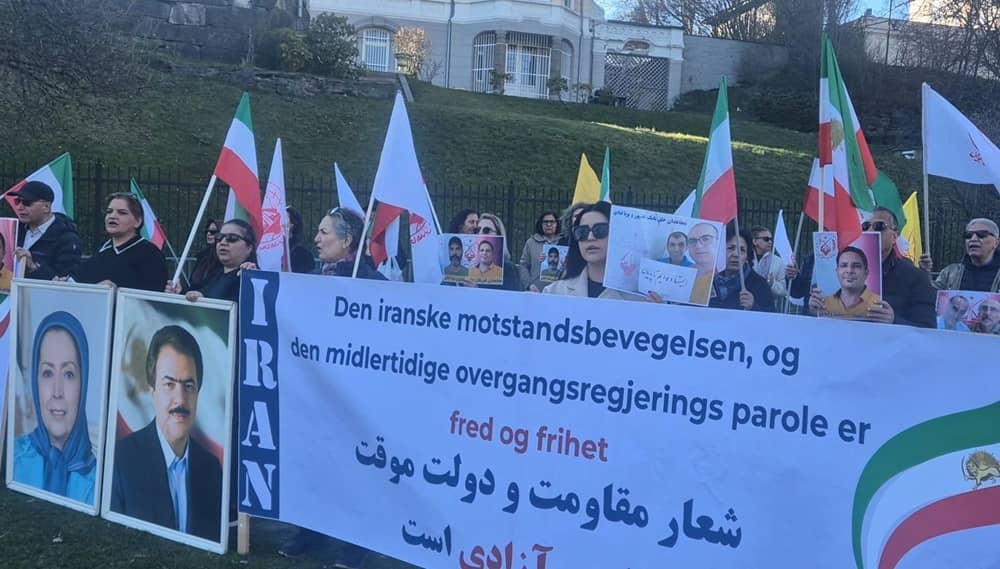
Bern, Switzerland — April 18, 2026 — Once again, supporters of the Iranian Resistance, along with Kurdish, Baluch, and other Iranian communities, held a protest in front of the regime’s embassy, condemning the IRGC’s terrorist attacks on the headquarters of Iranian Kurdish parties. They also protested the execution of political prisoners in Iran.