

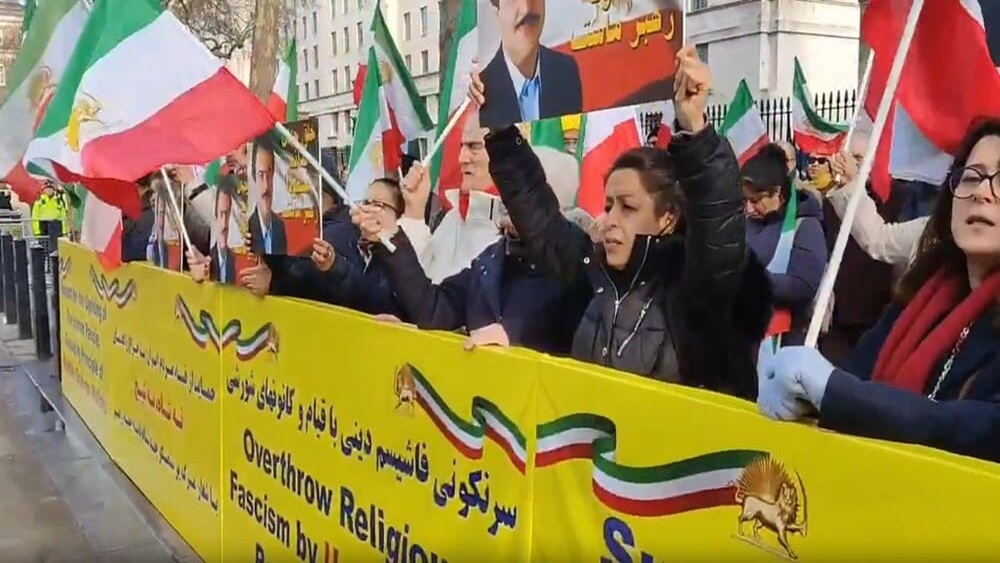
THIS PAGE WILL BE UPDATED WITH THE LATEST NEWS
UPDATE: 07:00 PM CET
Announcement of Additional Visa Restriction Targets for Individuals Involved in Inhibiting Iranians’ Rights to Freedom of Expression

During Iran’s nationwide protests in December 2025 and January 2026, the Iranian regime has unleashed violence and repression against tens of thousands of peaceful demonstrators. The regime imposed a near-total nationwide internet shutdown, unprecedented in scope and duration, that severely restricted independent documentation of abuses and cut Iranians off from the world. Even today, the regime continues to restrict the ability of Iranians to exercise their basic freedoms. As President Trump has made clear, the United States stands with the Iranian people.
Today, pursuant to his authority under Section 212(a)(3)(C) of the Immigration and Nationality Act, Secretary Rubio is taking steps to impose visa restrictions against 18 Iranian regime officials and telecommunications industry leaders, as well as their immediate family members.
UPDATE: 01:30 PM CET
“Neither with the Shah nor with the Mullahs,” Iran’s opposition: “We’re Ready to Govern”

“In June 1981, half a million people took to the streets in Tehran demanding democracy. The demonstration was crushed in blood. From that day on,” Sarvenaz Chitsaz recounts, “the mullahs’ regime entered a period of mass arrests, executions, and endless detentions.”
Chitsaz was twenty years old. She was studying in the United States during the 1979 revolution, then returned to Iran. One of her sisters was arrested and spent six years in prison. Her husband was executed. “It was impossible to stay,” she says in this interview with Corriere della Sera.
Today she lives in Europe and is president of the women’s commission of the National Council of Resistance of Iran (NCRI), one of the most structured and internationally visible opposition movements in exile. But the question running through her personal story is the same one confronting Iran today: can the regime really fall? And if it does, what comes next?
UPDATE: 08:00 AM CET
40th-Day Memorials Prove the Flame of Iran’s 2026 Revolution Cannot Be Extinguished

On February 17 and 18, 2026, the streets of Iran witnessed a resurgence of defiance that the clerical regime had desperately tried to suppress. Marking the 40th day since the martyrdom of protesters killed during the January 2026 uprising, cities across the nation transformed traditional mourning ceremonies into vibrant political rallies. Far from being moments of passive grief, these gatherings in cemeteries, mosques, and city squares became operational battlegrounds where the people renewed their pledge to overthrow the religious dictatorship.
Maryam Javadi Remains in Dowlatabad Women’s Prison Without a Judicial Ruling
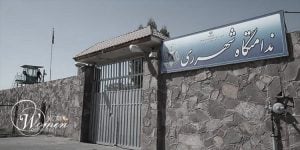
The continued detention of Maryam Javadi, a student of journalism, in Dowlatabad Women’s Prison in Isfahan has neared eight month, despite the absence of any judicial ruling or final determination of her case. The 27-year-old, originally from Chermahin and residing in Isfahan, was arrested by security forces in July 2025 and has since remained in a state of complete legal limbo. Since her arrest, Maryam Javadi has been held without a final court judgment. The persistence of her detention months after her arrest is widely viewed as an example of prolonged detention outside due process standards, in which the presumption of innocence and the right to a prompt and fair trial are effectively disregarded. The extended uncertainty surrounding her case is part of a broader mechanism of pressure routinely applied to political detainees.
Iran: Examining the Elements of a Widespread Attack Against Civilians During the 2026 Protests

Isfahan Province emerged as one of the principal sites of street repression during the nationwide protests of 2026. Field reports, eyewitness testimonies, and information provided by families of victims indicate a coherent pattern in the conduct of security forces toward civilian gatherings. This pattern includes the use of lethal force, obstruction of medical assistance, security-controlled handling of bodies, and pressure exerted on detainees following arrest. The collected evidence suggests that actions undertaken in Isfahan went beyond crowd dispersal. In multiple instances, individuals were directly targeted, and subsequent events were tightly controlled. This urban case file examines documented incidents, eyewitness accounts, official positions, and the legal implications of the conduct of armed forces in this province. During January 2026, Isfahan became one of the central nodes of nationwide protests. Demonstrations took place across several urban axes and extended to surrounding towns within the province.
Ali Khamenei Issues Firm Position on Nuclear Program as Domestic Unrest Continues
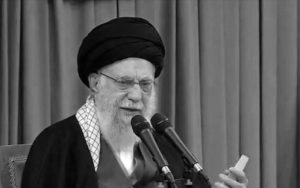
On 17 February, Ali Khamenei, Iran’s Supreme Leader, delivered a speech in which he stated that Tehran would continue its uranium enrichment activities, would not enter negotiations over its missile program, and would not accept what he described as attempts to destabilize the country. His remarks were delivered during a period of heightened tension, as ceremonies were taking place in several Iranian cities to mark those killed during the January 2026 protests. In some instances, these gatherings were followed by renewed confrontations and reports of additional fatalities.
Iran Resistance Rallies in Oslo, Ottawa, Dallas and Atlanta Highlight Uprising, Call: “No to Shah, No to Mullahs!”
February 14, 2026: Supporters of the Iranian Resistance in Oslo, Ottawa, Dallas, and Atlanta held demonstrations and gatherings accompanied by photo exhibitions of the martyrs of the January 2026 uprising, declaring their solidarity with the nationwide revolt and the MEK’s Resistance Units inside the country.
Iran Resistance Rallies in Oslo, Ottawa, Dallas and Atlanta Highlight Uprising, Call: “No to Shah, No to Mullahs!”#IranRevolution2026 #No2ShahNo2Mullahs #FreeIran2026https://t.co/j8FsqhHv8a
— Iran Freedom (@4FreedominIran) February 18, 2026
In their rallies, they voiced support for the Iranian people’s uprising to overthrow the clerical regime and called for an end to executions, as well as for recognition of the legitimate right of self-defense of the uprising’s youth and the Resistance Units against the ruling dictatorship.
Iran’s Solution: Foreign War or Popular Uprising?

While Western foreign policy toward Iran has for decades oscillated between two poles—war and appeasement—today a louder voice has risen from within Iranian society, declaring: no foreign war, no negotiations with the regime! This third option—organized popular uprising and internal resistance—is not an emotional slogan but a political analysis rooted in Iran’s contemporary history and the realities on the streets. Iran’s regime is negotiating with the United States, but not from a position of strength—rather out of desperation. The Trump administration has drawn clear red lines: preventing Iran’s regime from acquiring nuclear weapons and curbing its missile program. Officials of the Iranian regime are attempting to buy time through media propaganda.
Iran’s Investment Collapse and Middle-Class Decline Signal Deepening Structural Crisis

Negative Investment, Rising Poverty, and Expanding Inequality Point to a Systemic Economic Breakdown. Iran’s economic crisis is no longer limited to inflation or currency volatility. Recent reports published in Iranian state-affiliated newspapers—including Tose’e Irani, Donya-e-Eqtesad, and Siasat-e Rooz—paint a picture of a systemic breakdown: negative investment growth, accelerating depreciation of infrastructure, mass migration of skilled labor, and the steady collapse of the middle class into poverty. Taken together, these indicators reveal an economy trapped in structural contraction rather than cyclical downturn. According to Tose’e Irani, Iran’s investment growth has fallen to negative 15 percent, meaning capital formation is no longer sufficient to compensate for depreciation of existing infrastructure. In macroeconomic terms, this signals capital stock erosion.