

THIS PAGE WILL BE UPDATED WITH THE LATEST NEWS
UPDATE: 8:00 PM CEST
Joint Statement of the G7 Foreign Ministers on Iran and the Middle East

We the G7 Foreign Ministers of Canada, France, Germany, Italy, Japan, the United Kingdom and the United States of America, and the High Representative of the European Union, met in The Hague on June 25, 2025, where we discussed recent events in the Middle East.
We reiterate our support for the ceasefire between Israel and Iran announced by U.S. President Trump, and urge all parties to avoid actions that could further destabilize the region.
We reaffirm that the Islamic Republic of Iran can never have nuclear weapons, and urge Iran to refrain from reconstituting its unjustified enrichment activities. We call for the resumption of negotiations, resulting in a comprehensive, verifiable and durable agreement that addresses Iran’s nuclear program.
UPDATE: 5:00 PM CEST
11 Iranian Nationals Arrested in U.S. on Terror-Related Charges, Says Congressman
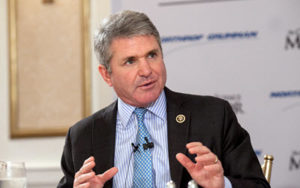
Amid heightened global scrutiny of the clerical dictatorship’s activities, U.S. Congressman Michael McCaul revealed that 11 Iranian nationals have been arrested on U.S. soil in recent days, citing connections to terrorism, the Islamic Revolutionary Guard Corps (IRGC), and espionage.
Speaking on CBS’s Face the Nation on June 29, McCaul—a senior Republican lawmaker and former chair of the House Foreign Affairs Committee—confirmed that among the individuals detained were: “One a sniper, one IRGC, another one, a known suspected terrorist, just within the last couple of days.”
The revelation underscores growing concerns that the clerical regime may be activating or repositioning sleeper cells as part of a broader campaign of retaliation following its recent military and strategic defeats. When asked if these individuals had operational plans or were simply connected to hostile networks, McCaul said the full details remain classified, but emphasized the seriousness of the threat: “We have to take it seriously that there could be sleeper cells in the United States.”
He named several high-profile American targets Iran has threatened in the past, including former Secretary of State Mike Pompeo, former National Security Advisor John Bolton, and President Donald Trump.
UPDATE: 9:00 AM CEST
The Iranian Threat Already inside Britain

The Treasury is currently investigating British companies for violating sanctions against Iran’s nuclear programme, with concern over nine suspected breaches of Britain’s sanctions regime against Iran in 2024 being intensified by Israel’s recent 12-day war.
These sanctions violations are of course concerning, but only constitute a small part of Iran’s clandestine political influence and illicit finance operations in Britain. Its hybrid war against British institutions and society been enabled by years of dereliction from policymakers tasked with combatting this threat.
Owing to Britain’s special relationship with the United States and support for the 1953 coup that helped Shah Mohammad Reza Pahlavi consolidate power, the Islamic Republic of Iran has long waged a shadow war against Britain. In June 2009, Iran’s supreme leader Ayatollah Ali Khamenei condemned Britain as “the most evil” foreign power and incited “Marg bar Ingles” (Death to Britain) chants from listeners at Tehran University’s mosque.
FINTRAC To Toughen Rules on Iran as Businesses Flag More Suspicious Transactions

Canada’s anti-money-laundering watchdog is planning to instruct banks and other regulated businesses to increase their scrutiny of funds flowing to or from Iran as it records a sharp increase in suspicious transactions from the sanctioned country.
The Financial Transactions and Reports Analysis Centre of Canada, or FinTRAC, told The Globe and Mail it expects to imminently publish updated requirements for those companies to conduct enhanced monitoring, due diligence and recordkeeping – marking its second such advisory about Iran this year.
Financial intelligence agencies in Canada and other countries are intensifying their attention on Iran at a time of heightened geopolitical risk. Tensions continue to run high in the Middle East in the wake of Israeli and U.S. bombing of Iranian nuclear sites and Tehran’s missile attacks on Israel.
US Government Warns of New Iran-Linked Cyber Threats on Critical Infrastructure

Companies should disconnect operational technology from the internet and enforce strong protections for user accounts, a joint alert from CISA, the FBI, NSA and DoD said. The new warning from four U.S. government agencies — the Cybersecurity and Infrastructure Security Agency (CISA), the FBI, the National Security Agency (NSA) and the Pentagon’s Cyber Crime Center — reflects federal officials’ worries about collateral damage from the U.S. joining Israel’s war with Iran.
Tehran-linked hackers have a history of targeting Western critical infrastructure in retaliation for Israeli military operations. During Israel’s late-2023 offensive in Gaza, hackers affiliated with Iran’s Islamic Revolutionary Guard Corps hacked into operational technology equipment powering water utilities and other infrastructure, including in the U.S. Iranian hackers also launched hack-and-leak operations that caused “financial losses and reputational damage for victims,” according to the advisory.
Iranian Opposition Leader Talks to Newsmax on Overthrow of Regime

In the wake of the U.S. bombing of Iran’s nuclear facilities June 21 and subsequent calls by President Donald Trump and Israeli Prime Minister Benjamin Netanyahu for regime change, the leader of the largest Iranian resistance group insists that “[t]he uprising of the Iranian people is not a distant aspiration — it is already underway.”
In an exclusive interview with Newsmax from her Paris headquarters (via email), Mrs. Maryam Rajavi, president-elect of the National Council of Resistance of Iran, pointed out that even before the airstrikes by Israel and the U.S., NCRI insurgents within the country were gaining ground.
“In the past seven years alone,” she told us, “five nationwide uprisings, each erupting in more than 150 cities, have shaken Iran and rattled the very foundations of the regime. Today, the religious dictatorship stands at its weakest point since 1979. The reasons are clear: uncontrollable economic collapse, the regime’s failure to provide essential services such as electricity, gas, and water, rampant corruption, and relentless repression — the very factors that fueled the 2022 uprising.”
UPDATE: 8:00 AM CEST
New PMOI Report Reveals Alarming Conditions of Political Prisoners Forcibly Transferred from Evin Prison

A new report from the PMOI’s social headquarters inside Iran has exposed the harrowing aftermath of the regime’s recent purge of Evin Prison, revealing a campaign of deliberate cruelty masked by sheer incompetence. The details paint a damning picture of a cornered and fearful regime, led by its desperate supreme leader, Ali Khamenei, lashing out at political prisoners with chaotic violence. The forced transfer of hundreds of inmates on June 23 to notoriously brutal detention centers was not a managed security operation, but a panicked move that reveals the rot at the core of the ruling theocracy.
June 2025 Report: Femicide, Structural Violence in Iran

June 2025 Report: Violence against women in Iran is on the rise. Under the rule of the misogynistic clerical regime, violence against women is not an isolated incident, but a fundamental part of the regime’s imposed cultural structure.
Due to repressive laws and the lack of legal protection for battered women, combined with the failure to criminalize domestic violence or gender-based violence in workplaces and public spaces, and the absence of legal support for women and girls under a regime that itself has institutionalized violence against women, we are witnessing a daily rise in cases of violence—particularly the murder of women at the hands of their husbands, relatives, or within society at large.
Brussels Rally Urges Support for Maryam Rajavi’s Third Option and Democratic Change in Iran

Brussels, June 28, 2025 – Supporters of the Iranian Resistance including the National Council of Resistance of Iran (NCRI) and the People’s Mojahedin Organization of Iran (PMOI/MEK) gathered to protest against the Iranian regime and to voice their support for a democratic alternative. They rejected both war and appeasement, instead backing the “Third Option” proposed by Maryam Rajavi, the President-elect of the NCRI—calling for democratic change led by the Iranian people and the organized Resistance movement.
Bournemouth Exhibition, with the Support of Citizens, Endorses Maryam Rajavi’s Third Option for Democratic Change in Iran

Bournemouth, UK — June 28, 2025 — In a compelling display of solidarity and civic engagement, the Academics in Exile Association held its first-ever public campaign event in Bournemouth, uniting local residents and members of the Iranian diaspora in a powerful call for justice, democracy, and human rights in Iran. Organized as part of the association’s broader “No to Executions” campaign, the initiative featured a public bookstall and a photo exhibition that vividly documented the Iranian regime’s intensifying wave of executions, particularly targeting political prisoners affiliated with the People’s Mojahedin Organization of Iran (PMOI/MEK).
Paris Exhibition Reveals Iran’s Human Rights Abuses and Calls for Global Action

Paris, France – June 28, 2025 – Supporters of the People’s Mojahedin Organization of Iran (PMOI/MEK) held an exhibition to denounce the Iranian regime’s escalating human rights abuses, with a special focus on the recent surge in executions across the country.
Heidelberg: MEK Supporters Protest Iran Regime’s Abuses, Urge Global Action

Heidelberg, Germany – June 28, 2025: Supporters of the People’s Mojahedin Organization of Iran (PMOI/MEK) organized an exhibition in Heidelberg to protest the Iranian regime’s intensifying human rights violations, particularly the growing number of death sentences handed down to political prisoners.
Exclusive Report from Qarchak Varamin Prison
Qarchak Women’s Prison in Varamin, located on the Qaleh Now Tehran–Varamin road, in the heart of the desert, is not only a detention center for women accused of various crimes, but has also become a living testament to neglect, systemic violence, and injustice. In this exclusive report, we examine the appalling conditions faced by female inmates in this prison—women trapped in an inhumane environment governed by a policy of silence, corruption, and utter disregard for their human rights.
According to numerous testimonies emerging from inside Qarchak Prison, women are subjected to ongoing psychological and physical torture, including beatings, sexual abuse, and humiliation. The prison warden, Soghra Khodadadi, along with the head of the women’s ward and several guards, have been accused of forming a “power mafia” that suppresses any dissent through threats, censorship, and violence.
Where Is Ali Younesi?
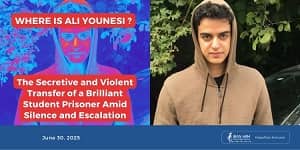
At approximately 1:00 PM on Wednesday, June 18, 2025, Ali Younesi — a gifted university student and political prisoner — was violently removed from Ward 4 of Evin Prison and transferred to an undisclosed location. Five days later, Evin Prison was targeted by missile strikes, leaving sections such as Ward 209 in ruins. Now, over twelve days after his forced transfer, there is still no information regarding Ali’s whereabouts. His family, attorney, and international human rights observers remain in the dark.
This enforced disappearance, executed under total media blackout and official silence, serves as yet another alarming indicator of systematic human rights violations in Iran’s prison system.
Execution of 10 Prisoners, Including a Woman, in Iran

In recent days, at least 10 prisoners have been executed in the prisons of Yasuj, Ardabil, Tabriz, Qom, and Khorramabad. These executions included one woman and several individuals convicted of various charges, including murder, rape, drug-related offenses, and armed robbery. With these executions, the number of recorded executions in the Iranian month of Khordad (May 22 to June 21) has reached 147.
- Details of the Executions by Prison:
- Yasuj Prison – In the early hours of Monday, June 16, 2025, three prisoners were executed: Houshang Morovati (32 years old, convicted of rape), Mehdi Davoudi (31 years old, convicted of murder), and Yashar Amini (34 years old, convicted of murder).
- Ardabil Prison – At dawn on Sunday, June 22, 2025, Hedayat Menshari (29 years old), who had been arrested four years earlier on murder charges, was executed.
- Qom Prison – On the morning of Tuesday, June 24, 2025, two prisoners were executed: Hassan Rostam-Nejad (convicted of murder) and Tal’at Sabzi (a 47-year-old woman, convicted of murder).
The Return of Power Outages in Iran Amid Intense Summer Heat

Iran’s national electricity distribution company has released a new schedule of rolling blackouts across various provinces, signaling the return of power outages following the 12-day war between Iran’s regime and Israel.
The schedule comes after a 12-day period of uninterrupted power supply during the attacks. Now, in an effort to compensate for a nationwide capacity shortage, the Ministry of Energy has reinstated its model of region-based and scheduled blackouts.
What makes this decision more significant are recent remarks by Mohammad Allahdad, Deputy for Transmission and Foreign Trade at Tavanir (Iran Power Generation, Transmission and Distribution Company). Explaining the impact of the war on the national grid, Allahdad stated that electricity consumption dropped sharply during the internet shutdown that occurred over this period.
Worsening Conditions for Political Prisoners in Iran After Israeli Strike on Evin Prison
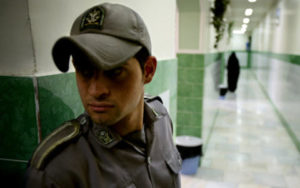
Concerns have escalated over the condition of political prisoners formerly held in Evin Prison after their transfer to Qarchak Varamin, Greater Tehran, and Ghezel Hesar prisons in Karaj. Reza Valizadeh, an Iranian-American journalist currently imprisoned, described the situation as “critical” in a phone call with his brother.
On Wednesday, June 18, the family of political prisoner Ali Younesi reported that he had been forcibly and abruptly transferred from Evin Prison to an undisclosed location. Younesi, born in March 2001, is a computer science student at Sharif University of Technology and the recipient of a gold medal at the 2018 International Olympiad on Astronomy and Astrophysics (IOAA) held in Beijing, China.
Iran’s Regime Faces Renewed Scrutiny and Uncertainty as Nuclear Crisis and Ceasefire Fragility Persist — Day 18

Day 18 – Overview Despite the ceasefire between Israel and the Iranian regime, tensions remain high across diplomatic, economic, and military fronts. Political discontent is mounting within the regime’s leadership, the economic fallout continues, and the status of Iran’s damaged nuclear infrastructure is increasingly under global scrutiny.
1. No Date Set for Negotiations, Tensions Remain Iranian Foreign Ministry spokesperson Esmail Baghaei stated on Monday that no definitive date has been agreed upon for talks with Europe or the United States. Despite earlier claims by U.S. President Donald Trump that negotiations would begin this week, Iran’s top officials continue to deny any formal agreement or schedule. Political deputy Majid Takht-Ravanchi reaffirmed that Iran would only negotiate if it received explicit guarantees that it would not be attacked during talks. Meanwhile, both Trump and U.S. envoy Steve Witkoff have expressed readiness for a “comprehensive peace agreement.”
Baghaei also emphasized Iran’s dissatisfaction with the positions taken by France and Germany regarding Israel’s attack, calling them “unacceptable.”