
HomeIran News NowIran News in Brief-Articles and VideosIran News in Brief – March 30, 2026

Iran News in Brief – March 30, 2026

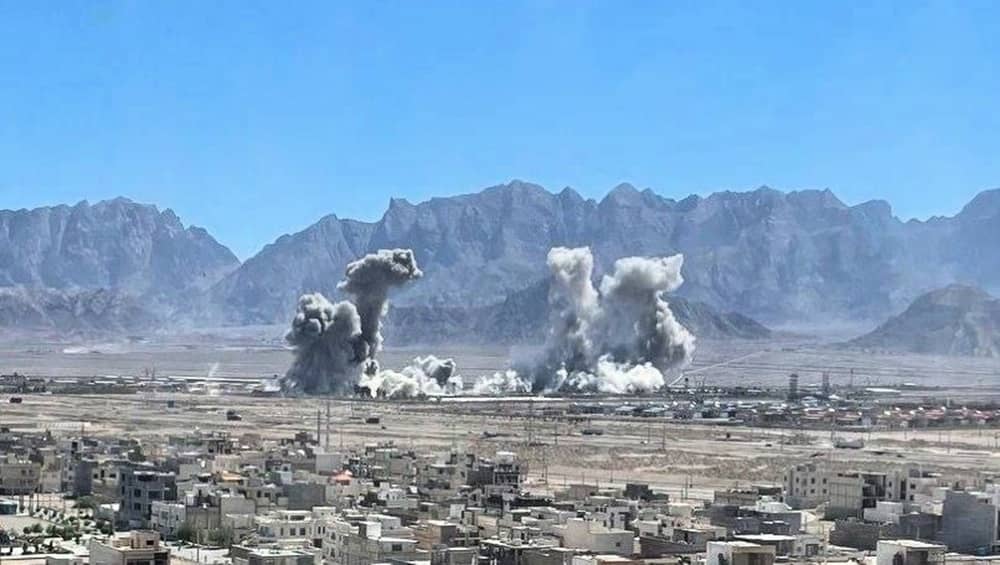
Columns of smoke rise over the outskirts of Yazd following reported explosions on March 29, 2026

THIS PAGE WILL BE UPDATED WITH THE LATEST NEWS

UPDATE: 09:30 PM CEST

Iranian Regime Suffers Leadership Losses, Strategic Strikes as War Intensifies; Retaliatory Attacks Hit Israel’s Energy Sector

A coordinated wave of U.S. and Israeli strikes over the past 24 hours expanded across multiple Iranian cities, killing a senior Revolutionary Guard commander, degrading military, nuclear, and industrial infrastructure, and triggering widespread blackouts and internal disruption. Iran’s regime responded with missile and proxy attacks, including strikes on Israeli energy infrastructure, while threatening broader retaliation against U.S. and allied targets. The conflict continues to widen geographically and strategically, with mounting pressure on shipping routes, increased U.S. troop deployments, and tightening internal controls inside Iran.

Regime Losses: Targets Hit, Infrastructure Damage, Personnel Killed

Overnight and into the morning, sustained air and missile strikes hit Tehran, Isfahan, Shiraz, Tabriz, Abadan, Bandar Abbas, Qom, Karaj, and multiple northern regions, marking one of the broadest synchronized attack waves in recent days.

In Tehran alone, explosions were reported across northern, eastern, western, and central districts, including areas near Mehrabad Airport, Pasdaran, Sohanak, and Shahr-e Rey. Air defenses were widely activated as multiple sites were struck, including military-linked facilities, Basij infrastructure, and IRGC-associated buildings.

A confirmed high-level casualty was Hassan Hassanzadeh, commander of the IRGC’s Mohammad Rasullallah Corps in Tehran, responsible for internal security of the capital. His killing represents a significant operational and symbolic blow to regime control in the capital.


Additional confirmed and reported strikes include:

  • Complete destruction of a Defense Ministry-affiliated SAIRAN facility in eastern Tehran
  • Strike on IRGC university complex (Imam Hossein University), including missile research infrastructure, wind tunnels, and chemical research centers
  • Targeting of Basij logistics and repair base in southern Tehran
  • Attack on police and Basij sites in Kurdistan (Sanandaj, Dehgolan)
  • Heavy bombardment of petrochemical facilities in Tabriz and Abadan, including repeated strikes near refineries
  • Destruction of an IRGC division headquarters (Tharallah unit in Kerman) (satellite-confirmed, same operational wave)

Critical infrastructure was also degraded:

  • Power facilities in Tehran and Alborz provinces were hit, causing widespread outages
  • Telecommunications tower in northern Iran (Nowshahr) destroyed
  • Port and dock facilities in northern Iran struck, with casualties reported
  • Multiple residential zones hit, producing civilian casualties and injuries

At the strategic level:

  • The Khondab heavy water facility was confirmed non-operational after earlier strikes
  • Reports indicate strikes near Parchin military-nuclear complex and Kohak IRGC base

Industrial capacity also took a major hit:

  • Foolad Khuzestan steel production halted after direct strikes on key production units

Iranian Retaliation and Effectiveness

The regime in Iran responded with missile and drone activity, though with mixed effectiveness.

  • A cluster missile strike impacted over 20 locations in Be’er Sheva
  • A missile struck energy infrastructure in Haifa, hitting a fuel storage tank and industrial structure, causing fires but no casualties and limited operational disruption
  • Additional reported Iranian actions included:
    • Attacks on a major Israeli refinery (Haifa) causing fire damage
    • Attempted strikes linked to regional infrastructure, including a reported attack on a Kuwaiti facility
    • Continued threats to target U.S. and Israeli assets across the region

Overall, Israeli defenses and emergency response limited casualties and prevented major systemic disruption in the latest round, although infrastructure damage continues to accumulate.

Israeli and U.S. Casualties and Damage

Past 24 hours:

  • No confirmed U.S. fatalities reported in this cycle
  • Israeli casualties appear limited, with no deaths reported in the Haifa refinery strike, despite infrastructure damage

Broader context (cumulative):

  • U.S. forces have sustained over a dozen fatalities and hundreds of injuries since the war began
  • Israel has faced repeated missile strikes causing injuries and localized structural damage in prior days
  • Iranian claims of large-scale U.S. casualties remain unverified and disputed

Regional Spillover: Gulf, Shipping, and Military Posture

The conflict continues to expand beyond Iran’s borders:

  • The Strait of Hormuz remains effectively disrupted, severely impacting global oil flows
  • The U.S. has deployed hundreds of additional special forces, including Rangers and Navy SEALs, raising total regional troop presence above 50,000
  • Potential U.S. operational scenarios now include:
    • Securing Hormuz
    • Seizing Kharg Island (Iran’s main oil export hub)
    • Direct operations against nuclear sites in Isfahan and Natanz

Iran, meanwhile, has:

  • Threatened attacks on U.S. bases and allied infrastructure
  • Continued indirect escalation via regional targets and proxy networks

Diplomatic activity remains tentative, with indirect messaging ongoing but no confirmed direct negotiations.

Internal Conditions Inside Iran

Conditions inside Iran deteriorated further over the past 24 hours:

  • Nationwide internet blackout entered day 31, leaving millions without access to global communications
  • Widespread power outages hit Tehran and surrounding regions following strikes on electrical infrastructure
  • Reports indicate continued arbitrary arrests, including:
    • A teachers’ union activist
    • Multiple civilians detained for using VPNs or satellite internet
  • Security forces conducted home raids and confiscations of electronic devices

Additional indicators of internal strain:

  • Continued reports of civilian casualties from strikes, including residential areas
  • Confirmation of use of child participants in checkpoint duties, including the death of an 11-year-old in earlier attacks
  • Emergency services report hundreds rescued from collapsed structures in recent weeks

UPDATE: 04:30 PM CEST

French Authorities Arrest Suspects in Paris Bomb Plot Linked to Iran-Backed Networks

French media report that authorities have placed dozens of individuals under surveillance over suspected links to Iranian networks and Hezbollah, amid heightened security concerns tied to the Middle East conflict. At least 15 individuals are under particularly close monitoring by intelligence services.

According to reports from BFM TV, a man was arrested between Friday and Saturday, March 28, while allegedly attempting to ignite an improvised explosive device outside a Bank of America branch in Paris’s 8th district. French Interior Minister Laurent Nuñez linked the incident to the broader Middle East war, describing it as part of what he called Iran’s “proxy operational methods in Europe.”

Authorities have arrested three suspects in total. The first was detained at the scene, while allegedly trying to activate the device. A second suspect was arrested south of Paris in Athis-Mons and is believed to have been assigned to monitor and film the attack. A third individual, reportedly a minor with a criminal background, was also detained. All three are suspected of being recruited through intermediaries acting on behalf of Iranian-linked networks.

Investigators say one suspect claimed he had been recruited via the social media platform Snapchat and was paid €600 to carry out the attack. French officials say this reflects a growing pattern in which Iranian-linked operatives rely on local criminal networks to conduct operations, allowing for deniability and reduced visibility.

French authorities have increased protection for Iranian dissidents inside the country and warned of continued vigilance in the coming weeks. Officials also noted similar incidents across Europe, including attacks on Jewish-linked targets in Belgium, the Netherlands, and the United Kingdom, which have been attributed to pro-Iranian groups.

The Interior Minister emphasized that while no direct sponsor has been officially named, there is strong suspicion of coordinated proxy activity linked to the ongoing regional conflict.


UPDATE: 07:00 AM CEST

Iran’s Power Shift: From Political Balancing to Military Control
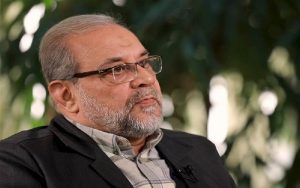
Mohammad-Bagher-Zolghadr

The appointment of Mohammad Bagher Zolghadr as Secretary of Iran regime’s Supreme National Security Council is not a routine bureaucratic reshuffle—it is a structural turning point. Following the killing of Ali Larijani, a figure long associated with political mediation and crisis management, this decision lays bare a deeper reality: the Iranian regime has abandoned even the pretense of political balancing and is consolidating authority within its most hardline security apparatus.

This is not merely a change in personnel; it is a shift in doctrine. The regime is signaling that, in the face of mounting existential threats, it no longer trusts political actors or institutional mechanisms. Instead, it is handing over national security decision-making entirely to the entrenched core of the Islamic Revolutionary Guard Corps (IRGC).

Zolghadr is not a politician in any conventional sense. His career has been forged within the security and intelligence machinery of the state, placing him at the center of some of the regime’s most controversial and coercive operations. Unlike his predecessor, whose influence derived from parliamentary and diplomatic experience, Zolghadr represents the institutional DNA of repression.

Read more


The Importance of The Strait of Hormuz as a Vital Artery of the Global Economy

The importance of the Strait of Hormuz is not only political; it is considered a vital artery of the global economy. The Strait of Hormuz is the only narrow maritime passage connecting the Persian Gulf to the Gulf of Oman and international waters. It serves as the sole export route for many of the world’s largest oil producers.

The most important reason for the strait’s significance is the massive volume of oil that passes through it. About 20% to 25% of the world’s total oil consumption and a large portion of exported liquefied natural gas (LNG) are transported through this route. If this passage were closed even briefly, global energy prices would surge dramatically.

At its narrowest point, the Strait of Hormuz is only about 33 kilometers wide. The shipping route consists of two channels, each approximately 3 kilometers wide (one for inbound and one for outbound traffic), separated by a 2-kilometer buffer zone. This means massive vessels have very limited maneuvering space, and the security of this area directly impacts the entire global supply chain.

Read more


From Oil to Food: The Impact of the Iran War on Global Supply Chains

The Iranian regime's military forces seize a South Korean Tanker in the Strait of Hormuz

Shifts linked to the conflict are being observed across energy markets and, in turn, food prices, highlighting potential vulnerabilities in global trade routes and the systems that support the distribution of everyday goods.

The Iran war global supply chain crisis is no longer a distant risk—it is already unfolding across energy, shipping, and food systems worldwide. What began as a geopolitical escalation has quickly expanded into a multi-layered disruption, with the Strait of Hormuz constrained and new threats emerging around the Bab al-Mandab.

As of late March 2026, markets are increasingly reflecting conditions that some analysts describe as a dual chokepoint situation, associated with the broader impact of the Iran war on global supply chains.

Read more


Canberra: Iranians Rally Outside Iranian Regime’s Embassy in Support of the NCRI’s Provisional Government

Canberra: Iranians Rally Outside Iranian Regime's Embassy, Backing NCRI’s Provisional Government

Canberra, Australia — March 25, 2026 — Supporters of the People’s Mojahedin Organization of Iran (PMOI/MEK) demonstrated outside the Iranian regime’s embassy, calling for the overthrow of the clerical establishment and endorsing the National Council of Resistance of Iran’s (NCRI) announcement of a provisional government. They also demanded the closure of the Iranian regime’s embassy in Canberra, describing it as a center of espionage and terrorism.

Read more


UK Urged to Recognize NCRI Provisional Government as London Rally Backs Maryam Rajavi’s Democratic Plan

UK Urged to Recognize NCRI Provisional Government as London Rally Backs Maryam Rajavi’s10 Point Plan

On March 28, 2026, freedom-loving Iranians and supporters of the Iranian Resistance, along with Kurdish compatriots and other fellow citizens, rallied at Marble Arch in London, voicing strong support for the provisional government proposed by the National Council of Resistance of Iran (NCRI) and endorsing the Ten-Point Plan of Mrs. Maryam Rajavi, President-elect of the NCRI, as a clear roadmap for a democratic transition in Iran.

Read more


Also, read Iran News in Brief – March 29, 2026