


THIS PAGE WILL BE UPDATED WITH THE LATEST NEWS
UPDATE: 9:00 AM CEST
Pezeshkian Is No Savior of the Iranian People

It’s time for the United Nations to hear the true voice of the Iranian people. As general debate of the 80th session of the United Nations General Assembly takes place in New York, the ruling regime in Iran is once again attempting to cleanse its bloodstained hands by sending its representative to this international platform. Masoud Pezeshkian, the newly appointed president of this regime, spoke at the General Assembly this week. However, he is neither a representative of the Iranian people nor a messenger of peace; rather, he is one of the criminal operatives who, over the past four decades, has contributed to the ongoing repression and killings.
Mr. Pezeshkian proudly introduces himself as part of the Islamic Revolutionary Guard Corps, the organization that is listed as a terrorist group by the State Department and is responsible for exporting terrorism across the region and killing Iranians. He has posed for photos in IRGC uniform and said, “I would wear the IRGC uniform again.”
Thousands Protest Iranian President Masoud Pezeshkian’s UN Visit, Urge Regime Change: ‘Not Our Representative’

More than 2,000 people gathered outside the United Nations headquarters in New York on Wednesday to protest Iranian President Masoud Pezeshkian’s visit, with the demonstrators calling for a regime change. The demonstrators yelled, “Free Iran,” as they condemned Pezeshkian’s appearance at the UN General Assembly and called for his administration to be ousted and replaced with a democratic republic.
“We don’t believe people who rule an authoritarian regime should be invited to speak in the United Nations,” Neda, 24, of Stockholm, told The Post.
UPDATE: 8:00 AM CEST
Iran: Mahnaz Dehghani Among 13 Women Executed in 56 Days

On Wednesday morning, September 24, 2025, Mahnaz Dehghani, a woman prisoner convicted of murder, was executed in Adelabad Prison in Shiraz. Despite the execution being carried out, neither Adelabad Prison authorities nor Iranian regime’s judicial institutions have issued any official statement regarding the case. With the execution of Mahnaz Dehghani in Adelabad Prison in Shiraz, the number of women executed in Iran since the beginning of 2025 has reached 37. In less than two months, since July 30, at least 13 women have been executed in Iran under the misogynistic clerical regime.
Critical Health Condition of Political Prisoner Yousef Savari in Sheiban Prison, Ahvaz
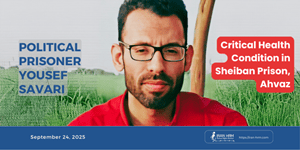
Political prisoner Yousef Savari, currently held in Ward 5 of Sheiban Prison in Ahvaz, is reportedly in critical health condition due to severe respiratory complications. According to sources close to his family, Savari has experienced multiple acute episodes of shortness of breath in recent days and is unable to sleep. Despite the seriousness of his condition, prison authorities have so far failed to transfer him to a medical facility outside the prison. In an interview with news outlets, his brother, Isa Savari, stated: “Yousef suffers from a pulmonary illness, and his breathing has deteriorated significantly in recent days. He feels like he’s suffocating when he lies down.” He added that the family has made repeated requests for his transfer to a medical center, but these have been denied without explanation. This situation is seen as part of a broader pattern of the deliberate denial of medical care to political prisoners in Iran.
Five Political Prisoners in Ahvaz Face Torture, Denial of Medical Care, and Unfair Legal Proceedings

Five political prisoners held in Sheiban Prison in Ahvaz—Mokhtar Alboushokeh, Mostafa Helichi, Reza Hezbavi, Abbas Saeedi, and Amer Machasebeh—have reportedly been subjected to torture, medical neglect, and prolonged legal uncertainty. On September 22, 2025, they participated in a videoconference hearing to present their final defense before the Revolutionary Court on the charge of “membership in an insurgent group.” The case now awaits a final verdict. According to human rights sources, Helichi and Hezbavi, both cultural activists and poets, were arrested in December 2024 by Iran’s Public Security Police (PAVA), a branch of the national police force (FARAJA). They were detained for a month in a PAVA facility, where they were allegedly subjected to repeated physical and psychological abuse, including beatings and suspension torture. One week later, the other three detainees—Alboushokeh, Saeedi, and Machasebeh—were arrested and transferred to the same facility. Reports indicate they were also tortured, including while restrained, and denied basic legal rights during their interrogations.
Iranian Regime Supreme Court Upholds Death Sentence of Poet Peyman Farahavar
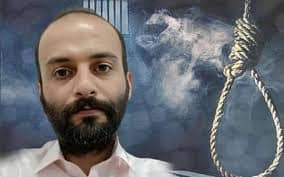
The death sentence of Peyman (Amin) Farahavar, a poet from Gilan imprisoned in Lakan Prison in Rasht, has been upheld by Branch 39 of Iran’s Supreme Court. He had previously been sentenced to death by Branch One of the Revolutionary Court of Rasht. The death sentence of Peyman (Amin) Farahavar, a poet from Gilan who is currently detained in Lakan Prison in Rasht, was confirmed by Branch 39 of the Supreme Court. He had previously been sentenced to death at the initial stage by Branch One of the Revolutionary Court of Rasht. Ramin Safarnia, the defense attorney of this political prisoner, announced in a statement that Branch 39 of the Supreme Court rejected the appeal and confirmed Mr. Farahavar’s death sentence. He added that a request for retrial will be submitted to the highest judicial authority in the country.
Iran’s Workers Crushed by Poverty as Regime Pursues War and Nuclear Escalation
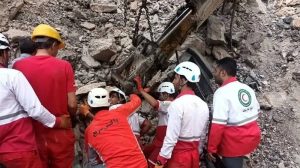
As Iran sinks deeper into economic turmoil, the regime’s policies of confrontation with the West are taking a devastating toll on the country’s workforce. Mounting data and testimonies show that millions of Iranian workers are being crushed under an unbearable cost-of-living crisis. The poverty line in Iran has surpassed 55 million tomans, while the average salary of even senior workers and employees with benefits remains only around 17 million tomans. This staggering gap has left more than 70 percent of the population under severe financial pressure, forcing many to take on second or even third jobs just to survive. The disparity is particularly stark in southern industrial regions, where contract workers endure the harshest conditions. Unlike official employees who at least receive some benefits and higher annual pay, contract workers scrape by on 15 to 20 million tomans a month without insurance, job security, or meaningful benefits.