
THIS PAGE WILL BE UPDATED WITH THE LATEST NEWS
UPDATE: 7:30 AM CET
Retirees And Educators Protest Poverty and Corruption in Six Cities Across Iran
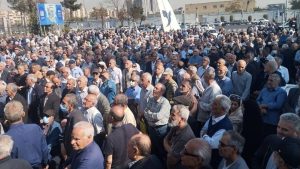
On Sunday, November 1, 2026, six major Iranian cities—Tehran, Isfahan, Ahvaz, Shush, Kermanshah, and Rasht—witnessed a coordinated wave of protest rallies and marches led by Social Security and steel industry retirees alongside public educators. Demonstrators took to the streets to denounce collapsing living standards, runaway inflation, and the rapid erosion of purchasing power. Moving beyond purely occupational grievances, the chants raised across the country targeted the core policies of the regime, exposing the state’s exploitation of religious rhetoric to mask systemic corruption while directly blaming foreign warmongering and the looting of oil revenues for the impoverishment of Iranian society.
In Isfahan, retirees from the steel industry and the Isfahan foundry marched toward the provincial governorate to demand their delayed pensions and statutory benefits. The slogans echoing through Isfahan’s streets reflected a complete public break with the ruling establishment’s official narrative across three distinct fronts. Protesters directly challenged the state’s manipulation of religious sentiment to cover up financial graft, chanting: “Hussein, Hussein is their slogan; lies and theft are their trade.”
Simultaneously, demonstrators dismantled the state propaganda that routinely blames foreign powers for domestic crises, chanting in unison: “Our enemy is right here; they lie when they say it’s America.” Protesters also aimed their anger directly at the regime’s president, Masoud Pezeshkian, chanting: “Hey President, you lied to the nation,” underscoring the collapse of public trust in the government’s promises of economic reform.
October 2026 Report: Femicide in Iran: A Crime Without Punishment
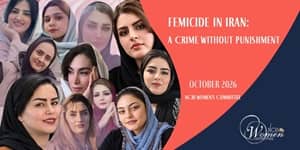
October 2026 Report–Femicide in Iran: While combating violence against women, criminalizing domestic violence, and protecting women at risk have become legal and social priorities in many countries around the world, women in Iran continue to face a system under the misogynistic clerical regime that denies them even the most basic legal protections.
The rising number of women murdered in Iran cannot be dismissed as a series of individual crimes or family disputes. These crimes do not occur in a vacuum. They are the product of a system in which discrimination against women is institutionalized, laws offer them no protection against violence, violence against women is not criminalized, and perpetrators enjoy effective impunity.
Nearly five decades of rule by the mullahs’ regime, marked by the promotion of patriarchal values and the obstruction of protective measures, have created conditions in which violence against women has become normalized and recurrent.
An examination of documented cases of women murdered in 2026 reveals that the home has become the most dangerous place for many Iranian women. Most victims were killed not by strangers, but by their husbands, former husbands, fathers, brothers, sons-in-law, and other men within their immediate families.
Senior Belgian MR Figures Oppose Reza Pahlavi Visit, Call Initiative “Unacceptable”
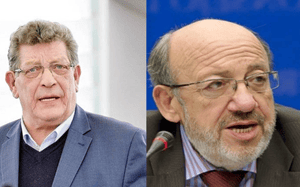
Two prominent figures from Belgium’s French-speaking liberal MR party have publicly opposed the planned visit of Reza Pahlavi, son of Iran’s last shah, criticizing the decision to give him an official platform at the Royal Military Academy and questioning the political implications of his reception in Belgium.
In comments published by the Belgian newspaper De Standaard on October 29, former Deputy Prime Minister Louis Michel and former MR vice-chair Gérard Deprez described the initiative as inappropriate and called on Prime Minister Bart De Wever to intervene. Pahlavi is scheduled to visit Belgium on November 6 at the invitation of Defense Minister Theo Francken (N-VA), where he is expected to deliver a speech at the Royal Military Academy. The planned appearance has generated criticism because of Pahlavi’s continued positive references to his father’s rule and the absence of a clear break with the former monarchy’s authoritarian legacy.
Michel, a former deputy prime minister and father of former European Council President Charles Michel, questioned the democratic credentials of presenting Pahlavi as a potential alternative for Iran.
“You can have an open mind, but you must know which system you are supporting. It was a dictatorship. Nobody can dispute that,” Michel told De Standaard. He warned that the invitation could divide or weaken Iran’s democratic opposition.
32 Prominent Belgians Urge Prime Minister to Cancel Reza Pahlavi’s Military Academy Event
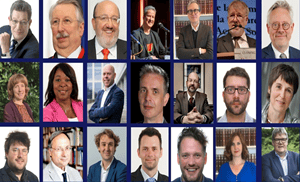
Thirty-two prominent Belgian figures, including members of parliament and representatives of the country’s academic, legal, and political communities, have called on Prime Minister Bart De Wever to intervene and cancel a planned appearance by Reza Pahlavi at Belgium’s Royal Military Academy on November 6.
In an open letter to the prime minister, the signatories expressed deep concern over Defense Minister Theo Francken’s decision to host Pahlavi for a working breakfast and a speaking engagement at the military institution. They argued that the initiative contradicts the balanced position previously adopted by the Belgian government and reflected in a decision by the Federal Parliament.
The letter was circulated by Gérard Deprez, an honorary government minister, who urged the prime minister to consider the political and institutional consequences of the invitation and intervene to cancel the official event.
The signatories recalled that Foreign Minister Maxime Prévot had previously emphasized the diversity of Iran’s opposition movements and the importance of avoiding any impression that Belgium was endorsing a particular individual or political faction as the future representative of Iran.
Following Prévot’s position, the Conference of Presidents of the Belgian Chamber of Representatives decided against organizing an official parliamentary event for Pahlavi.
Iran’s Banks Pour Billions into Working Capital as Investment and Business Expansion Decline

Banks disbursed approximately 72,310 trillion rials ($26.584 billion) in loans between March and September 2026. However, 85% of business loans went toward working capital, while only 12% was allocated to establishing and expanding businesses.
According to the state-run Eghtesad News daily, of the 55,330 trillion rials ($20.341 billion) in loans disbursed to business owners, 47,040 trillion rials ($17.294 billion), equivalent to 85%, was allocated to working capital. By contrast, total loans for establishing and expanding economic activities amounted to just 6,900 trillion rials ($2.536 billion). In other words, banks provided nearly seven times more financing for the day-to-day operations of existing businesses than for establishing and expanding businesses.
These figures were recorded in an economy where real investment in machinery declined in 2025 and fell by a further 7.9% in the spring of 2026. The contradiction is clear: the volume of bank lending is enormous, but the share of development loans remains negligible compared with financing for working capital.
Iran: Structural Deprivation of Dignified Life and Socio-Economic Rights

This report examines and evaluates the human rights implications of the current economic situation in the Islamic Republic of Iran. Statistical documentation and official field reports in the first half of 2026 indicate that the adoption of contractionary economic policies, the abrupt elimination of subsidies for basic goods and medicines, structural imbalances, and the failure to prioritize public welfare have led to an unprecedented collapse in societal purchasing power and the emergence of a profound humanitarian crisis.
The misery index reaching a historic high of 97.7%, point-to-point inflation ranging from 83.8% to 88.6%, food inflation soaring up to 128.1%, the exclusion of 1.5 million individuals from formal employment, and a multi-fold increase in the cost of critical medications for rare and chronic diseases provide serious evidence of the deterioration of living conditions and the diminished access of broad segments of the population to work, food, housing, and medical services. This situation raises serious concerns regarding the implementation of the obligations of the Islamic Republic of Iran under Articles 6, 11, and 12 of the International Covenant on Economic, Social and Cultural Rights (ICESCR), as well as obligations related to the protection of the right to life and human dignity enshrined in Article 6 of the International Covenant on Civil and Political Rights (ICCPR). The continuation of this trend can amount to a structural deprivation of the conditions necessary for a life of dignity and human worth.
Iran: Systematic Persecution of the Alipour Family

In international human rights law, criminal responsibility and punishment are strictly personal. No individual should be subjected to punishment, harassment, persecution, or restriction due to family ties, emotional bonds, or kinship with another person. This principle is a cornerstone of the rule of law and fair trial, recognized across a broad spectrum of international human rights instruments and standards.
Nevertheless, United Nations human rights bodies have repeatedly warned in recent years against the expanding phenomenon of exerting pressure on relatives of political prisoners, human rights defenders, protesters, journalists, and executed individuals. These measures manifest as arbitrary arrests, summons, threats, denial of fundamental rights, judicial and security pressures, or other forms of harassment targeting relatives. In human rights discourse, this trend is frequently examined under concepts such as “Reprisals Against Family Members” and “Family-Based Repression.”
Beyond obligations under Articles 9, 14, and 17 of the International Covenant on Civil and Political Rights (ICCPR) concerning personal liberty, fair trial, and the protection of privacy and family life, States are obligated to refrain from any punitive or restrictive measures against family members of individuals due to the activities, beliefs, or legal status of their relatives.
The case of the Alipour family is a notable illustration of concerns in this area. According to available information, this family has faced a chain of judicial and security measures within a short timeframe—ranging from the execution of Babak Alipour and the prolonged detention of Rouzbeh Alipour to the arrest, trial, and imprisonment of the father, Ali Alipour. Examining this sequence of events provides a clear picture of the human, social, and legal consequences of exerting pressure on the families of political prisoners and executed individuals.
PMOI Supporters in Bellinzona, Switzerland Hold Exhibition Denouncing Iranian Regime Executions
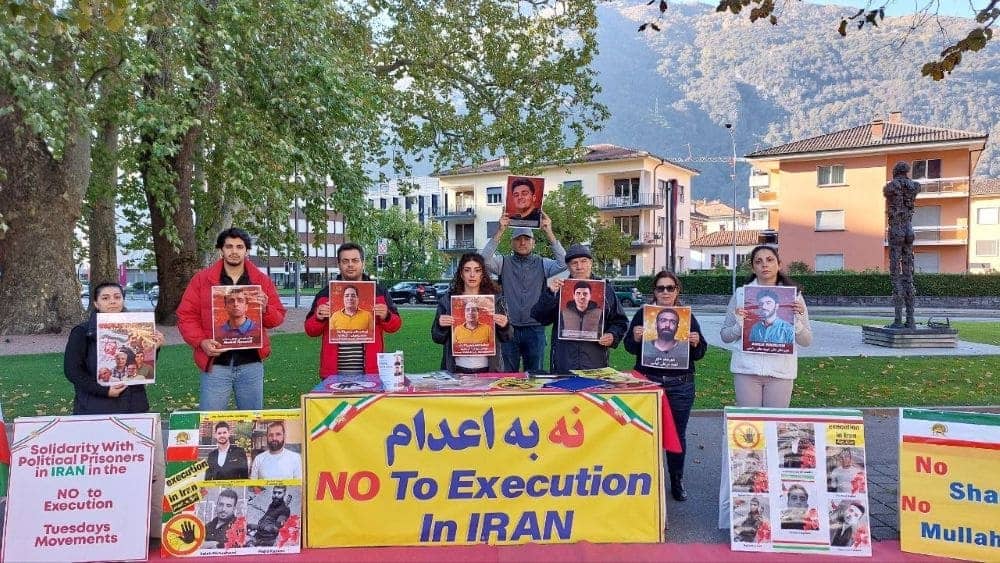
Bellinzona, Switzerland – October 31, 2026 — Supporters of the People’s Mojahedin Organization of Iran (PMOI/MEK) held a photo exhibition and book table in Bellinzona to condemn executions carried out by the Iranian regime and to oppose the death penalty, particularly against political prisoners.

Participants also expressed solidarity with the “No to Execution Tuesdays” campaign, which calls for an end to executions in Iran. They urged the immediate release of political prisoners and an end to the prosecution and persecution of protesters and other dissidents.
Chingford, London: Academics in Exile Hold Anti-Execution Campaign and Petition Drive
Chingford, London — October 31, 2026 — Members of the Academics in Exile Association in the UK, who support the Iranian Resistance (NCRI), set up an information and campaign stall in Chingford, London, on Saturday as part of the “No to Executions” campaign. The initiative featured a book table highlighting human rights violations and executions in Iran, a petition drive inviting members of the public to sign a petition calling for an end to executions, and campaign posters and photographs of political prisoners and victims of executions displayed around the stall. The activities aimed to raise public awareness of the Iranian regime’s escalating use of executions and systematic repression, and received encouraging support from the public. The organizers’ message was clear: The world must not remain silent. Stop Executions in Iran!

The public response reflected solidarity with the Iranian people’s struggle for freedom, democracy, justice, and a secular republic. Many people also signed petitions urging the United Nations and the international community to take concrete action to end executions in Iran and support the Iranian people’s democratic aspirations.
London, UK: Iranian Resistance Supporters Call for an End to Executions by Iran’s Regime
London, UK — October 31, 2026 — Supporters of the National Council of Resistance of Iran (NCRI) gathered at Trafalgar Square in London as part of the “No to Executions” campaign, organizing a photo exhibition and a petition drive to raise public awareness of the Iranian regime’s escalating use of executions, systematic repression, and widespread human rights violations.
The event received a warm welcome and strong support from members of the public. Its message was clear and unequivocal: Stop Executions in Iran!

Emphasizing that every voice matters, the organizers called on the international community to stand up for human rights and demand an immediate end to executions in Iran. Many members of the public signed petitions urging the United Nations and the international community to take concrete action to stop executions and support the Iranian people’s aspirations for democracy.