
THIS PAGE WILL BE UPDATED WITH THE LATEST NEWS
UPDATE: 7:00 AM CET
Ongoing Medical Neglect of Elaheh Fouladi; Knee Surgery Denied in Evin Prison

Elaheh Fouladi, a political prisoner held in the women’s ward of Evin Prison, is facing worsening health conditions while denied access to specialized medical treatment. In addition to chronic pain in her back and knees, she suffers from serious neck problems. Despite requiring knee surgery, she has been prevented from being transferred to an outside medical facility.
Born in 1978 and originally from Khalkhal, Elaheh Fouladi is currently serving her sentence in Evin Prison. Her health has continued to deteriorate as she remains deprived of specialized medical services and the surgery she urgently needs.
Fouladi’s knee condition requires surgical intervention, yet she has not been allowed to leave prison for the procedure. At the same time, her back and neck problems remain untreated by medical specialists, increasing the risk of further complications caused by delays in care.
Her knee injuries, chronic back problems, and severe neck pain require ongoing medical supervision and specialized treatment. Any further delay could worsen her condition and make recovery more difficult.
58 Nobel Laureates Call for International Action to Save Mohammad Javad Vafaei-Sani

Fifty-eight Nobel laureates have issued a joint appeal calling for urgent international action to save Iranian political prisoner and boxing champion Mohammad Javad Vafaei-Sani, whose death sentence has been upheld by the Iranian regime.
The appeal welcomes the decision by the Magnitsky Foundation to award Vafaei-Sani the 2026 Magnitsky International Human Rights Award, recognizing his exceptional courage and commitment to human rights despite years of imprisonment and persecution. The signatories describe the award as more than recognition of one individual’s resistance to repression, emphasizing its broader significance for human dignity, freedom, justice, and the right of peoples to determine their own future.
The Nobel laureates also call on the United Nations, governments, national parliaments, international human rights organizations, and all advocates of human dignity to exert immediate and effective pressure on the Iranian regime to prevent the execution of Vafaei-Sani and end the use of capital punishment against political prisoners.
Iran’s Rising Cost of Living: Successive Price Hikes Hit Households Across Essential Sectors
Iranian households have faced a succession of price increases over the past two months, affecting nearly every aspect of daily life. Higher internet tariffs, more expensive gasoline, the removal of preferential exchange rates for thousands of imported goods, rising food prices, and increases in vehicle costs have added to the financial pressure on an already struggling population.
The cumulative impact extends beyond individual price adjustments. The measures affect essential goods and services that families cannot easily eliminate from their budgets. At the same time, the government of Masoud Pezeshkian has begun removing households from the list of recipients of subsidized food credits, further weakening the purchasing power of lower-income families.
The latest developments point to a broader pattern in which the costs of the regime’s economic crisis are increasingly transferred to ordinary citizens.
Iran: The Threat to Food Security Facing the People

Field reports from various cities across Iran on Friday, November 20, paint a worrying picture of people’s living conditions and the country’s food security. Long lines for bread, purchase restrictions, bakeries shutting down due to flour shortages, skyrocketing food prices, fuel shortages, and disruptions to farmers’ activities are a collection of signs that, taken together, raise a serious question: Is Iran heading toward a widespread food crisis and even the threat of famine?
What makes this concern even more serious is that problems are occurring simultaneously across different parts of the food supply chain—from agricultural production and harvesting to transportation, distribution, and consumers’ purchasing power.
In Maragheh, residents have been lining up to buy bread since 5 a.m. Yet, after waiting for hours in the cold, each person is given a maximum of 20 loaves of lavash, a thin Iranian flatbread.
In the town of Miyanshahr in Fasa, a bakery was also closed on Wednesday and Friday because it had no flour, increasing residents’ concerns about securing bread in the coming days.
Air Pollution in Iran: 50,000 Deaths Annually and Billions of Dollars in Damages
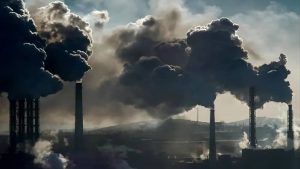
Air pollution in Iran claims 50,000 lives every year. From the crisis of particulate matter and aging vehicles to official inaction and economic losses, the consequences are devastating. Tehran’s Air Quality Index (AQI) has reached 167, and between 8,000 and 9,000 people die annually in the city as a result of air pollution. Nationwide, the number of deaths attributed to air pollution is estimated at approximately 50,000. Despite existing laws and repeated warnings from experts, this crisis continues to claim lives. The return of severe air pollution in Tehran, just days after November’s rainfall, once again demonstrated that this crisis has deeper roots than weather conditions. The Air Quality Index has reached 167, forcing residents to once again breathe polluted and hazardous air.
Mohammad Sadegh Hassannavand, head of the Air Pollution Research Center at Tehran University of Medical Sciences, has emphasized that an examination of data from 2011 through March 2026 shows that concentrations of particulate matter smaller than 2.5 microns (PM2.5) have failed to meet health standards in any of those years.
The Labor Crisis in Iran: Workers Flee Formal Employment for the Margins of the Economy
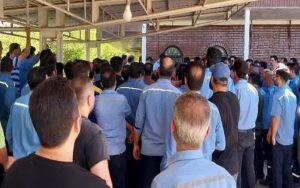
The labor crisis in Iran is now threatening both the livelihood security of households and the future of production. The collapse in purchasing power and the inability of wages to cover living expenses are pushing workers toward informal employment, multiple jobs, and unstable work.
Reports by Iran’s state-run media on the country’s labor market paint a disturbing picture of the deepening labor crisis. Declining purchasing power, rising inflation, economic stagnation, and the consequences of war have created conditions in which even having a job no longer guarantees the ability to afford life’s basic necessities. To cover their families’ essential expenses, workers are being forced to take on second and third jobs or turn to online and informal activities.
This situation reveals the spread of a dangerous phenomenon: employment without the ability to make ends meet. In other words, a large segment of the workforce has become part of the working poor.
One of the direct consequences of the labor crisis is the gradual departure of workers from formal employment. Online sales, temporary jobs, work without contracts, and holding multiple jobs have become ways to compensate for household income shortfalls.
Iran Says Weapons Smuggling Is Rising as Authorities Intensify Security Measures
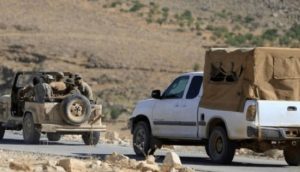
TEHRAN, Iran — A senior Iranian Interior Ministry official said Saturday that weapons smuggling into the country has increased beyond normal levels, an acknowledgment that points to mounting security concerns as authorities step up intelligence operations, border enforcement and other domestic security measures.
Ali Zeynivand, spokesman and deputy interior minister for political affairs, said at a news conference on Saturday, Nov. 21, 2026, that the Interior Ministry and Iran’s National Security Council were closely monitoring the movement of illegal weapons.
“Weapons smuggling has always existed, and the Interior Ministry and the National Security Council monitor this area with a high degree of sensitivity,” Zeynivand said.
He said weapons seizures had risen above their usual level and alleged that Iran’s adversaries had shifted their focus toward smuggling unauthorized weapons into the country after failing to achieve their objectives through military confrontation.
PMOI Supporters in Bucharest Call for Urgent International Action Against Executions in Iran
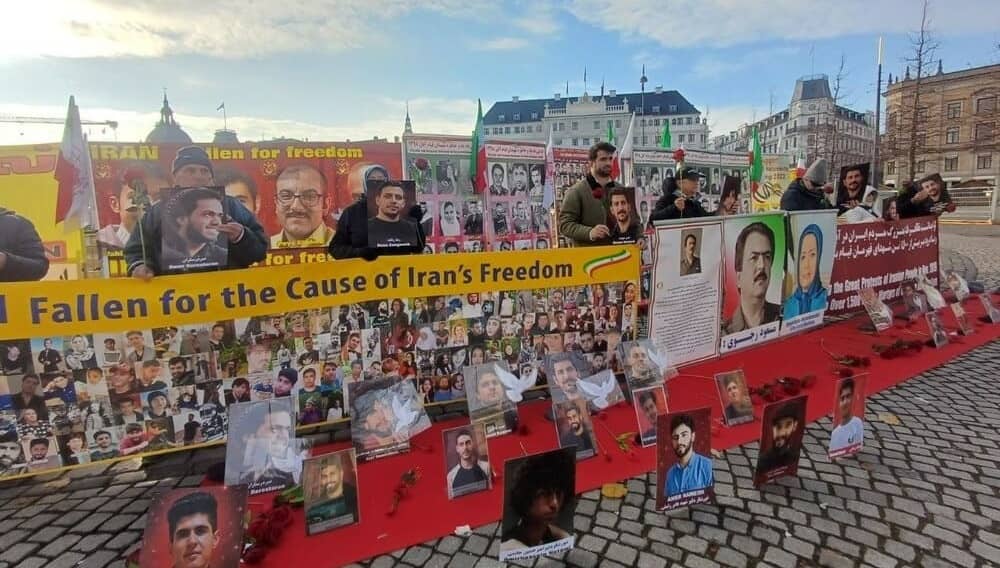
Bucharest, Romania – November 20, 2026 – Supporters of the People’s Mojahedin Organization of Iran (PMOI/MEK) held a photo exhibition in Bucharest to draw attention to human rights violations in Iran and urge the international community to act urgently against executions and death sentences facing political prisoners.
The exhibition focused on the continued detention of protesters arrested during Iran’s January 2026 uprising, the execution of political prisoners, and the imminent danger confronting others. Participants called for international intervention to prevent further executions and to secure the immediate release of all political prisoners and detainees at risk.

The event also demanded the complete abolition of the death penalty in Iran and urged the international community to hold senior Iranian regime officials accountable for crimes against humanity before an international tribunal.