
THIS PAGE WILL BE UPDATED WITH THE LATEST NEWS
UPDATE: 9:00 PM CEST
The West Disarmed Tehran’s Opposition — and Handed the Regime a Lifeline

A former French counterterrorism judge has raised a question Western governments should have asked years ago: What did Iran’s rulers gain when Europe and the United States weakened an organized force opposed to them?
Marc Trevidic’s account matters because he speaks from experience inside the judicial system. Discussing France’s 2003 proceedings against members of the People’s Mojahedin Organization of Iran, or MEK, he recalled a period when Paris pursued valuable oil and gas agreements with Tehran while the Iranian authorities sought action against their opponents.
Trevidic later handled the case and dismissed the charges he examined. In remarks delivered in May 2026, he described the political use of counterterrorism justice. He also offered a strategic assessment: The MEK once possessed substantial military capabilities in Iran that, in his view, would be useful today in bringing down the regime. France, the U.S., and Britain, he said, had all played a part in eliminating those capabilities.
UPDATE: 7:30 PM CEST
Iran: Why Ignore the Institutional Weakening?

Bombings and the deepening oil crisis are diverting our attention from the situation inside Iran. The elimination of Supreme Leader Ali Khamenei, and the uncertainty surrounding the actual balance of power and his son and successor, Mojtaba, have created a new situation. Uncertainty has emerged around the regime’s keystone. Internal divisions have intensified among the Islamic Revolutionary Guard Corps and within the political establishment. Dissent is also growing within the religious hierarchy. Will the opposition be able to take advantage of this?
Three dynamics are contributing to the weakening of the institutional structure in Tehran: divisions within the Islamic Revolutionary Guard Corps, struggles among political factions, and the emergence of internal religious dissent challenging the theological legitimacy of the ruling establishment. Together, they paint a picture in which the weakened central authority must contend with increasingly visible centrifugal forces.
Over the past 10 years, small groups of active resistance have gradually emerged under the aegis of the PMOI, the People’s Mojahedin Organization of Iran.
These “Resistance Units” now constitute a network of several thousand groups spread across Iran’s vast territory, from the Pakistani border to the Iraqi border. Available images show the diversity of their recruitment, with a significant female presence. Their activities range from throwing Molotov cocktails at government buildings to destroying regime displays and painting or posting their slogans.
UPDATE: 2:00 PM CEST
UK Trial of Three Iranians Over Alleged Plot to Target Iran Dissident Journalists

In London three Iranians go on trial accused of targeting UK-based journalists opposed to the regime in Tehran
Opening the trial the prosecution alleges the three men were Iranian spies, conducting surveillance of journalists at a UK-based Persian news channel critical of the government in Tehran, with the intention of physically harming and intimidating. Mostafa Sepahvand, 41, Farhad Javadi Manesh, 46, and Shapoor Qalehali Khani Noori, 57, went on trial in Woolwich Crown Court on charges of engaging in conduct likely to assist Iran’s foreign intelligence service between August 2024 and March 2025.
Prosecutor Bill Emlyn Jones said people criticize Iran “at their peril” and that Iran International, a London-based satellite channel, had “come under particular attack” for its opposition to Tehran. He reminded jurors that former leader Ayatollah Khomeini ordered the death of Salman Rushdie in 1989 for his novel “The Satanic Verses,” and noted the vicious 2022 stabbing of the author in New York.
The three men have denied the two charges brought against them under Britain’s National Security Act.
UPDATE: 10:30 AM CEST
The Ultimate Threat to Tehran Isn’t Trump or Israel. It’s The Price of Bread
A teacher still has a classroom. An office worker still receives a paycheck. A merchant still opens his shop. Yet all three can lose their place in Iran’s middle class without becoming unemployed. Their earnings no longer buy the life their work once supported.
That is the political significance of Iran’s economic crisis. Inflation is undermining the expectation that work, education, and personal responsibility can provide a secure future. For a government already confronting public anger, the collapse of that expectation widens the potential constituency for opposition.
When protests began in Iran’s bazaars in late December 2025, merchants faced rising prices, a falling currency, and dwindling sales. But the unrest spread beyond the marketplace, reflecting the predicament of families who remain employed while losing their economic footing. That pressure has since intensified: on Oct. 4, the rial plunged to an all-time low of 2.723 million to the dollar on the open market, further eroding household purchasing power and savings.
UPDATE: 7:30 AM CEST
In Memory of Mohammad Afzalian: 47 Years of Struggle and Sacrifice Within PMOI’s Ranks
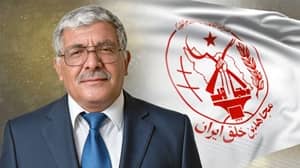
It is with heavy hearts that we announce the passing of PMOI member Mohammad Afzalian in Albania following a cardiac arrest. Mohammad led 47 years of unrelenting struggle against the mullahs’ regime in the ranks of the People’s Mojahedin Organization of Iran (PMOI/MEK) and the National Liberation Army of Iran (NLA)
Born in 1955 in Na’in in Isfahan Province, Mohammad Afzalian became acquainted with the People’s Mojahedin Organization of Iran (PMOI/MEK) while he was in the United States studying mechanical engineering, after hearing the courtroom defense and learning of the execution of Mehdi Rezaei, known as the “Red Rose” of Iran’s anti-monarchical revolution.
Following the anti-monarchical revolution in 1979, he began his full-time activities with the PMOI through the Muslim Students Association in the United States. In 1985, he went to the Iran-Iraq border region to join the PMOI’s combat units.
In 1987, with the formation of the National Liberation Army of Iran (NLA), he donned the uniform of combat and honor and fought valiantly in many NLA operations, including Operations Meydan, Qarqan, Lak Lak, Dani-Gaz, Garmab, Marivan, Sepidar, Piranshahr, Aftab, Chelcheragh, Forough Javidan (Eternal Light), and Morvarid (Pearl).
Iran Regime MPs Expose Currency Crisis and Collapse of Healthcare System

Iran’s economic crisis is increasingly spilling into every aspect of daily life, from the collapse of the national currency to the rising cost of medical treatment. Recent remarks by members of the regime’s parliament have provided an unusually stark picture of the problems facing the country.
As the rial continues to lose value, lawmakers have openly questioned the Central Bank’s management of the foreign-exchange market and the government’s policies on imports. At the same time, Salman Es’haghi, spokesman for the parliamentary Health and Treatment Committee, has acknowledged that Iran’s insurance funds are effectively bankrupt and that patients are being forced to shoulder most medical expenses.
The remarks came amid growing infighting among regime officials over responsibility for the economic crisis.
Hossein Kia, a member of the regime’s parliament, directly attacked Central Bank officials over the continuing turmoil in the currency market.
Iran’s Regime Escalates Executions of January Uprising Prisoners

The Iranian regime has continued its campaign of executions against prisoners arrested during the January 2026 uprising, putting to death protesters in several cities while leaving others facing death sentences.
Recent executions in Isfahan, Shahrekord, and Mashhad reveal a recurring pattern. Protesters are prosecuted under broadly defined national-security charges, including Moharebeh—“enmity against God”—and are sentenced to death in cases involving clashes with security forces during the uprising.
The executions have also taken place as international attention focuses on Iran’s use of the death penalty ahead of the October 10 World Day Against the Death Penalty.
Rather than isolated cases, the executions form part of a broader campaign targeting those who participated in or were accused of organizing protests.
On October 5, the regime executed Alireza Sepahi, 24, and Alireza Raisi, 21, at Dastgerd Prison in Isfahan. Both had been arrested during the January uprising and sentenced to death in the case known as the “Alikhani Square” case.
Exposé: Investigation Finds Student Newsletter Claiming Ties to Iranian Activists Is Suspected of Links to Iran’s Intelligence Apparatus
An investigation spanning several months has found that the Amir Kabir Newsletter circulated a wide range of reports from universities across Iran while evidence reviewed in the investigation points to troubling contacts and channels of communication between individuals involved with the publication and people linked to Iran’s intelligence and security apparatus.
According to the information reviewed in this investigation, the newsletter’s portrayal of itself as an Iran-based source reporting from inside Iran’s student protest movement during the 2026 uprising was misleading. Significant parts of its operation were in fact based outside the country. Questions have also emerged around individuals involved in managing or promoting the publication, including allegations concerning possible contacts with people linked to Iranian security structures.
The review also reveals highly questionable conduct by a network calling itself the Lion and Sun Associations, which promoted Reza Pahlavi and monarchist politics.
The Amir Kabir Newsletter reported demonstrations, arrests and campus unrest with the immediacy of an outlet embedded inside Iran’s universities, giving readers the impression that its reporters and sources were operating from within the protest movement itself.
50 Trillion Rials in New Money Printed Daily in Iran, A 50-Year Record
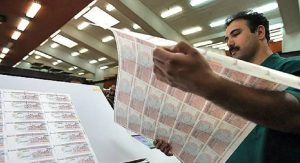
Unbacked money printing in Iran’s economy has reached a new level. In the first five months of the current year (from March 22 to August 22), the Central Bank added approximately 50 trillion rials (Approximately $19.3 million) to the monetary base every day. This figure is unprecedented in the comparable statistical period since the 1970s.
The monetary base increased by approximately 7,610 trillion rials (about $3 billion) over the five months from March 22 to August 22.
Over 154 days, this amounts to an average of approximately 49.4 trillion rials per day (about $19.3 million). The monetary base has now surpassed 29 quadrillion rials (about $11.2 billion). This figure was approximately 21.96 quadrillion rials at the end of last year. The increase is the highest recorded for such a period since the 1970s. Comparable data have been available since the beginning of that decade. Therefore, this finding represents the highest figure in the comparable period, rather than a claim about the entire history of Iran’s economy.
218th Day of Berlin Sit-In: Condemning Executions in Iran and Commemorating Zahedan’s Bloody Friday
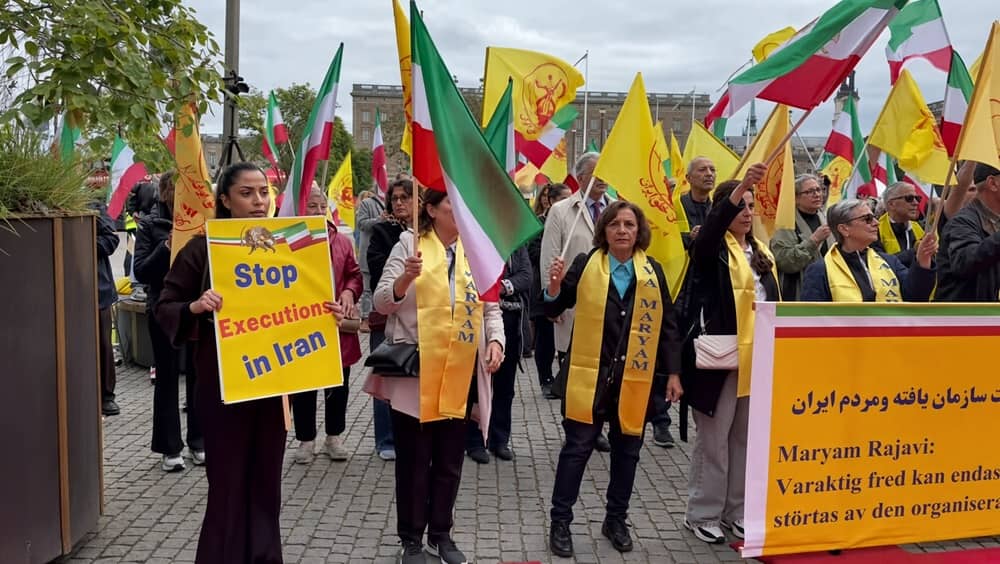
Berlin, Germany — October 3, 2026: Supporters of the People’s Mojahedin Organization of Iran (PMOI/MEK) continued their sit-in protest outside the Iranian regime’s embassy in Berlin for the 218th consecutive day. They condemned the executions carried out by the mullahs’ regime, particularly the execution of political prisoners and the ongoing wave of executions targeting protesters arrested during uprisings in Iran. They called for an end to the death penalty. The protesters also honored the victims of Zahedan’s Bloody Friday in 2022.

The protesters called for the closure of the embassy, as a center of espionage and terrorism operated by the Iranian regime in Germany. They are also demanding accountability for the regime’s systematic repression, human rights violations, and continuing executions in Iran.