

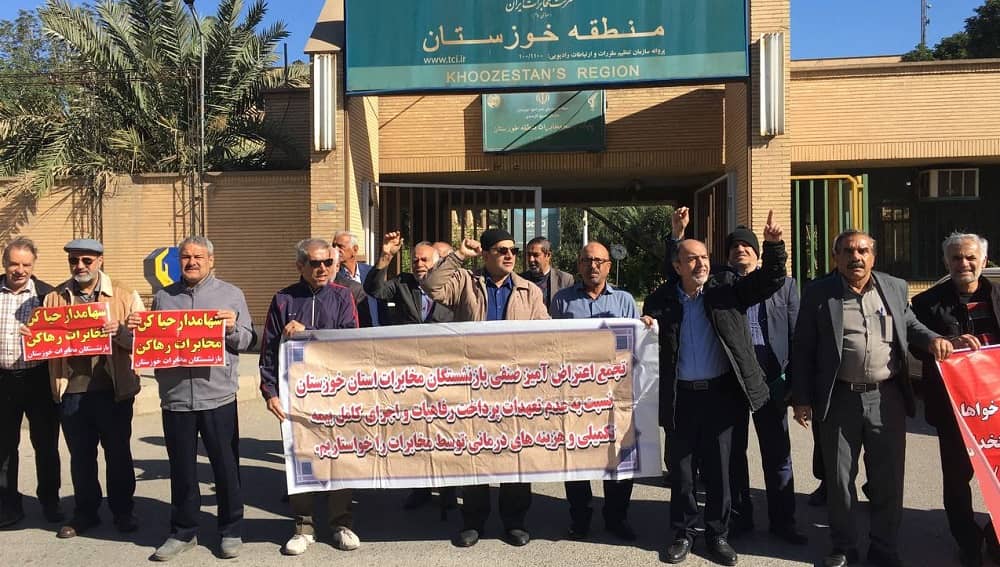
February 24, 2025 – Iran is witnessing a new wave of widespread protests as people from all walks of life—including retirees, healthcare workers, industrial laborers, and defrauded investors—take to the streets, demanding justice and economic relief. As inflation and the cost of living soar, demonstrators are condemning the government for failing to pay wages, manipulating salaries, and neglecting their economic grievances while spending national wealth on foreign interventions and ideological projects.
In Ahvaz and Rasht, retirees from the Social Security and Telecommunications sectors defied the presence of security forces and protested unpaid benefits and government inaction on pension reforms. “Enough oppression, our tables are empty!” and “From Khuzestan to Gilan, shame on our officials!” were among the slogans that echoed through the streets. The protests, sparked by repeated unfulfilled promises from authorities, were met with no concrete response from government officials.
In Kashan, workers at Saipa Citroën went on strike over stagnant wages and the lack of job classification policies. Employees accused company officials of disregarding their demands and treating them unfairly compared to workers in Iran Khodro, the country’s largest automaker.

Similarly, contract workers at the Electricity Distribution Company in Isfahan gathered outside company headquarters after authorities failed to follow through on promises of better wages and full-time employment contracts. When the company’s director refused to address the protesters, they moved their demonstration to the provincial governor’s office.
Healthcare workers also joined the growing wave of protests. In Ahvaz’s Arya Hospital, nurses and administrative employees went on strike after management deducted portions of their salaries to fund year-end bonuses. Hospital officials attempted to placate workers by promising that wages would be restored in the coming months, but employees were unwilling to accept vague assurances.
In Tehran, defrauded customers of Farda Motor and Kerman Motor staged demonstrations against delayed vehicle deliveries. Protesters accused the companies of exploiting customers while facing no government accountability. “These companies take our money, lie, and keep delaying deliveries. If ordinary citizens owed a small amount, the law would crush them. But the rich get away with it,” a furious protester said.
Teachers and university lecturers have also mobilized against the government, protesting unfair salary structures and demanding wage adjustments. Retired educators from Farhangian University, who have been left out of pension increases, accused officials of sidelining their concerns while allocating resources toward ideological indoctrination in schools. “Instead of fixing our broken education system, the regime focuses on rewriting textbooks with ideological propaganda,” an educator remarked.

Tensions are particularly high in Sistan and Baluchistan Province following a targeted attack against senior security official Mohammadreza Sandi (Sandgol) in Khash. He was shot outside the local IRGC intelligence office in what was seen as an act of retaliation for the government’s long history of land confiscations, arbitrary arrests, and extrajudicial killings in Baluchi communities.
Meanwhile, local sources reported that Iranian authorities have intensified home demolitions in Sistan and Baluchistan, destroying properties belonging to residents in the city of Iran Shahr. This action is part of an ongoing policy of land confiscation targeting Baluchi communities, who have long suffered systemic discrimination. The unrest further escalated after four Baluchi men, who had been arrested three months ago, were returned to their families dead, fueling accusations of government brutality.
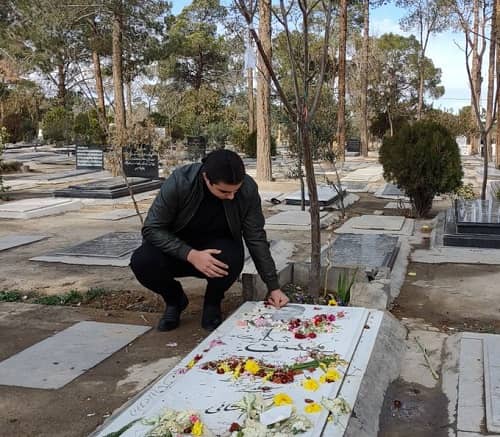
Furthermore, memorial gatherings were held for Mohsen Shekari in Tehran and Fouad Ghadimi in Divandarreh, honoring their sacrifices in Iran’s 2022 uprising. In Tehran, supporters gathered at Shekari’s gravesite alongside his mother, chanting, “Mohsen, the red rose of our struggle, happy birthday!” He was executed in December 2022 for participating in nationwide uprisings.
In Divandarreh, a ceremony on February 20, 2025, marked Ghadimi’s memory with Kurdish songs and speeches. His wife tearfully said, “Fouad, wake up! It is Nowruz, the festival of Kurdish victory.” Ghadimi, 40, was shot by security forces during protests in September 2022 and died two days later in Sanandaj. Despite government crackdowns, these gatherings reflect continued defiance and remembrance of fallen protesters.
The Iranian regime’s response to mounting economic and social grievances has been repression rather than reform. While people across the country struggle with unpaid wages, job insecurity, and skyrocketing prices, the government has been funneling billions into foreign militant groups, most recently staging an extravagant state funeral for Hezbollah’s Hassan Nasrallah.
As protests spread across the country, demonstrators have been relentless in calling out the clerical dictatorship for its plundering and systemic corruption. The growing coordination between different sectors, from labor unions to retired pensioners, signals a deeper movement beyond economic grievances, one that directly challenges the legitimacy of the ruling system.