

Three-minute read
In the aftermath of the January uprising and the ensuing crackdown, Iran’s clerical leadership is escalating a familiar two-track response: expanding arrests and judicial pressure at home while urging mass public displays of loyalty to project control. Recent statements and confirmations carried by official and state-aligned platforms show senior authorities framing the country as under coordinated threat, demanding faster prosecutions, and widening the security net to include so-called reformist figures—steps that signal continuing anxiety about renewed unrest.
At the same time, official economic reporting points to persistent stress. The main Tehran Stock Exchange index has registered sharp declines in recent trading sessions, reinforcing public concern about instability and policy uncertainty as the state tightens internal controls.
Khamenei’s Call for Street Turnout as a Test of “Loyalty”
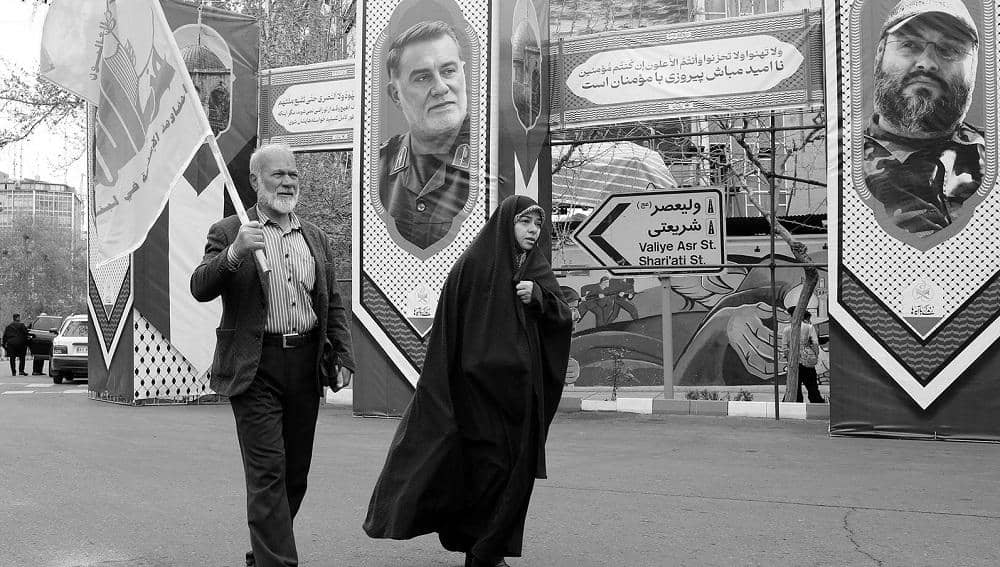
In a televised message ahead of the annual February 11 anniversary rallies, the regime’s supreme leader Ali Khamenei urged the public to “disappoint the enemy,” stressing that “the nation shows itself” through street marches and describing the event as a symbol of unity and resolve. On his official website, the message frames turnout as a form of national power rooted in “the will and steadfastness of nations,” not merely military hardware.
Khamenei’s desperate attempt is to portray the annual rally as a substitute for the social capital the state has steadily exhausted. In practice, this message is aimed at mobilizing the regime’s dependent apparatus—security forces, state employees, and those whose livelihoods rely on public-sector paychecks, along with their families—to manufacture the optics of popular support as authorities try to reassert control after mass unrest.
#Iran’s Regime Talks Tough Because It’s Weaker Than It Looks https://t.co/t8YZQhjnYz
— Iran Freedom (@4FreedominIran) December 26, 2025
Judiciary Signals a Harder Line and Faster Sentencing
State broadcaster IRIB News reported comments by Judiciary Chief Gholamhossein Mohseni Ejei urging that “cases of rioters” be determined “faster,” describing a “heavy responsibility” to confront those he claims are acting “in the enemy’s direction.” In the same coverage, Ejei used the phrase “the sword of justice,” arguing for a tougher approach where authorities deem it necessary.
IRNA likewise carried Ejei’s call for preventing “those who intend to disrupt the country’s security” from acting, emphasizing coordination with security and intelligence bodies—an official framing that treats the post-January environment as a continuing security emergency rather than a concluded episode.
This escalation in threats and fast-tracked sentencing—cast as “the sword of justice”—reads less like confidence than anxiety: an intimidation campaign meant to compensate for eroding authority and to reassure a nervous pro-regime base that the state still has the will and capacity to crush dissent.
#Tehran Escalates War Rhetoric to Mask Decline and Bolster Demoralized Forceshttps://t.co/nz151KuRIs
— NCRI-FAC (@iran_policy) August 20, 2025
Arrest Wave Reaches Insiders
Alongside street-level repression, state-controlled outlets have confirmed detentions of so-called reformist figures. Tasnim News reported arrests and summonses involving several activists, describing the case in security terms and attributing actions to “security and judicial” bodies.
Additional reporting in Iran’s state media ecosystem—citing security-linked confirmations—has described allegations against detainees in sweeping terms, including claims of “targeting national cohesion,” “coordinating with enemy propaganda,” and creating “secret overthrow mechanisms.”
In parallel, debate inside the political establishment has become more openly combative. Multiple Iranian outlets published video and text coverage of MP Mehdi Koochakzadeh demanding action against the Jamaran website over a headline he said could “throw the country into turmoil,” and directly calling on the judiciary to intervene—illustrating heightened internal suspicion and a readiness to securitize even intra-elite media disputes in the post-uprising climate.
#Iran’s Power Struggle: A Fractured Regime Hiding Behind Bold Rhetorichttps://t.co/SzNeQLYdh4
— NCRI-FAC (@iran_policy) October 16, 2025
A System Still Operating in Crisis Mode
Official economic reporting also points to continued fragility. IRNA reported a steep daily decline in the Tehran Stock Exchange’s main index (on the order of tens of thousands of points), a signal that market confidence remains weak amid political tension and uncertainty.
As the regime prepares to mark the February 11 anniversary to claim “survival,” it is also confronting its most acute peril in decades—an economy in shambles, repression at a peak, a fractured political class, and tens of thousands of grieving families merging into the broader mass of dissent. In that context, the propaganda push to manufacture unity reads increasingly out of touch, even as the leadership doubles down on preemption—tightening control, accelerating punishment, and policing internal discourse—rather than addressing the conditions that fueled the uprising in the first place.