

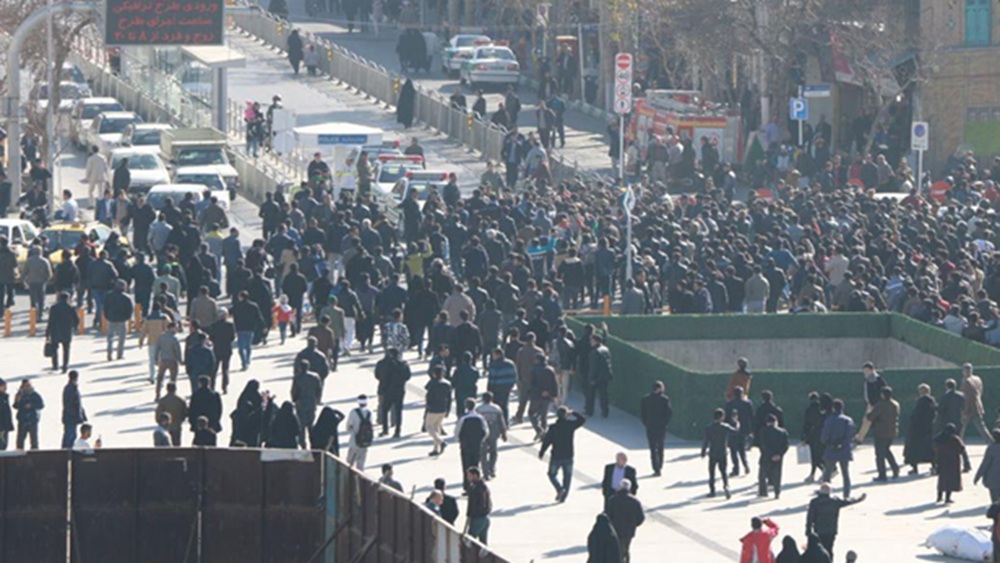
On December 30, 2025, the streets of Iran instead bore witness to a significant escalation in anti-government sentiment. For the third consecutive day, the historic bazaars of Tehran and major provincial capitals shuttered their gates, but this economic strike has now fused with a fervent political uprising from the country’s universities.
What began as a protest against runaway inflation and currency devaluation has rapidly morphed into a wholesale rejection of the theocratic dictatorship. As shuttered storefronts paralyzed the country’s economic arteries, university students poured into campuses and streets, creating a unified front that bridges the traditional merchant class and the nation’s youth.
The Bazaar: The Heart of the Economy Stops
In Tehran, the Grand Bazaar—historically the political barometer of Iran—remained in a state of total shutdown. From the Gold Market (Zargarha) to the Iron Market and the appliance hub of Amin Hozour, merchants refused to open their shops despite heavy pressure from security forces. Reports indicate that intelligence officers attempted to coerce shopkeepers into unlocking their doors, but the merchants stood firm, leaving the bustling corridors of commerce silent and empty.
December 30—Tehran, Iran
Merchants in Tehran’s Grand Bazaar (jewelers’ market and Saboun-Nia bazaar in Shush, Saray-e Melli) mark third day of mass strikes in protest to deteriorating economic conditions, depreciating national currency, rampant inflation, high costs, etc.… pic.twitter.com/lOCskj68C4— People's Mojahedin Organization of Iran (PMOI/MEK) (@Mojahedineng) December 30, 2025
The strike was not merely an act of passive resistance; it was vocal. In the Jafari and Bein-al-Haramein sections of the bazaar, crowds chanted, “The Bazaari has honor, support, support,” calling on the public to join them. One shopkeeper in the Grand Bazaar encapsulated the economic despair driving the strikes, telling observers: “Whatever item we sell, two hours later we cannot buy the same item back with the same price… We are tired. No matter how hard we try, we get no results.”
The strikes extended far beyond the capital. In Shiraz, the merchants of Hazrati Street—a key economic artery—closed their shops. In Kermanshah, wholesalers on Haddad Adel Street joined the strike, while across the island of Qeshm, specifically in Dargahan, markets shut down completely. This nationwide coordination was bolstered by a statement from the country’s truck drivers, who declared their solidarity with the market, asserting that “the problems of the market and the drivers have a common root.”
More footage of protests and strikes in Tehran's bazaars for the third day. Rallies continue despite heavy presence of the regime's repressive security forces.#IranProtests pic.twitter.com/MIFqOPW7kF
— People's Mojahedin Organization of Iran (PMOI/MEK) (@Mojahedineng) December 30, 2025
University Students Join the Fray
As the bazaars closed, the universities erupted. Students from Tehran’s most prestigious institutions—including Tehran University, Amir Kabir (Polytechnic), Sharif University of Technology, Khajeh Nasir, and Beheshti University—staged large-scale walkouts and rallies.
The scenes on campus were marked by a fearlessness that defied the regime’s security apparatus. At Beheshti University, students were filmed tearing down the sign of the “Supreme Leader’s Representation,” a direct symbolic attack on Ali Khamenei’s authority. At the main gates of Tehran University, a tense standoff occurred where students, chanting “Death to the Dictator,” marched toward security forces. In a rare display of the regime’s wavering grip, reports indicate the security forces retreated in the face of the advancing student body.
December 30—Iran
On the third day of mass protests that began on December 28, students at Tehran University, Khajeh Nasir University (Tehran), Bheshti (Tehran), and Isfahan University of Technology held rallies, protesting deteriorating economic conditions, high prices, and… pic.twitter.com/L2Z2M5GOct— People's Mojahedin Organization of Iran (PMOI/MEK) (@Mojahedineng) December 30, 2025
This mobilization was not limited to Tehran. In Isfahan, Yazd, and at the University of Science and Culture, students echoed the calls of the capital. Women played a prominent, leading role in these protests, often seen at the forefront of the marches in both the bazaars and the universities.
From Economic Grievance to Political Revolution
While the spark for the bazaar strikes was economic—fueled by the collapse of the rial and soaring costs—the slogans dominating the streets on December 30 were unambiguously political. The chanting moved rapidly from “Poverty, Corruption, Injustice” to targeting the entirety of the ruling establishment.
A recurring slogan heard across campuses was “Reformer, Hardliner, the game is over,” a direct dismissal of the regime’s internal political theater, including the administration of President Masoud Pezeshkian. Furthermore, students explicitly rejected the regime’s foreign policy and proxy wars, chanting, “No Gaza, No Lebanon, my life for Iran,” and labeling the IRGC and Basij forces as equivalent to ISIS with the chant: “Basiji, Sepahi, you are our ISIS.”
December 30—Tehran, Iran
Shahid Beheshti University students held a protest rally, denouncing repression and worsening conditions while calling for unity. They chanted: “Don’t be afraid—we are all together.”#IranProtests pic.twitter.com/CvC2sS9C1A— People's Mojahedin Organization of Iran (PMOI/MEK) (@Mojahedineng) December 30, 2025
The unity between the economic and intellectual classes was cemented with the slogan “Student, Bazaari, Unity, Unity,” which resonated in both the academic halls and the market alleyways.
The Regime’s Crackdown and the People’s Resilience
Predictably, the state responded with violence. In the Galubandak area of the Tehran Bazaar and along Mosaddegh Street in Kermanshah, security forces deployed tear gas to disperse crowds. In the Shush market of Tehran, reports emerged of shooting and distinct clashes lasting two hours. In Hamedan, security forces reportedly opened direct fire on protesters.
Simultaneously, victims of the state-affiliated “Hakim Project” fraud gathered outside the Parliament (Majlis). Having lost their life savings to government-linked corruption, they were met not with answers, but with dispersal by police.
December 30—Tehran, Iran
Security forces dispatched in Valiasr St. to crack down on ongoing protests.#IranProtests pic.twitter.com/XN3gNpKtpj— People's Mojahedin Organization of Iran (PMOI/MEK) (@Mojahedineng) December 30, 2025
Yet, the crackdown failed to clear the streets. In Kermanshah, despite the tear gas, protesters regrouped in the alleyways of Takieh Moaven al-Molk and continued their demonstrations. The regime’s attempt to drown out protest chants in Tehran’s Grand Bazaar using loudspeakers was reportedly unsuccessful, as the merchants’ slogans overpowered the state’s noise.
As 2025 draws to a close, Iran’s regime finds itself in a precarious deadlock. The simultaneous revolt of the bazaar and universities signals a profound loss of control. The slogans chanted on December 30 indicate that the Iranian people are no longer interested in economic concessions or superficial reforms; they are demanding a fundamental transformation of their country’s governance, free from the dictates of the mullahs’ rule.