

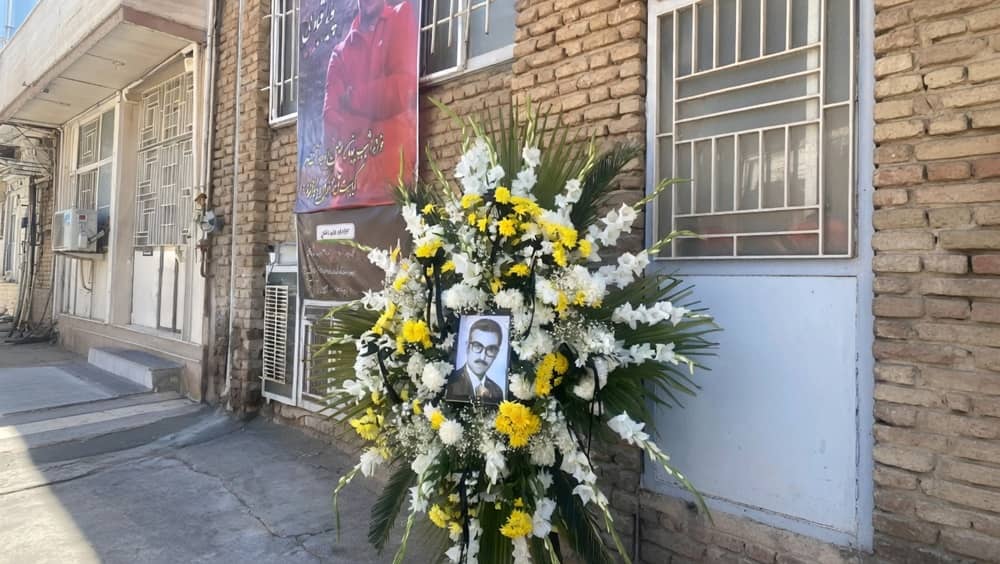
In the shadow of a fresh wave of state-sanctioned hangings, a quiet but dangerous rebellion is unfolding across the Iranian plateau. In a country where a single photograph can lead to the gallows, members of the People’s Mojahedin Organization of Iran (PMOI) and their “Resistance Units” are engaging in a high-stakes campaign of defiance that treats city streets as a battlefield of memory.
The recent execution of six political prisoners—Vahid Bani-Amerian, Abolhassan Montazer, Mohammad Taghavi, Akbar Daneshvarkar, Babak Alipour, and Pouya Ghobadi—was intended by the judiciary to stifle dissent. Instead, it has triggered a nationwide surge of clandestine activity.
Resistance Units commemorate executed PMOI members, defy regime’s execution spree https://t.co/UDL2DDiPdb
— People's Mojahedin Organization of Iran (PMOI/MEK) (@Mojahedineng) April 7, 2026
The Timeline of Defiance
April 2, 2026: In the city of Sonqor, the regime’s security apparatus attempted to lock down the neighborhood surrounding the home of Pouya Ghobadi’s father. Despite a heavy deployment of intelligence officers, a large crowd gathered to honor the executed PMOI member. In a rare display of public mourning-as-protest, the assembly sang revolutionary anthems in solidarity with Ghobadi’s mother, transforming a private funeral into a public rejection of the state.
April 3–4, 2026: In Zahedan, a city already scarred by previous crackdowns, underground units distributed leaflets and hung portraits of the “martyred” dissidents. Simultaneously, in Mashhad, Karaj, Varamin, Khorramabad, Tehran, and Bandar Abbas, Resistance Units engaged in “flower-laying” operations. To an outside observer, placing a rose on a sidewalk may seem trivial; in Iran, these acts are considered “War Against God” (Moharebeh). Activists strategically placed flowers and photos of the six executed men in pedestrian areas to ensure the public saw the faces the regime wished to erase.
#Iran News Alert – Simay Azadi Exclusive
Members of the PMOI Resistance Units and supporters of the Iranian Resistance paid tribute in several cities to six PMOI martyrs:
Vahid Baniamerian (“Commander Vahid”)
Pouya Ghobadi
Babak Alipour
Mohammad Taghavi
Akbar Daneshvarkar
In… pic.twitter.com/IIr2E5CsZ9— SIMAY AZADI TV (@en_simayazadi) April 7, 2026
April 5, 2026: The movement moved into cemeteries and public squares. In Isfahan, dissidents successfully placed memorial displays on gravesites. In Karaj and Babol, activists set up temporary “memorial tables”—clandestine altars featuring the victims’ photos and candles—before disappearing into the crowds. By evening, portraits of the six men appeared on walls in Tehran, Tabriz, Zanjan, Sabzevar, Chabahar, and Sanandaj, a visual rebuke to the judiciary’s claim of total control.
April 6, 2026: The campaign reached a crescendo of visibility. In Tehran, Shiraz, Hamedan, Kashan, Ilam, Kermanshah, Khash, and Sarbaz, Resistance Units took the ultimate risk: hanging placards and hoisting the flag of the National Liberation Army of Iran (NLA) over highway overpasses and thoroughfares. These displays served as a psychological blow to the security forces, demonstrating that the opposition remains organized and operational within the regime’s heartland.
Iran’s regime fails to silence Resistance Units with execution spree of PMOI members https://t.co/DRScP2LyT7
— People's Mojahedin Organization of Iran (PMOI/MEK) (@Mojahedineng) April 5, 2026