

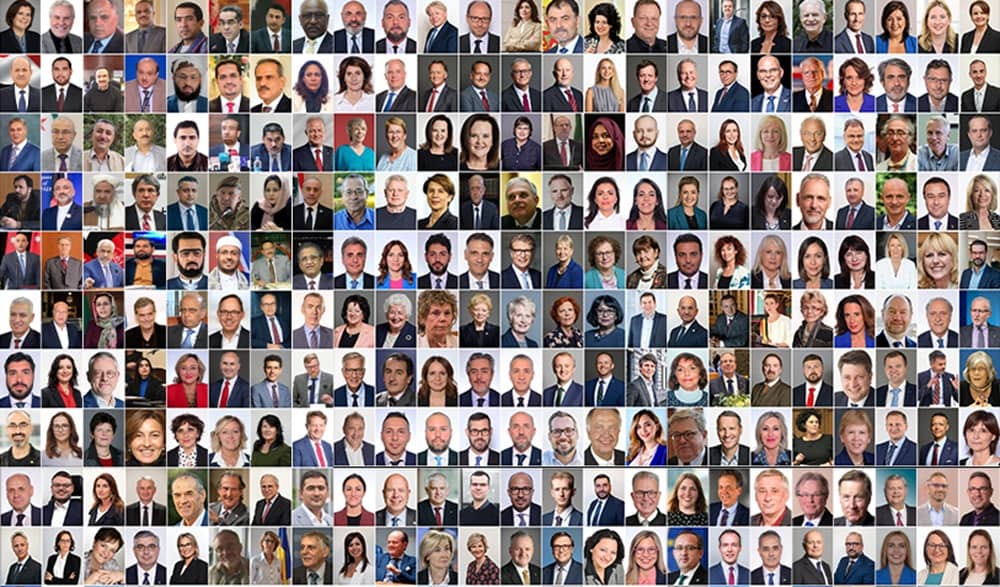
In what is being described as one of the most expansive and politically significant international initiatives on Iran in recent years, a coalition of more than 3,000 global dignitaries from 55 countries has issued a joint declaration urging an immediate end to political executions in Iran and endorsing a democratic transition for the nation.
The signatories—comprising former presidents, prime ministers, cabinet ministers, lawmakers, Nobel Prize laureates, diplomats, and human rights advocates—warned that the country has arrived at a “historic crossroads.” The declaration arrives amid reports of an escalating domestic crackdown by the Iranian judiciary.
A Surge in Capital Punishment and Repression
The joint statement sounds an urgent alarm over a sharp rise in political repression within Iran, explicitly highlighting recent executions targeting political dissidents and demonstrators.
“We are deeply concerned by a new wave of political executions in Iran,” the statement reads. “In recent weeks, a number of prisoners have been executed for their membership in the People’s Mojahedin Organization of Iran (PMOI/MEK) or for participating in last January’s uprising.”

According to the global leaders, the Iranian regime is leveraging current regional conflicts to intensify its internal security measures and suppress domestic dissent. The signatories noted that authorities have “exploited the wartime atmosphere to completely shut down the internet” and have carried out thousands of mass arrests. These actions, the statement asserts, are aimed at preventing further nationwide uprisings and obstructing young citizens from affiliating with organized resistance units.
Demanding an Immediate International Response
The document places direct responsibility on the international community, criticizing what it describes as a costly global silence. The leaders called on the United Nations and its member states to intervene immediately with diplomatic pressure to counter the directives of the Iranian regime’s judicial leadership.
The statement explicitly references recent instructions within the Iranian legal system, noting: “The head of the judiciary has called on judges to expedite their decisions and the issuance of death sentences. The world’s silence is unjustifiable. We call on the UN and its member states to take immediate action to halt these executions.“
Seventy-eight #Nobel Laureates Demand Urgent @UN Intervention Over Escalating Executions in Iranhttps://t.co/BOwAGwCyvB
— NCRI-FAC (@iran_policy) June 11, 2026
Rejection of Dictatorship, Focus on Internal Change
A core tenet of the statement is its support for the democratic aspirations of the Iranian populace, emphasizing that the desire for political transformation is rooted in a forward-looking vision rather than a return to historical models of governance.
The signatories observed that nationwide protests have consistently demonstrated that the population seeks a democratic republic, explicitly rejecting “both the current religious dictatorship and the authoritarian rule of the Shah.”
Furthermore, the 3,000 leaders argued that true political change cannot be imposed from the outside. “Regime change in Iran, with its far-reaching implications for global peace and security, particularly in the Middle East, can only be achieved by the Iranian people and their organized resistance,” the declaration states, adding that self-determination remains the exclusive right of the Iranian citizens.
Gathering for a Free Iran
On June 20, Iranians will gather in Paris. According to organizers, the event is in support of a free, democratic, and secular republic in Iran, while rejecting all forms of dictatorship and calling for international condemnation of executions in Iran.… pic.twitter.com/uiSguGcbAH
— SIMAY AZADI TV (@en_simayazadi) May 25, 2026
Endorsement of the NCRI Transition Framework
The international coalition lent its formal backing to the transition framework outlined by the National Council of Resistance of Iran (NCRI). This roadmap proposes the establishment of a temporary, provisional government following the regime’s fall, which would be tasked with organizing free and fair elections within a maximum of six months to transfer sovereignty to the public.
This framework is built upon the foundation of NCRI President-elect Maryam Rajavi’s Ten-Point Plan, which advocates for:
-
The total separation of religion and state
-
Pluralism and comprehensive civil liberties
-
Complete gender equality
-
The abolition of capital punishment
-
Autonomy rights for oppressed nationalities within a unified nation
-
A non-nuclear future for Iran
The statement highlights that this democratic blueprint has already garnered formal endorsements from more than 4,000 legislators across both sides of the Atlantic.
Kermanshah
"The announcement of the Provisional Government by the NCRI for the transfer of sovereignty to the people of Iran and the establishment of a democratic republic based on the Ten Point Plan of Mrs. Maryam Rajavi" pic.twitter.com/eaDAZBWAdl— People's Mojahedin Organization of Iran (PMOI/MEK) (@Mojahedineng) March 15, 2026
A Blueprint Driven by Independence
The signatories emphasized that the NCRI’s transition model maintains strict independence, noting that the coalition “has consistently affirmed that it seeks neither financial assistance nor the presence of foreign forces on Iranian soil.” Instead, the focus remains entirely on facilitating a peaceful, structured transfer of power via democratic elections.
In its concluding remarks, the international appeal encourages the broadening of this political alignment, welcoming the NCRI’s call for a unified “solidarity front.” This front seeks to bring together all political forces and opposition groups that share a mutual commitment to overthrowing the current clerical regime and establishing a secular, democratic republic.