

Three-minute read
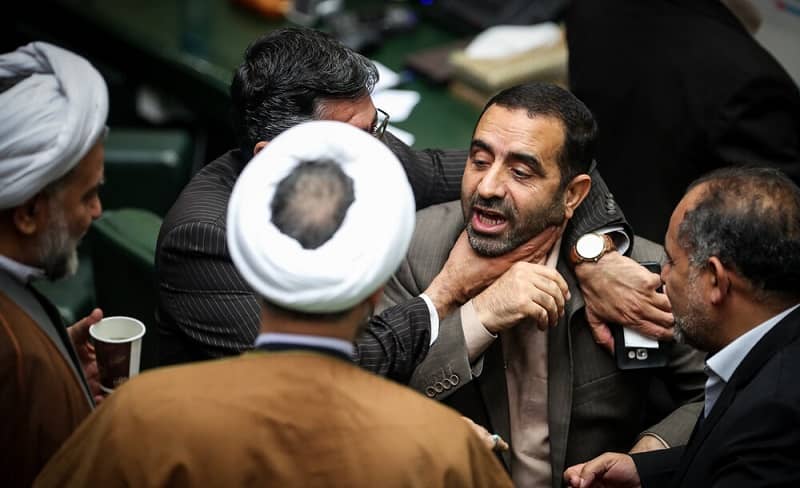
The ongoing power struggle within Iran’s ruling regime has intensified with the nomination of ministers for Masoud Pezeshkian‘s cabinet. Factions that have long presented themselves as “reformists,” attempting to whitewash the regime’s crimes and legitimize its rule, now find themselves disillusioned and vocal in their criticism. These factions, while refraining from directly naming Supreme Leader Ali Khamenei, have directed their anger toward Pezeshkian, attacking his choices for the new government. Some regime officials have seized this moment to defend their allies by criticizing Khamenei and his faction.
In a belated response, Pezeshkian defended his cabinet, stating, “In the selection and evaluation of the cabinet, we consulted with many experts and tried to create the best possible situation with the available capacities. Be patient, let the cabinet work, and judge it by its performance.”
However, criticism has been fierce. Didar News reported on August 3rd that Javad Imam, spokesperson for the so-called “Reformist Front,” expressed his disappointment: “Some members of the cabinet have no connection to reforms, nor are they even close to a moderate approach. Others are known for their opposition to any change or reform.” He further stated that Pezeshkian’s proposed cabinet continues the “militarization and securitization” of politics, with no shift in security policies toward political activists within the regime.
Etemad, a state-affiliated newspaper, echoed these sentiments on August 13th, writing, “This is not Masoud Pezeshkian’s cabinet; it is a government of those who demand their share. But it bears the signature of the person we elected.”
The discontent is not limited to media outlets. Mohsen Rannani, a disillusioned economist from the reformist camp, addressed Pezeshkian directly: “Mr. President, are you even Iranian? Have you secretly struck a deal with the powers behind the scenes? They struck down your most important ministers, forced you to appoint the same person who previously disqualified you for parliament and the presidency, and imposed a hardline military officer as Interior Minister who supports crackdowns on women’s rights. Yet, you still cling to power? How much does this power please you that you refuse to let it go?”
Rannani didn’t hold back, adding, “Mr. Pezeshkian, you have disgraced us! You have dashed our hopes! You have failed even before you officially took office!”
Pezeshkian Cabinet Triggers New Battlefront in #Iran’s Factional Power Strugglehttps://t.co/Vyh8UQTz0u pic.twitter.com/Xox0HYuuze
— NCRI-FAC (@iran_policy) August 13, 2024
The disillusionment is widespread. The Jomhouri newspaper noted, “The security sector of Pezeshkian’s cabinet is not significantly different from Raisi’s government. There is no message of change in this cabinet; at best, this government might extend the status quo.”
Rahmatollah Bigdeli, another self-proclaimed reformist political figure, criticized the cabinet formation process, stating, “Mr. Pezeshkian consulted with various elements within the state and other factions and ended up proposing ministers to parliament who were not even his first choices, but rather candidates suggested by other power structures within the state.”
Former Minister of Culture, Ali Jannati, expressed his frustration as well, saying, “There is no greater disgrace than nominating a police general, with a background in traffic management, as Interior Minister. Is there really such a void of qualified individuals?”
Mostafa Pourmohammadi, a former Interior Minister and a key figure in the 1988 massacre of political prisoners, also took aim at Pezeshkian, saying, “Others will manage him. He lacks a coherent vision to run the country. He has neither the experience nor the ability to make decisions. Has Pezeshkian even had two significant political meetings? Just managing a hospital and being a deputy health minister at one point doesn’t qualify one to solve the country’s problems.”
Rivalry Intensifies Among #Iranian Regime Factions with Pezeshkian’s New Cabinethttps://t.co/fvhiWitPcP pic.twitter.com/7VAwhuWdJg
— NCRI-FAC (@iran_policy) August 11, 2024
On the other hand, Mohammad Khatami, who has been dubbed the “leader of the reformists” by his faction, used this opportunity to show obedience to Khamenei and defended Pezeshkian’s cabinet choices before the parliament. Khatami stated, “While we approve of the good selections made, we believe that some areas could have been handled much better. However, we respect Pezeshkian’s right to choose his colleagues and do not expect miracles from him under any circumstances. Naturally, we hope he will adhere to the promises he made.”
Meanwhile, Hassan Rouhani, another former president who Khamenei has sidelined, used the opportunity to clear Mohammad-Javad Zarif and slam those who attacked him. Taking his usual approach of invoking Khamenei’s name to criticize the Supreme Leader’s faction, Rouhani’s website published excerpts from his memoirs, in which he recalled his discussions with Khamenei about selecting ministers: “The first session with the Supreme Leader about the ministers was a success. Although I wasn’t successful in selecting some ministers, I not only secured Khamenei’s approval for Mohammad Javad Zarif as Foreign Minister, but I also managed to transfer the nuclear negotiations from the Supreme National Security Council to the Ministry of Foreign Affairs.”
Rouhani’s memoirs also claimed that Khamenei had initially opposed the appointment of Rear Admiral Ali Shamkhani as Secretary of the Supreme National Security Council. Following severe factional infighting and several controversies targeting Shamkhani and his son, he was forced to resign from the SNSC. After stepping down from his post, Khamenei appointed Shamkhani as a member of the Expediency Discernment Council and a political advisor.
The reality is that the Iranian people have demonstrated their distrust of all factions within the regime by widely boycotting all six rounds of the regime’s sham elections in the last four years. The unveiling of Pezeshkian’s cabinet has once again exposed the regime’s inability to bring about any meaningful change from within. Therefore, the Iranian people’s demand for the total overthrow of the regime, as shown in the uprisings since 2017 and the widespread election boycotts, remains resolute and undeniable.