

Three-minute read
In the wake of the International Atomic Energy Agency (IAEA) Board of Governors’ resolution on November 20, 2025, officials of the Iranian regime have shifted their rhetoric from technical non-cooperation to open threats of nuclear proliferation. While the regime’s Foreign Ministry initially responded by voiding the “Cairo Understanding,” senior lawmakers and state officials are now publicly discussing withdrawing from the Non-Proliferation Treaty (NPT) and acquiring nuclear weapons from foreign allies, signaling a dangerous escalation in Tehran’s strategy to counter international isolation.
Threats of Imported Deterrence
On November 24, 2025, rhetoric from Tehran moved beyond domestic uranium enrichment to explicit threats of involving foreign nuclear powers in the crisis. Kamran Ghazanfari, a member of the Parliament’s Internal Affairs and Councils Commission, asserted that leaving the NPT would legally empower the regime to bolster its military and nuclear capabilities.
In a startling admission regarding the regime’s reliance on Eastern blocs, Ghazanfari claimed that Moscow and Pyongyang are prepared to back Tehran’s nuclear escalation. “Putin’s deputy has indirectly announced that Russia is willing to provide nuclear weapons to Iran,” Ghazanfari stated. He further alleged that North Korea had pledged support, claiming the North Korean leader had threatened Israel with a nuclear response should it attack Iran. “They also possess nuclear weapons and can react,” Ghazanfari added, suggesting a proxy nuclear deterrent strategy.
#Tehran Resorts to Nuclear Extortion in Response to IAEA Censurehttps://t.co/yGUC9fbUut
— NCRI-FAC (@iran_policy) November 23, 2025
Institutionalizing Defiance
The regime’s parliament is simultaneously moving to codify this confrontation. Ebrahim Rezaei, spokesperson for the Parliament’s National Security and Foreign Policy Commission, described the IAEA resolution as “political and illegal.” He announced that the commission is reviewing a draft “six-point counter-action plan.”
According to Rezaei, this plan is specifically designed to create deterrence against the “Snapback” mechanism—the restoration of UN Security Council sanctions which were reimposed in September 2025. The proposed legislation aims to compel the government to accelerate nuclear activities in response to Western pressure.
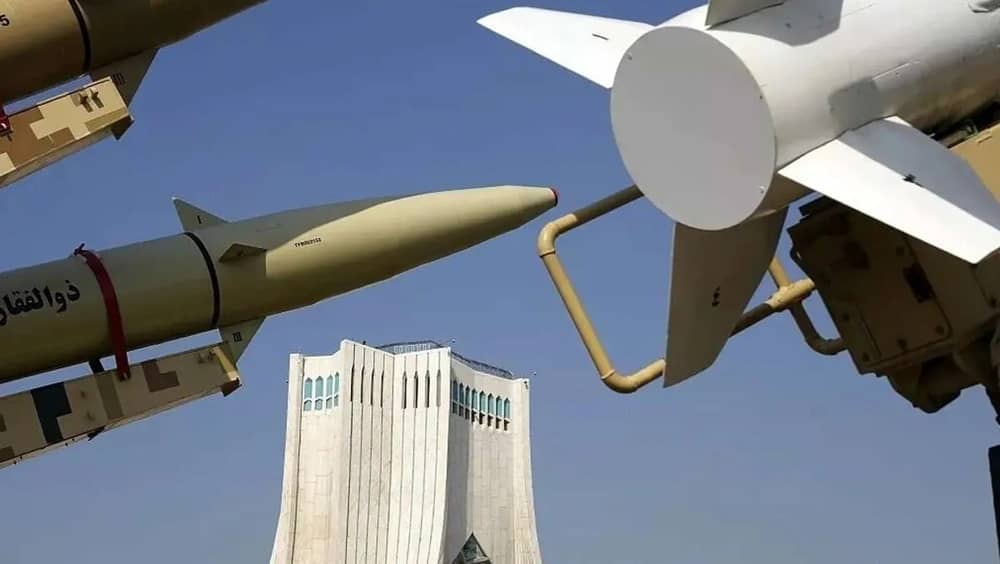
Parallel to legislative threats, the Ministry of Defense emphasized that sanctions would not halt missile development. Spokesperson Reza Talaei-Nik stated on November 24 that the regime’s missile industry is now “indigenous” and immune to external restrictions. “If our missile capability relied on foreign capacities, it would not have been possible to grow given the sanctions of the past 45 years,” Talaei-Nik claimed.
Khamenei Rejects U.S. Overtures, Says Conflict with U.S. Is Permanenthttps://t.co/93WEuazTdr
— NCRI-FAC (@iran_policy) November 3, 2025
Khamenei’s Red Line: The End of Talks
While Western powers continue to call for diplomatic engagement, officials in Tehran have clarified that the door to negotiation is firmly shut by Supreme Leader Ali Khamenei.
Mohammad-Hossein Saffar-Harandi, a member of the Expediency Discernment Council, spoke on state television on November 22, dismissing the utility of talks with the United States. He emphasized that regime supreme leader Ali Khamenei has established negotiations with the U.S. as a “red line” for the system. Harandi noted that while some officials previously believed they could extract concessions through dialogue, those efforts are now viewed as failures based on “lies” and “empty promises.”
Crucially, Harandi dispelled any notion that the administration of Massoud Pezeshkian could pursue an independent foreign policy. “Mr. President has repeatedly said that his red line is crossing the general policies of the system… communicated by the Leadership,” Harandi said. “My red line is there.”
This rigid stance was reflected by Foreign Ministry Spokesperson Esmaeil Baghaei, who reacted angrily to the E3 (France, Germany, UK) resolution. On November 23, Baghaei confirmed that the “Cairo Understanding”—an agreement reached with the IAEA in September—is “no longer possible to implement” and “void of validity.” He reiterated that decisions on the nuclear dossier are made at the “macro level,” a reference to the Supreme Leader’s office.
#Iran’s Nuclear Obsession: A Bomb That Destroyed a Nation’s Future https://t.co/ts9a3GLPm7
— NCRI-FAC (@iran_policy) October 19, 2025
A Crisis of Calculation
The regime’s aggressive posturing follows the November 20 resolution by the IAEA Board of Governors, which demanded “precise information” regarding Iran’s stockpile of 60% enriched uranium. According to the IAEA, Tehran currently possesses 440.9 kg of this material—sufficient for approximately 10 nuclear weapons if further enriched.
The resolution also required access to nuclear sites targeted during the conflict in June 2025. Since those strikes, and the subsequent reimposition of UN “Snapback” sanctions in September, the regime has blocked inspections.
By threatening to withdraw from the NPT and boasting of potential nuclear transfers from Russia, the regime appears to be abandoning the pretense of a civilian program. Instead, it is leveraging the threat of unchecked proliferation and regional war as a survival tactic against mounting international pressure.